KEY CONCEPTS
- High contrast: few tones, sharp edges between light and shadow
- Rim lighting: light from behind creates a glowing edge — the superhero signature
- Under-lighting (from below): menacing, villain-appropriate mood
- Side lighting: reveals the most form — ideal for anatomy study
- Shadow on a curved surface = gradual transition; on flat surface = sharp line
- The shadow terminator is the most important edge to get right
Decide on your light source direction and commit completely. Then divide every surface into exactly two zones: light and shadow. For a first pass, ignore mid-tones entirely. Light zone = paper white. Shadow zone = your darkest available mark. This binary approach reveals structure immediately — add mid-tones only after the structure is established.
Rim lighting is the secret weapon of superhero and comic art. The figure is backlit — the light source is behind and above. This creates a bright glowing line along every outer edge while the front-facing surfaces fall into dramatic shadow. It is visually spectacular, creates powerful depth, and is surprisingly easy to execute. Master this lighting type first.
TRY THIS — 10 MINUTESDraw a simple torso. Apply shading using ONLY three values: paper white (unshaded), medium gray (side planes turning from light), black (deepest shadow zones). Three values only — no blending, no gradients. Notice how the figure reads as fully three-dimensional. That is the three-value system, and it is all you need for most comic and heroic work.
REFERENCE GALLERY
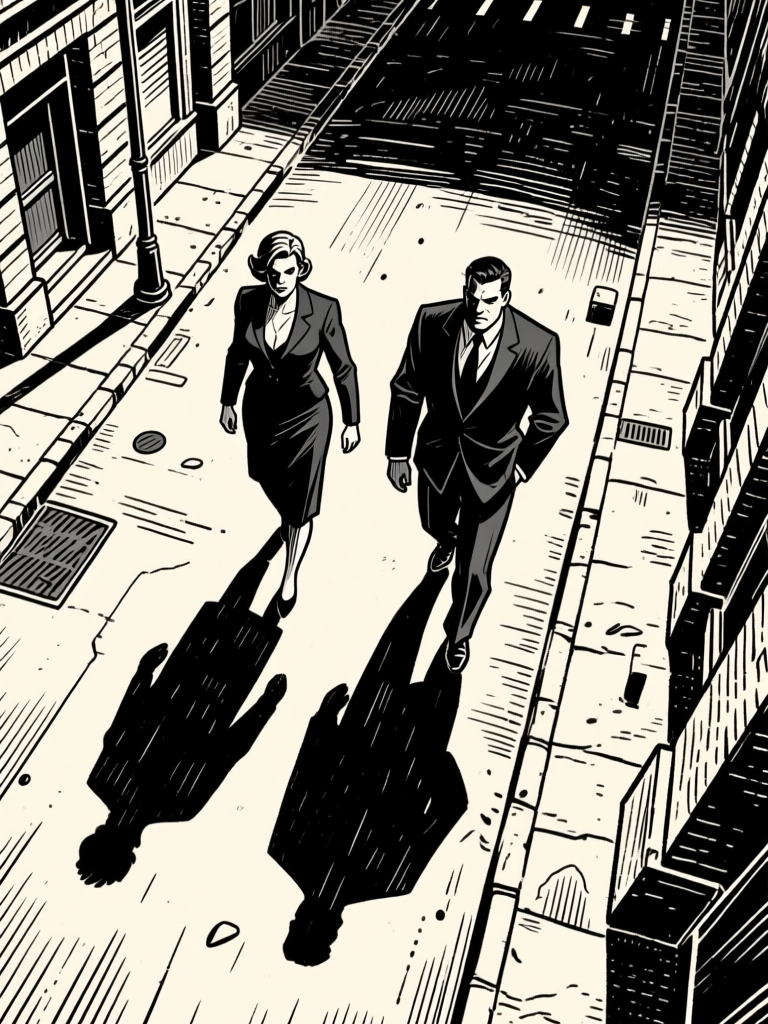
Overhead perspective — dramatic shadow
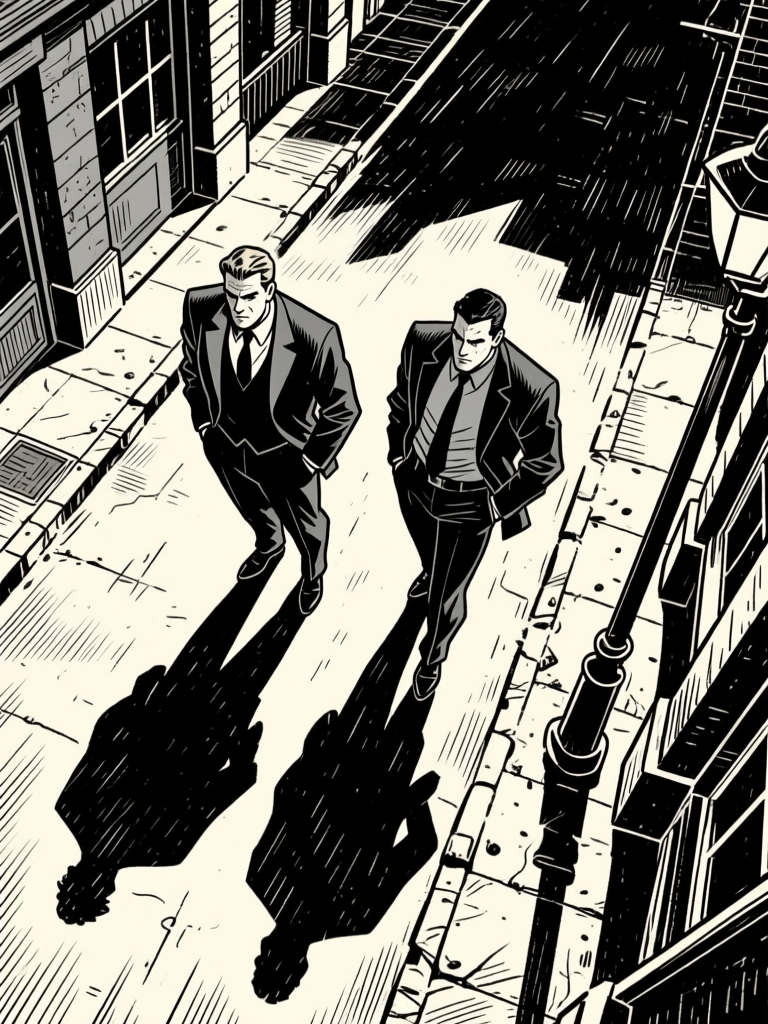
Street lighting — shadow direction study
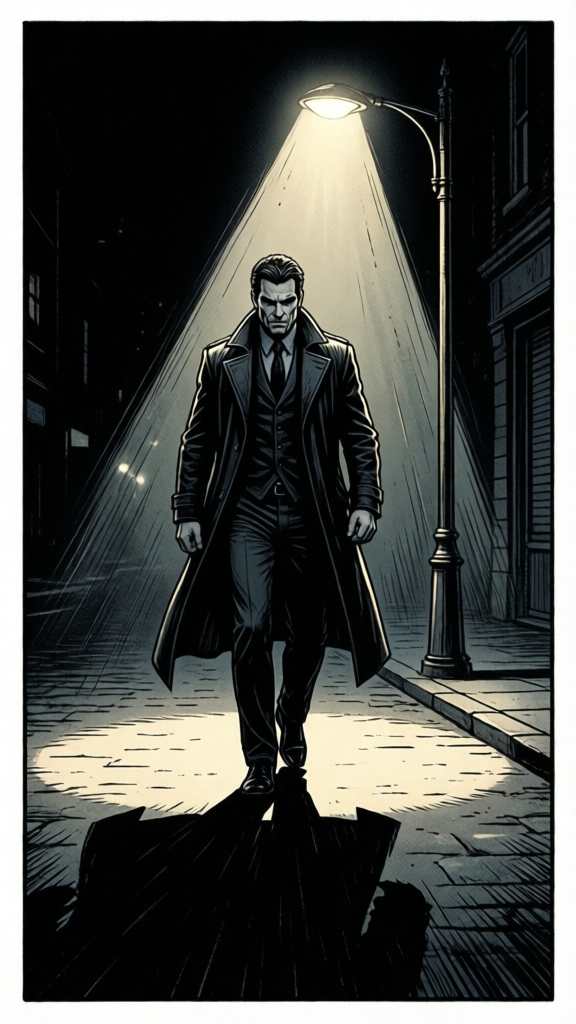
Noir full figure — rim and under-lighting
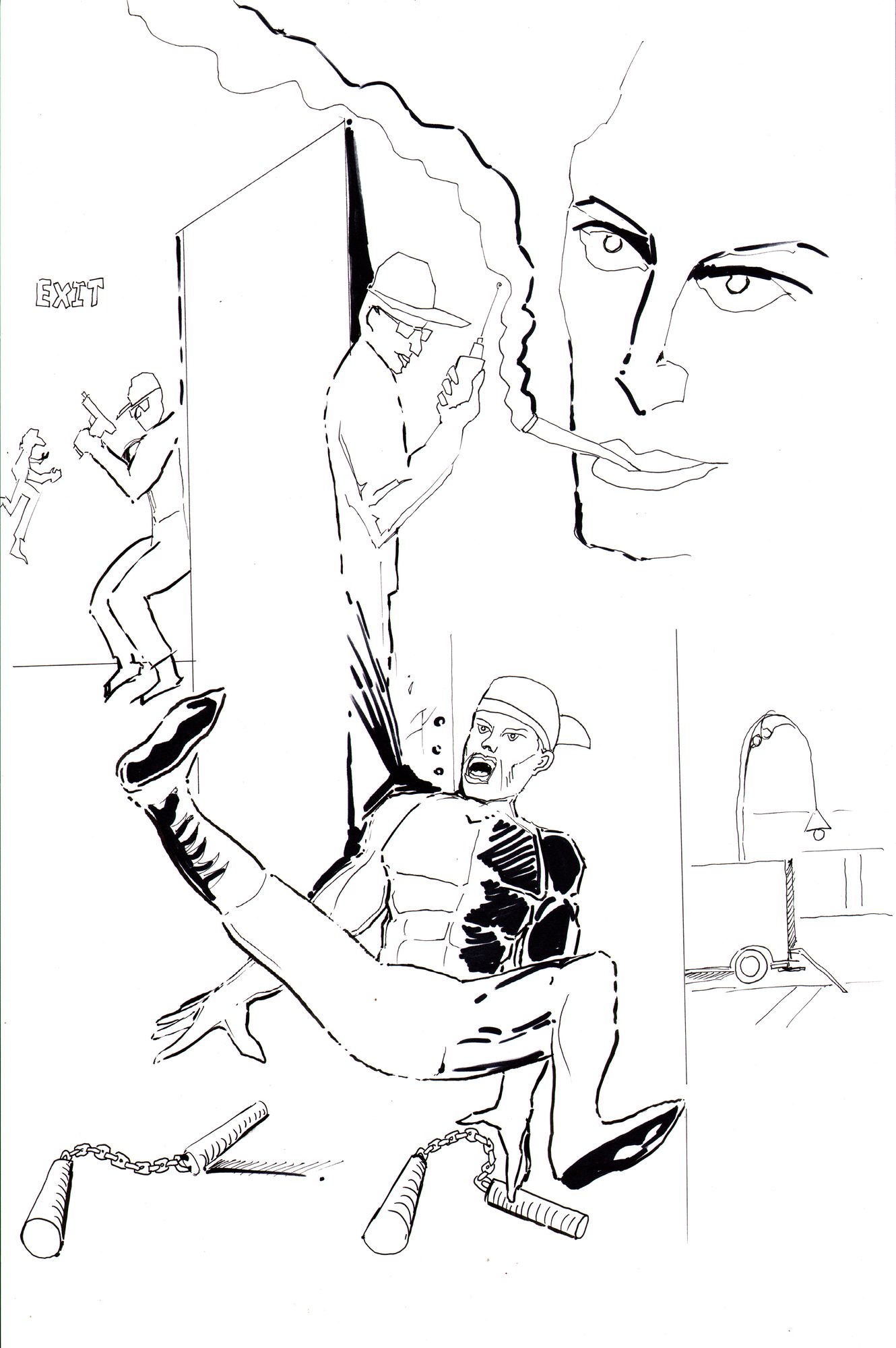
Life drawing — dramatic lighting study
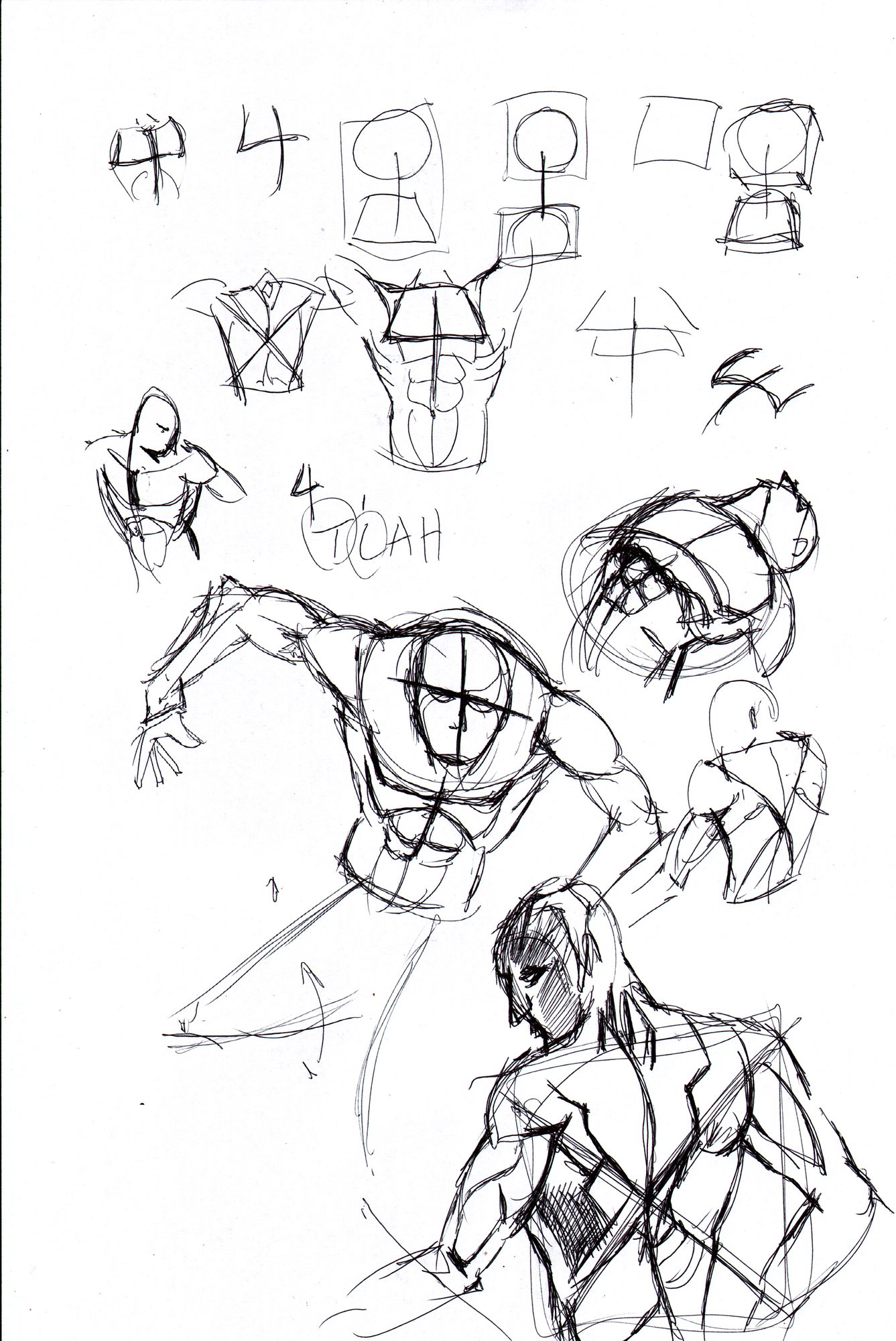
Life drawing — shadow/light study
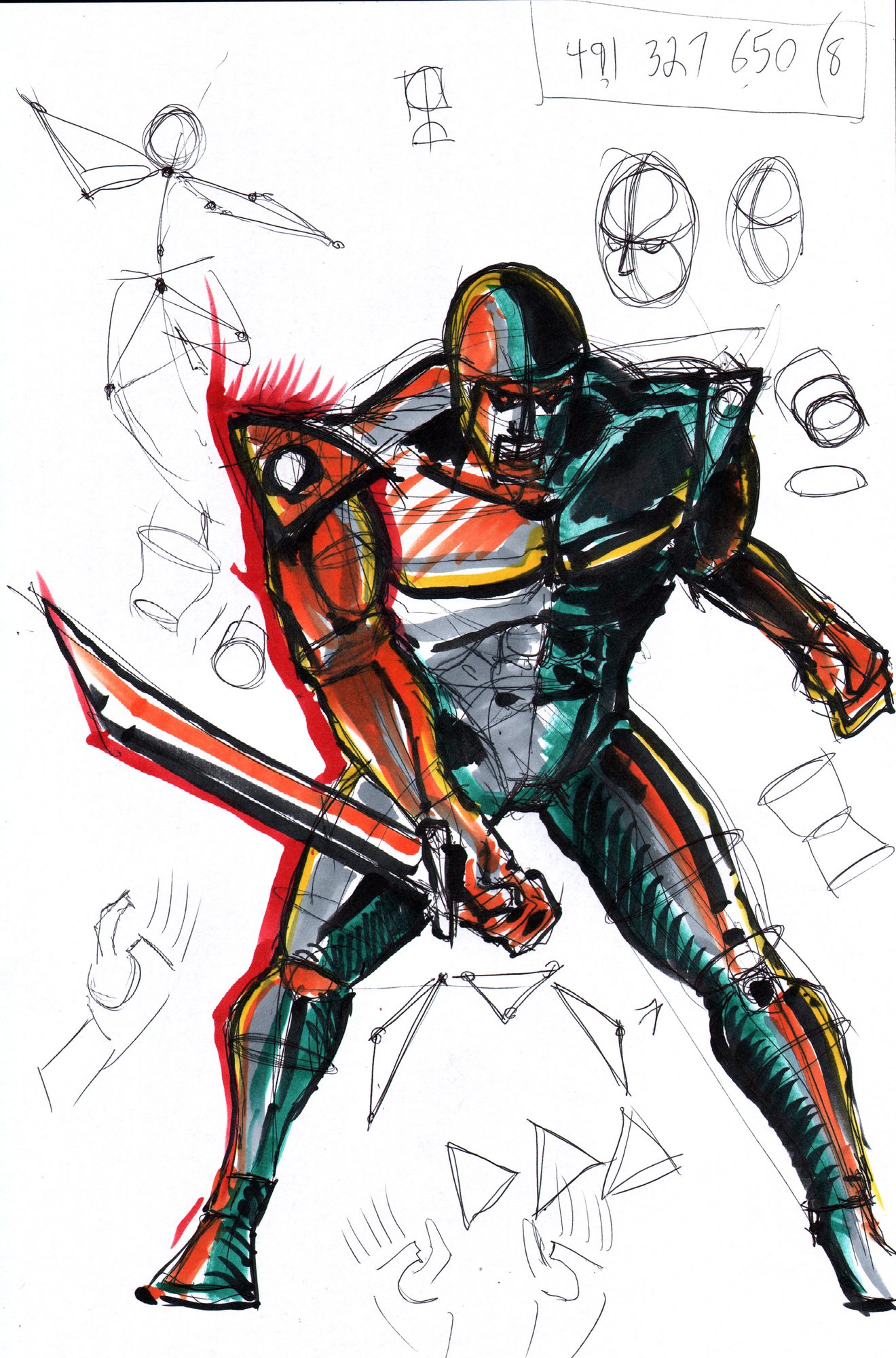
Life drawing large — dramatic lighting
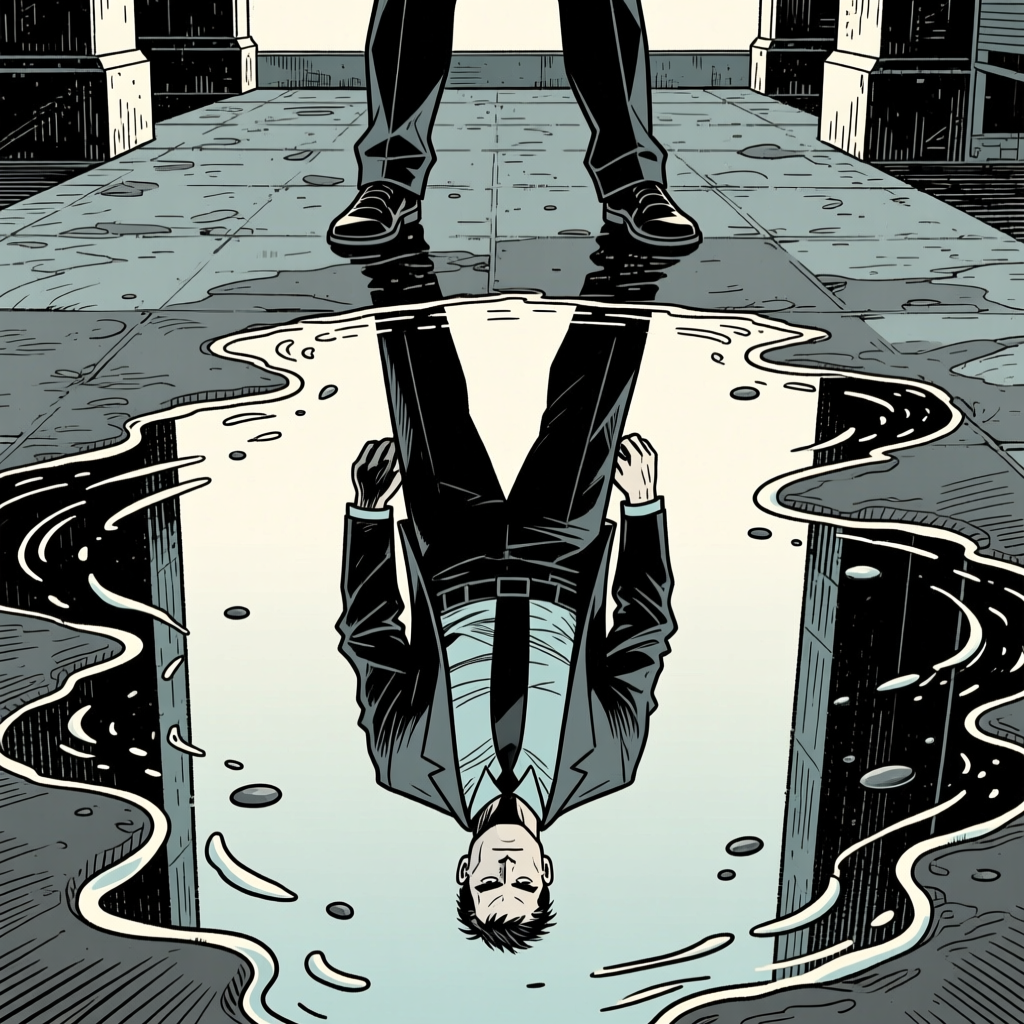
Figure reflected in puddle — noir
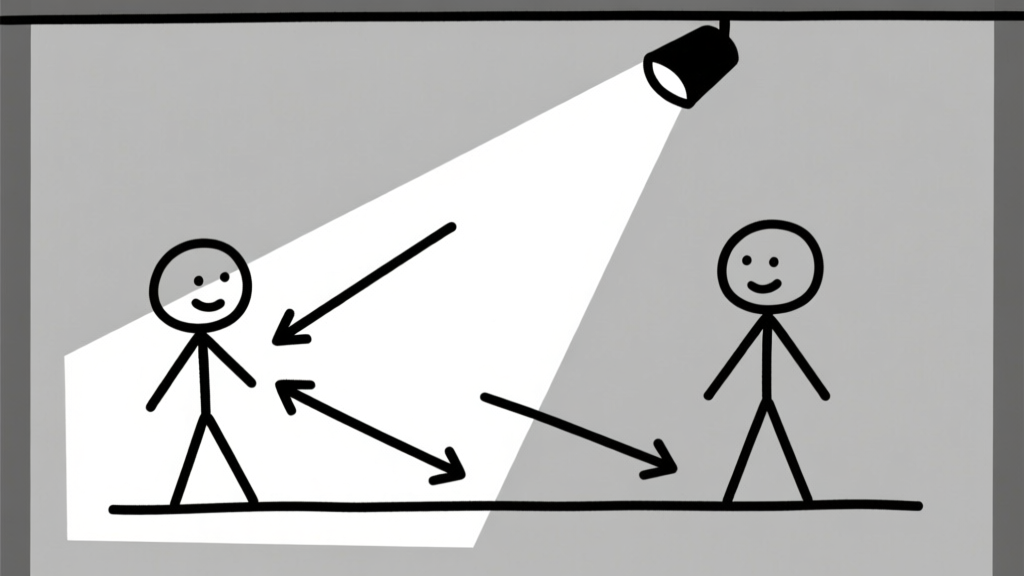
Spotlight diagram — stickfigures
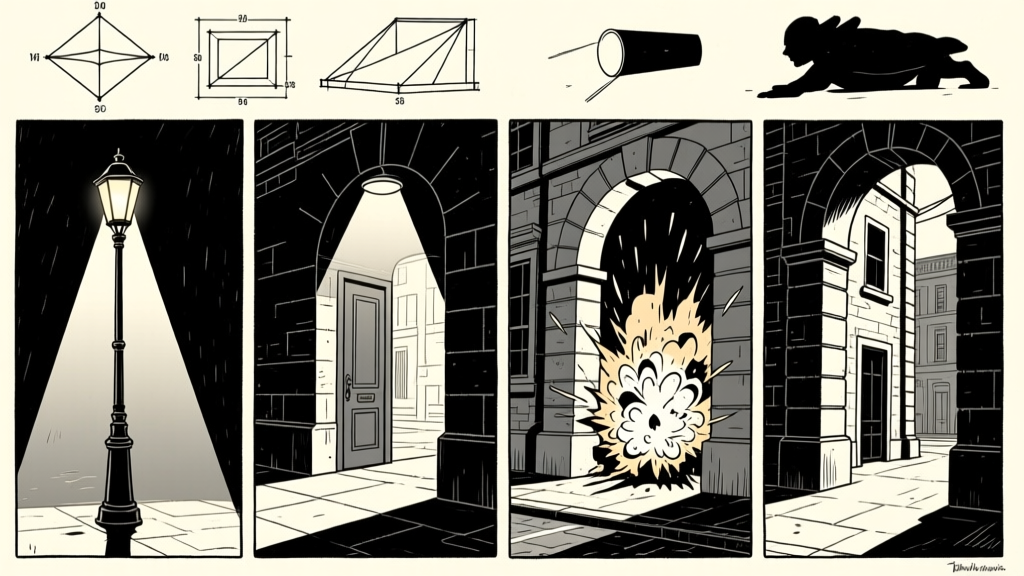
Lighting diagrams — architectural
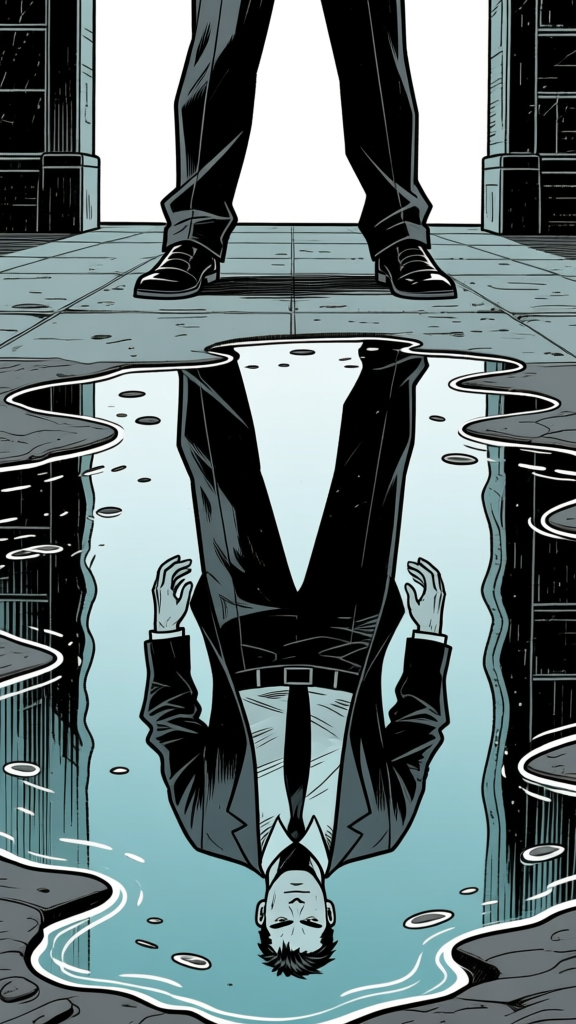
Figure reflected in water — noir
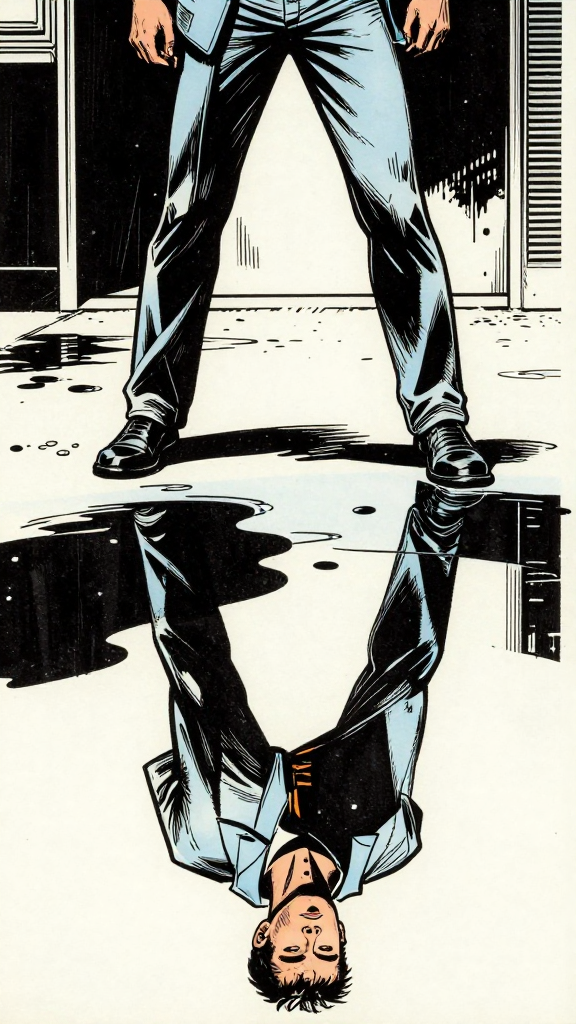
Figure reflected in puddle — noir
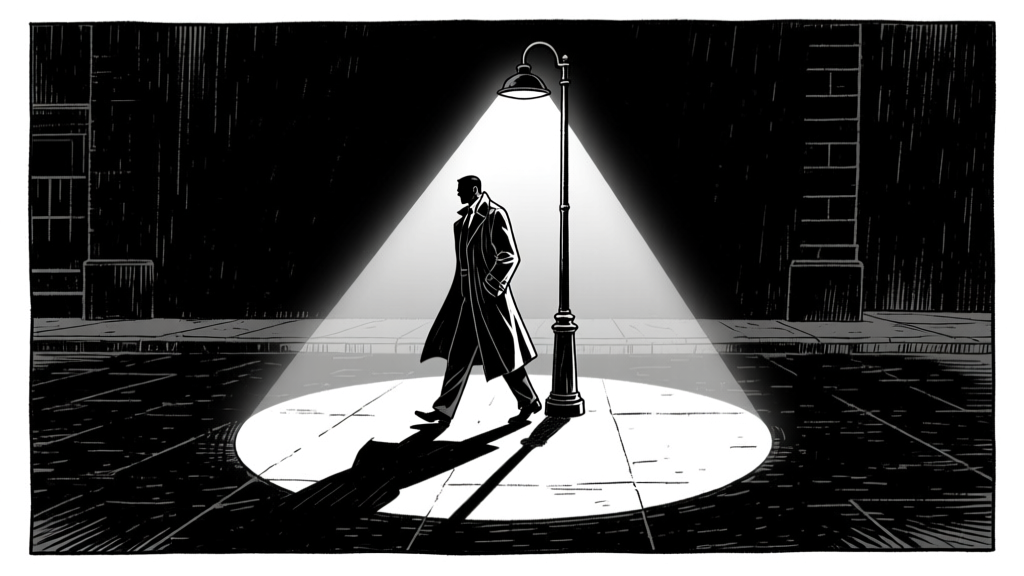
Figure in spotlight — noir scene
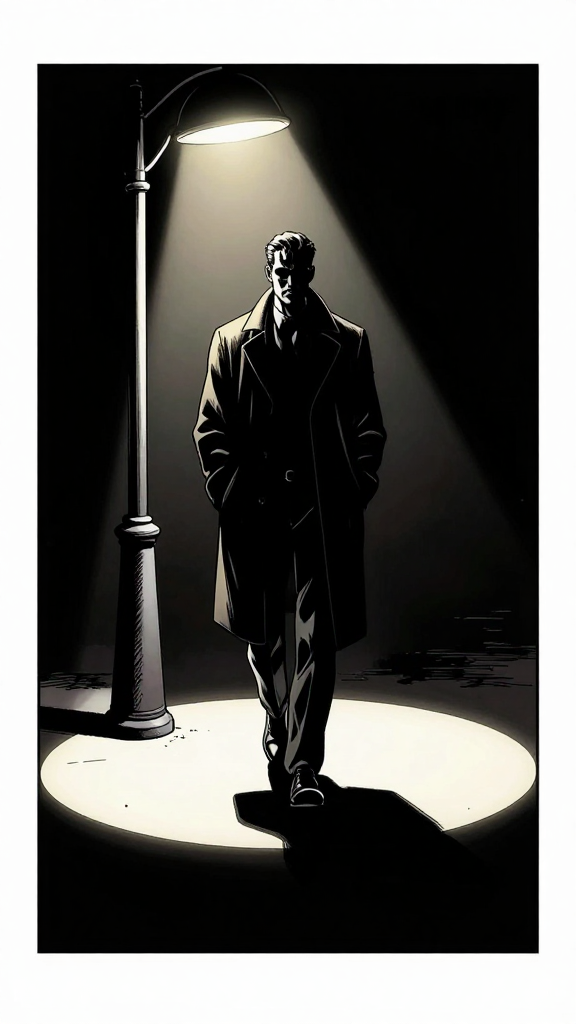
Figure in spotlight — street noir
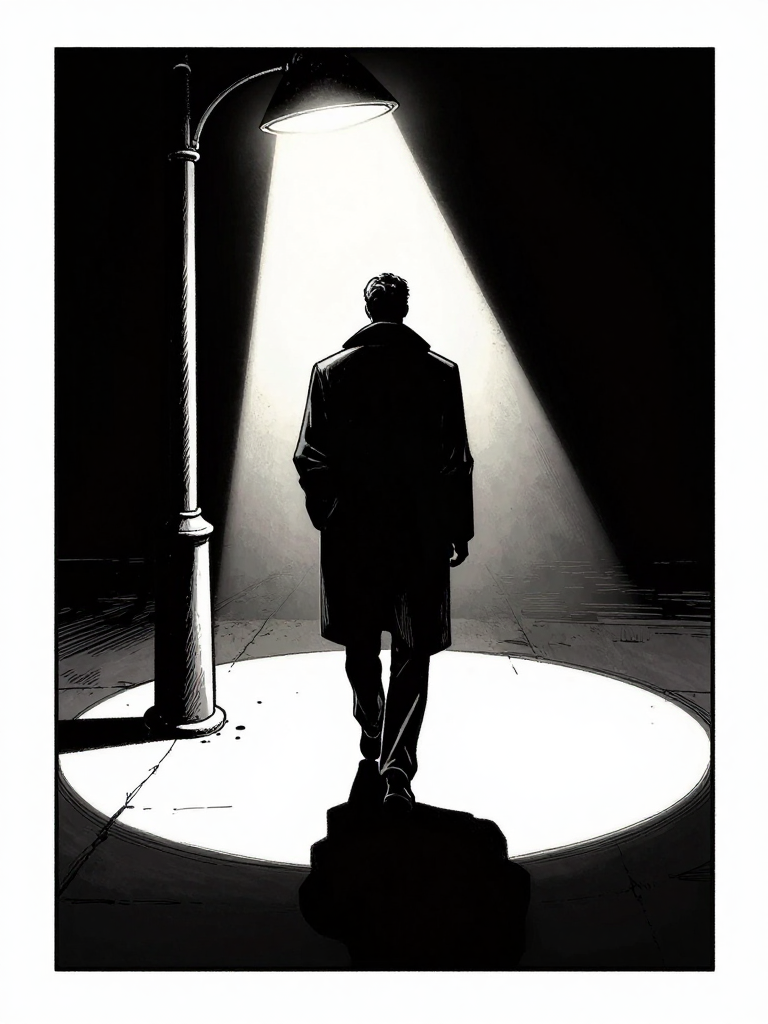
Figure in spotlight — noir photo
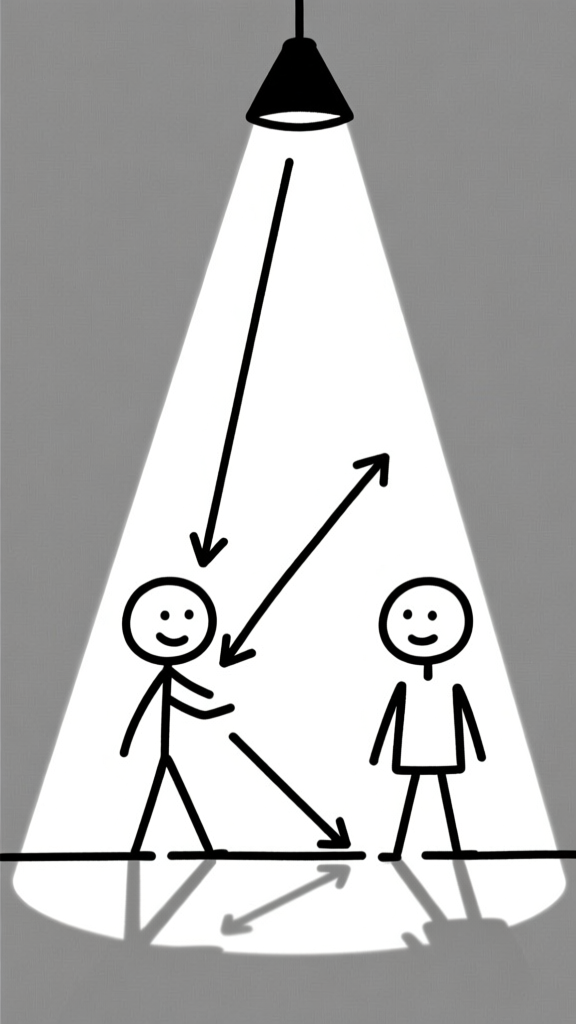
Spotlight diagram — stickfigures
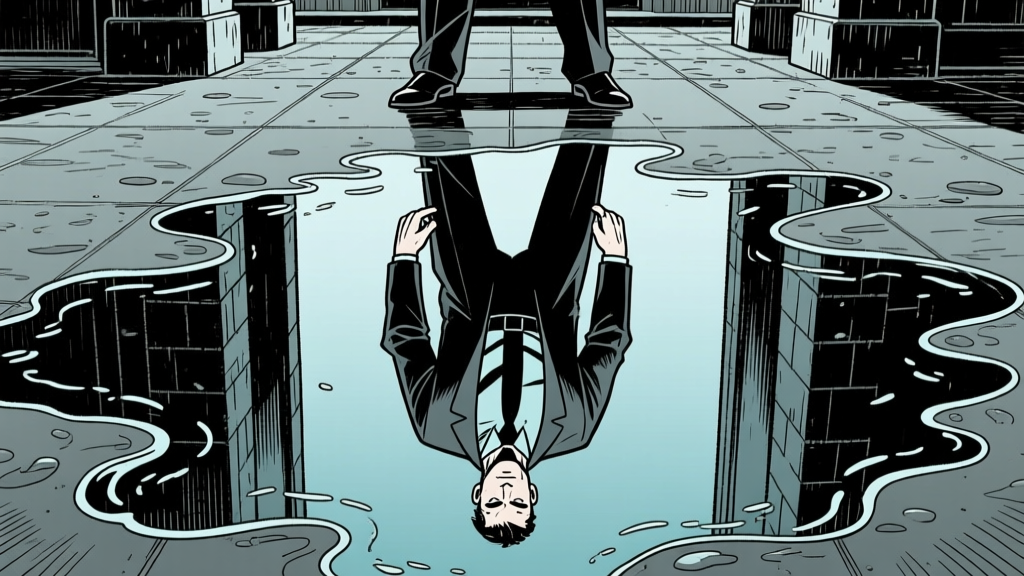
Figure reflected in puddle — noir
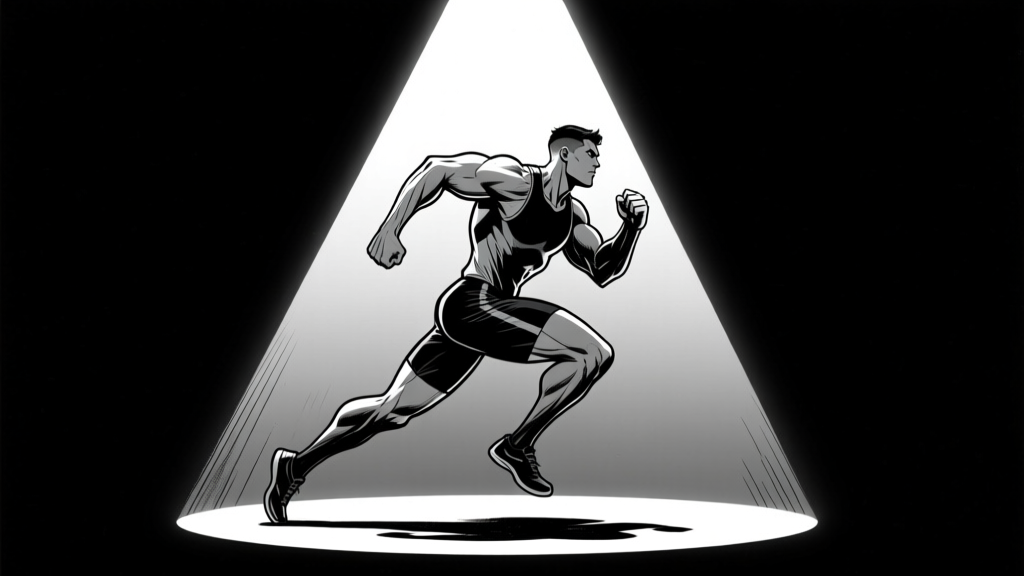
Figure in spotlight — triangle
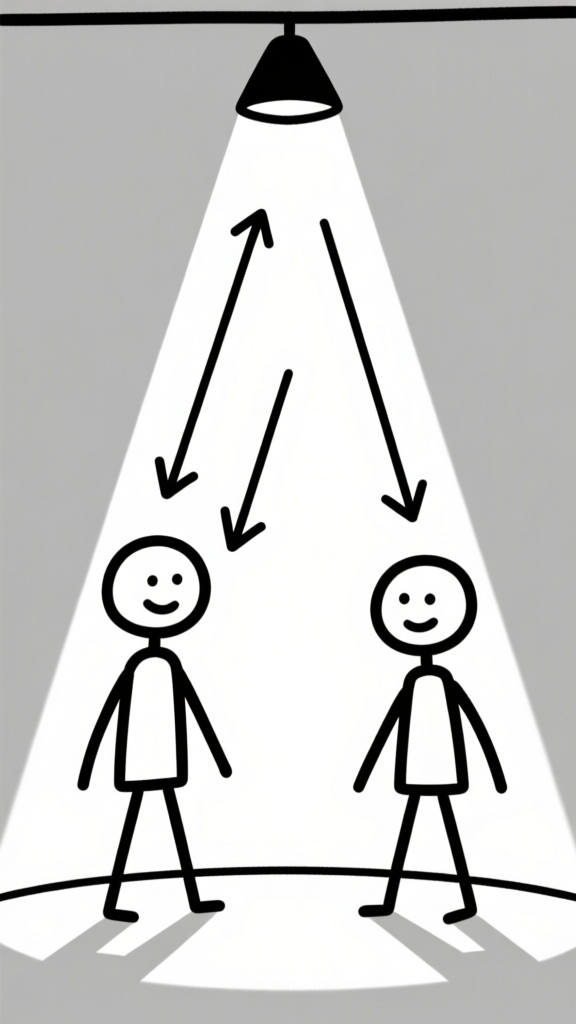
Spotlight diagram — stickfigures 2
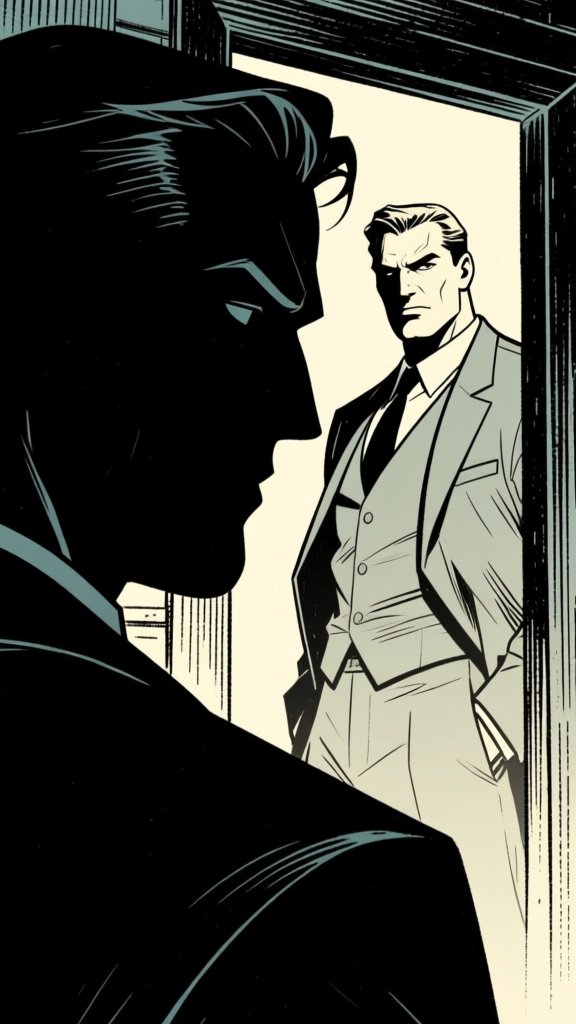
Figure in doorway — noir light
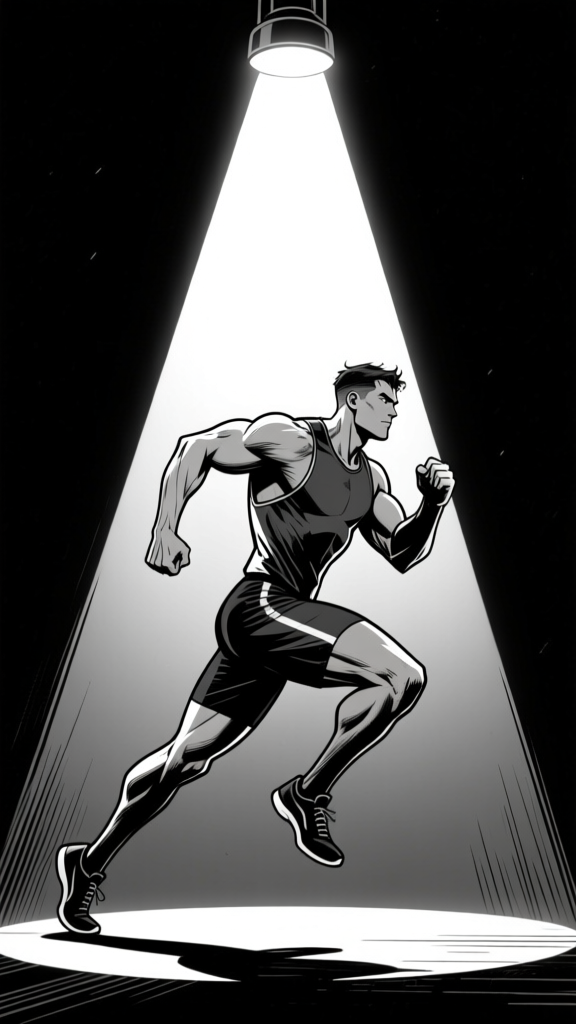
Figure running — spotlight colored
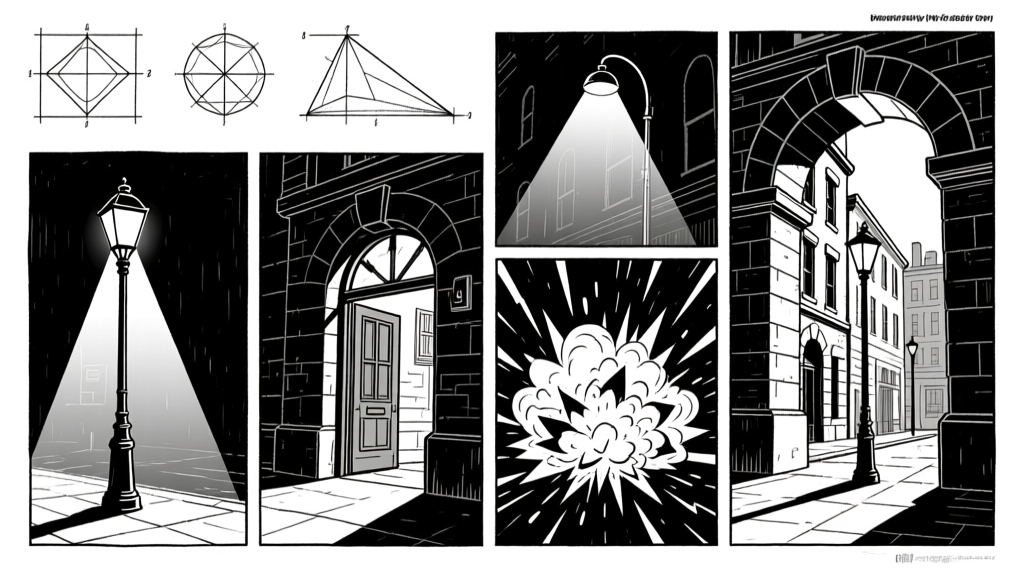
Lighting diagrams — architectural
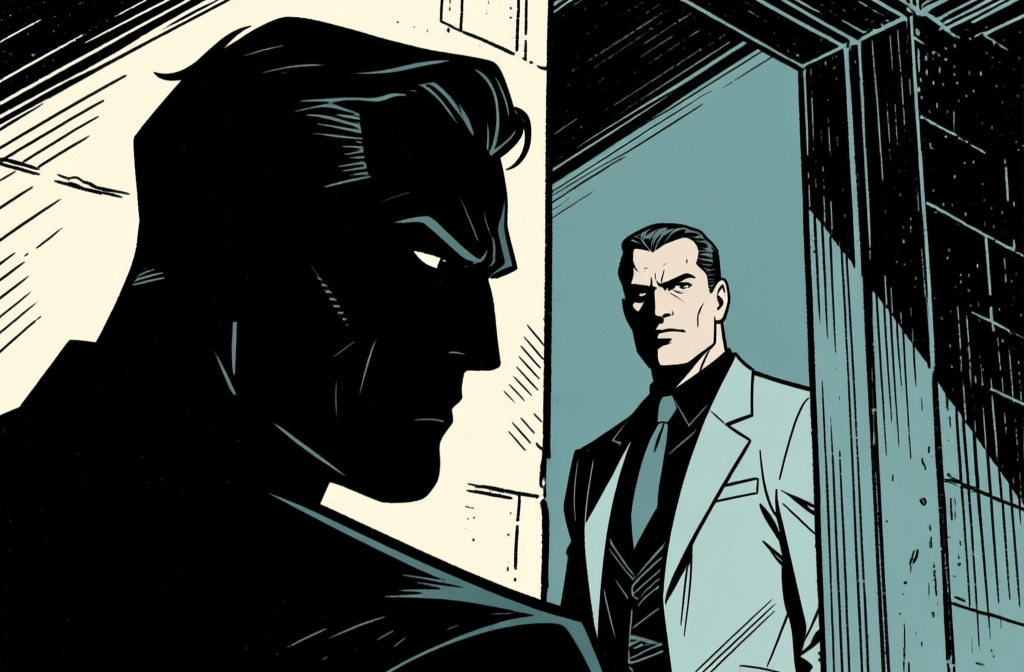
Two figures — noir scene
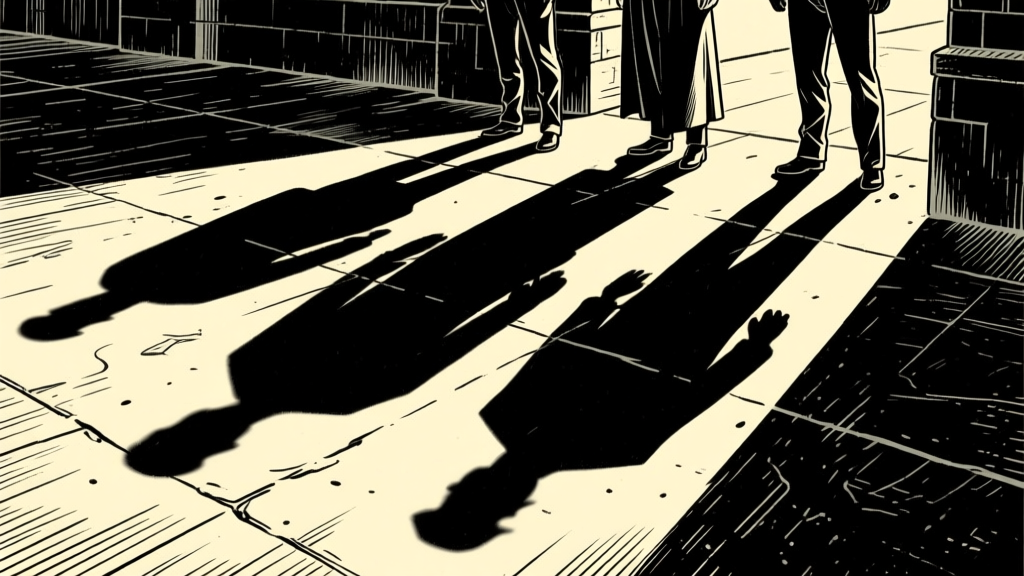
Shadow silhouettes — ground
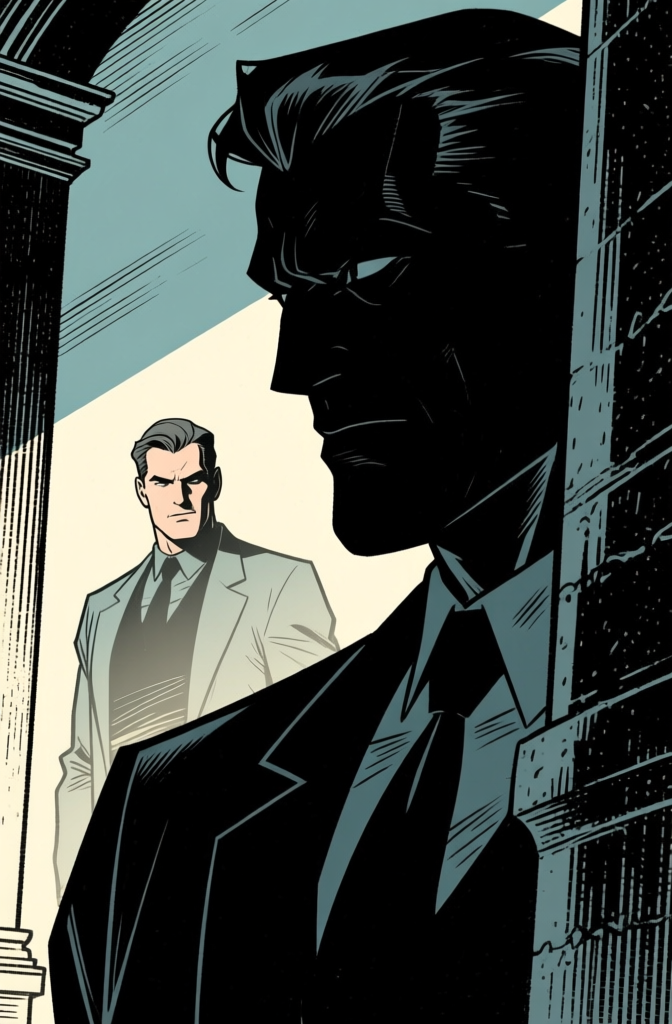
Two figures — noir scene
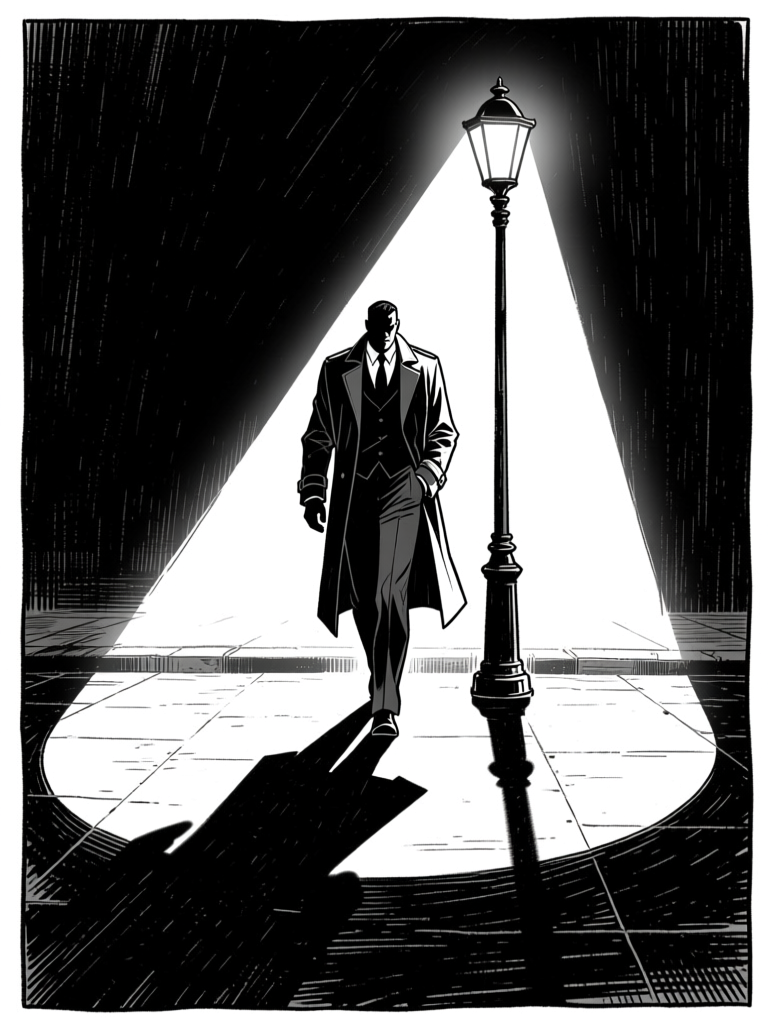
Figure in spotlight — street noir
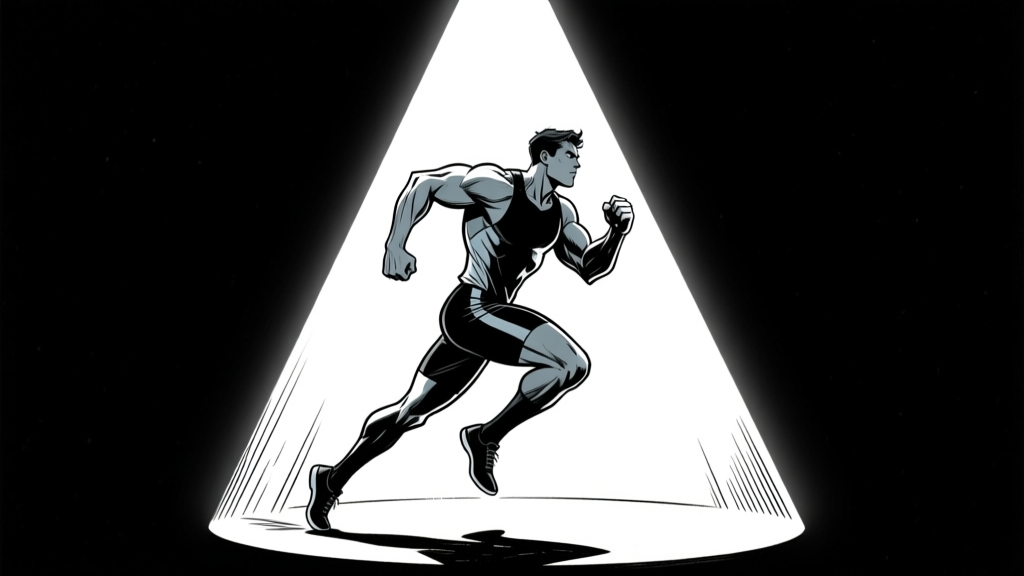
Figure running — spotlight
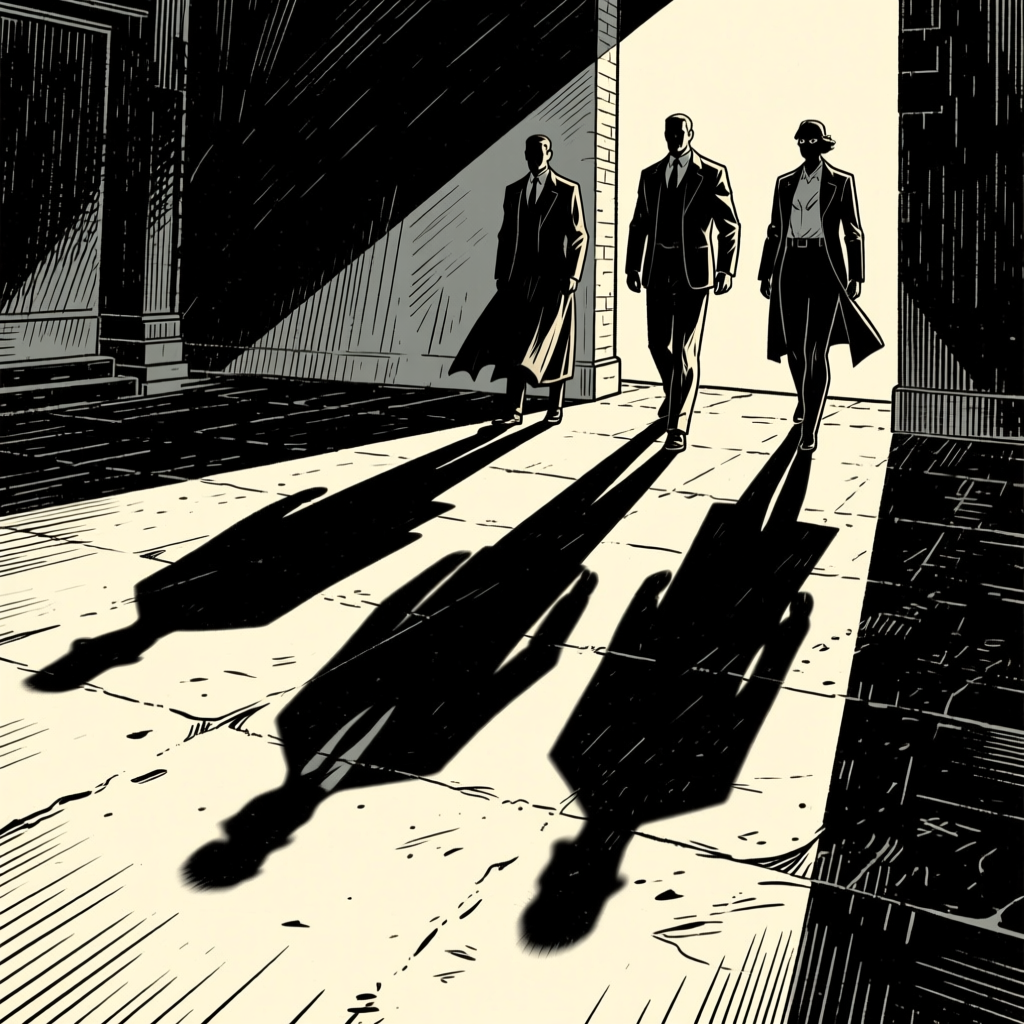
Three figures — shadow noir
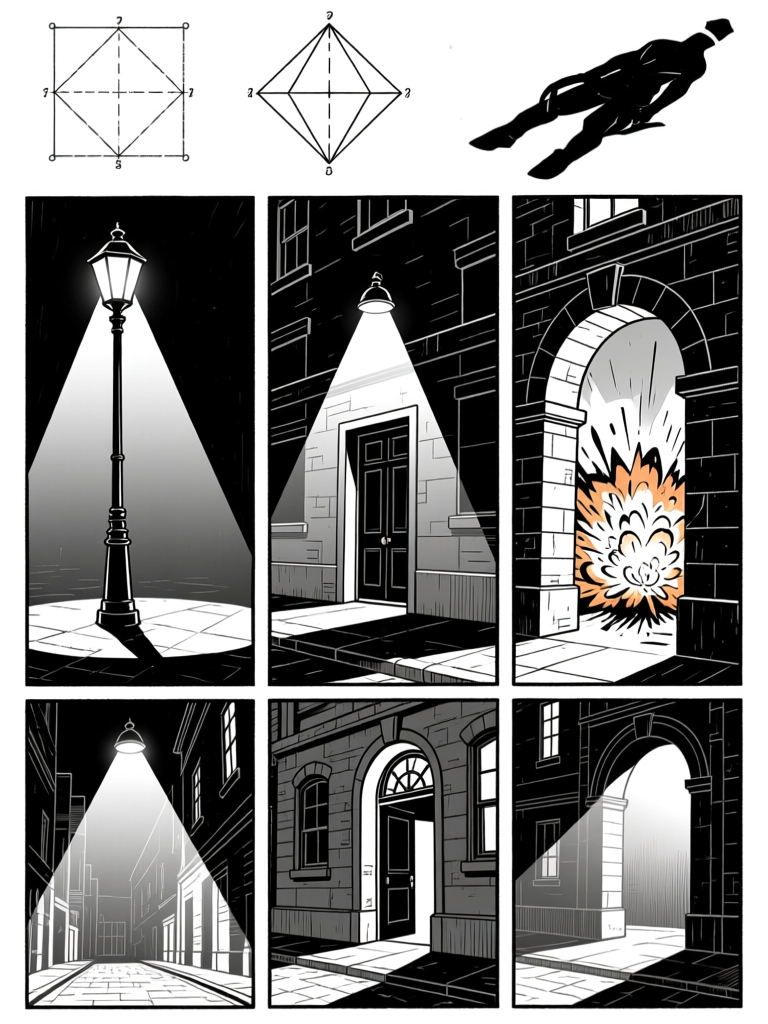
Lighting diagrams — architectural series
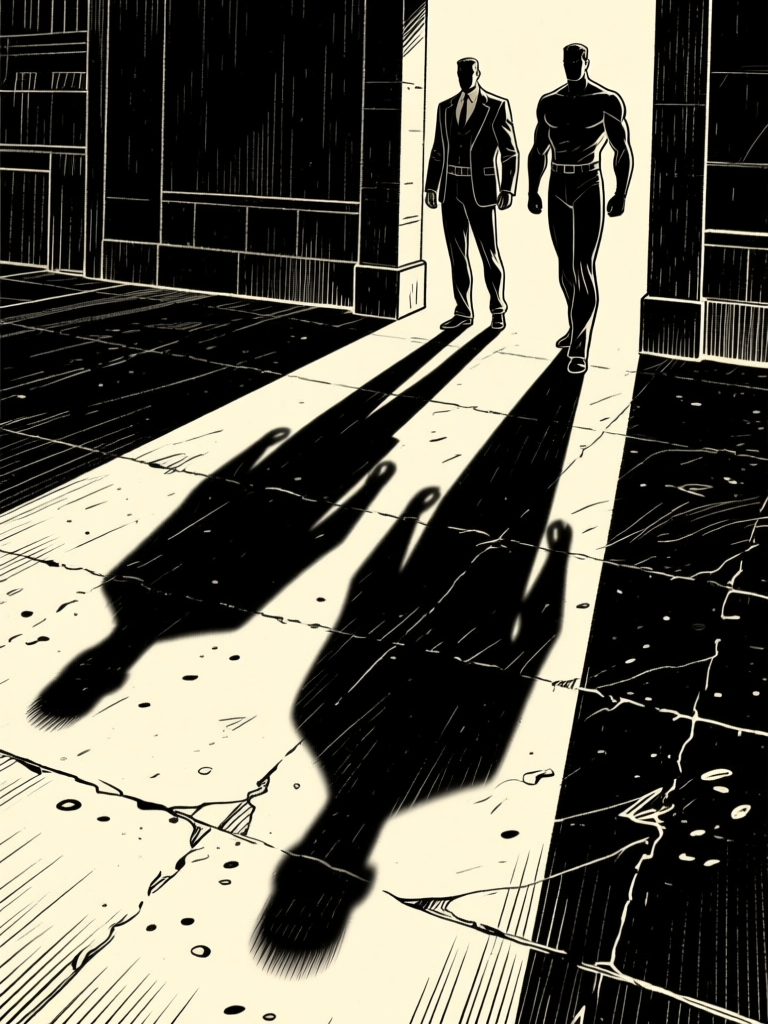
Two figures — street noir