KEY CONCEPTS
- The pelvis is the central anchor of the lower figure
- Shaped like an open bowl or the number 3 from the front
- Iliac crest (top of hip bone) = the visible hip curve in life drawing
- Pelvic tilt forward or backward directly affects posture and weight
- The pelvis bridges the spine above and the leg bones below
- Hip sockets sit at the lower outer corners of the pelvis — where the legs attach
Draw a 3. Now look at the two open curves — these are the two sides of the pelvis as seen from the front. The spine of the 3 is where the pubic symphysis sits at the center. The two curves reach out to either side like parentheses. Enclose the open ends with a baseline connecting them and you have the front view of the pelvis.
Pelvic tilt dramatically affects posture. A forward-tilted pelvis pushes the lower back into a pronounced curve (lordosis) and makes the belly protrude slightly. A backward-tilted pelvis flattens the lower back and pushes the hips forward. Understanding tilt allows you to draw convincing weight shifts and dynamic poses — it is one of the most important concepts in figure drawing.
VOCABULARY
- Iliac Crest — The curved upper edge of the hip bone — the visible "hip" in life
- Sacrum — The triangular bone at the base of the spine that fuses into the pelvis
- Pelvic Tilt — The forward or backward rotation of the pelvis around the hip sockets
- Hip Socket — The cup-shaped joint where the femur (thigh bone) connects to the pelvis
TRY THIS — 10 MINUTESDraw a 3 in large scale. Enclose the open ends with a baseline. You have the front view. Now draw the same shape from the side — it reads as a narrow wedge or D-shape. Then draw the three-quarter view — a slightly angled box. Practice all three orientations until each one comes naturally from memory.
REFERENCE GALLERY
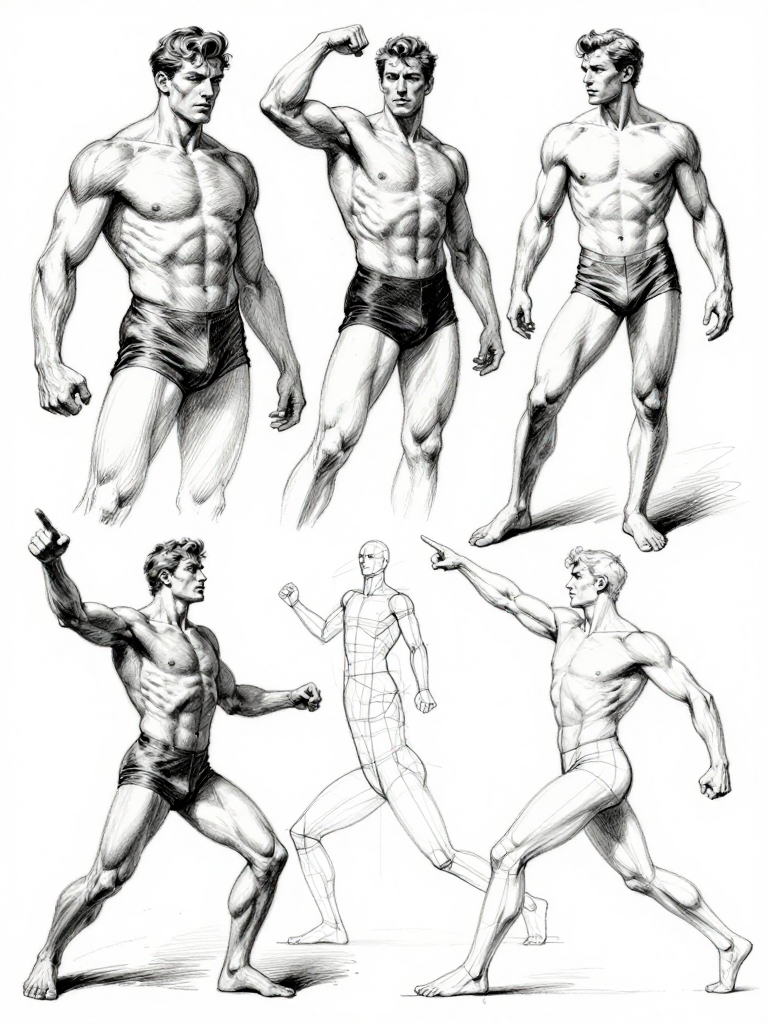
Multiple figure studies with pelvis visible
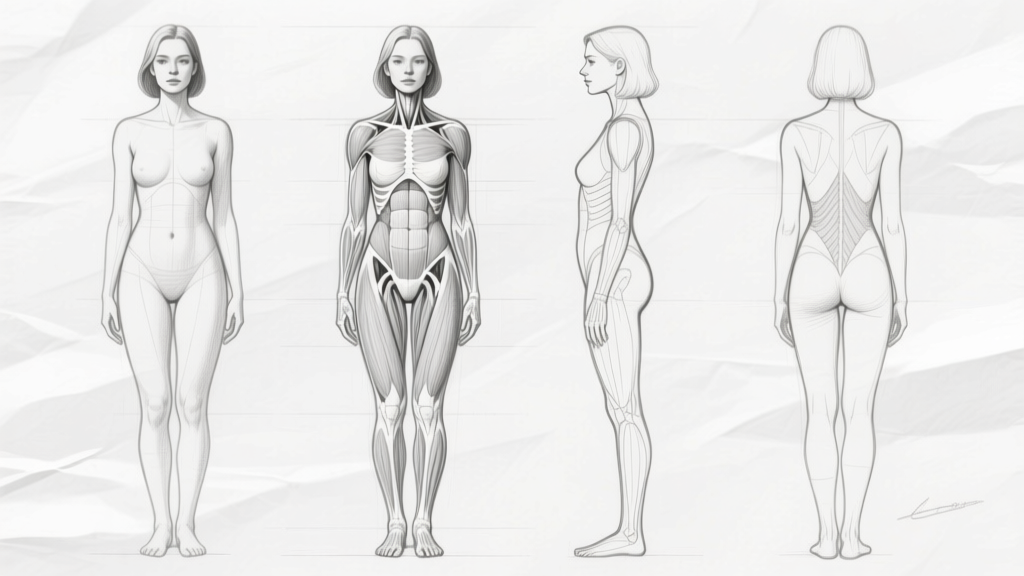
Female figure proportions — hip/waist ratio
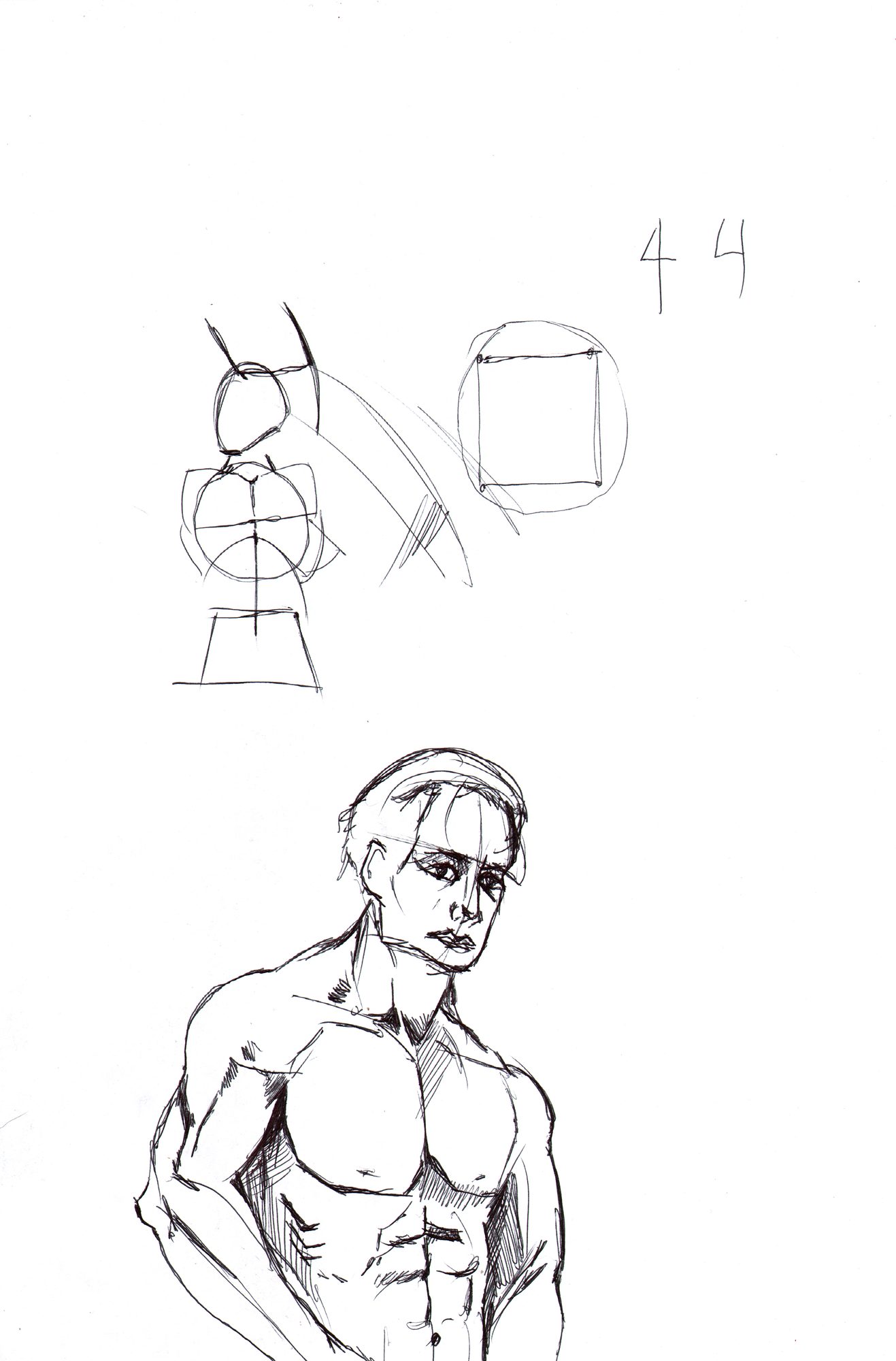
Life drawing — pelvis/hip reference
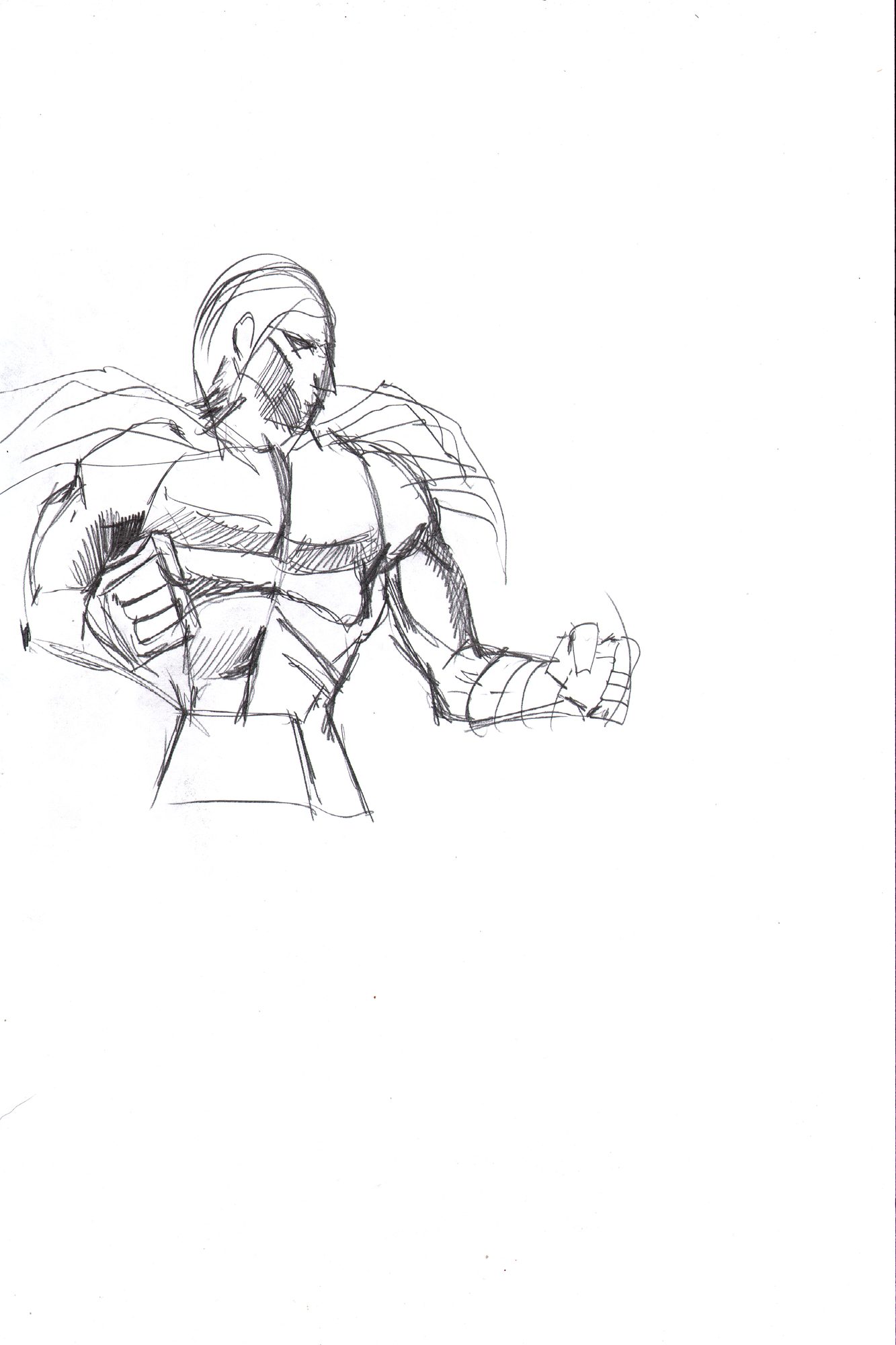
Life drawing — pelvis at angle