KEY CONCEPTS
- Horizon line = the viewer's eye level — always horizontal
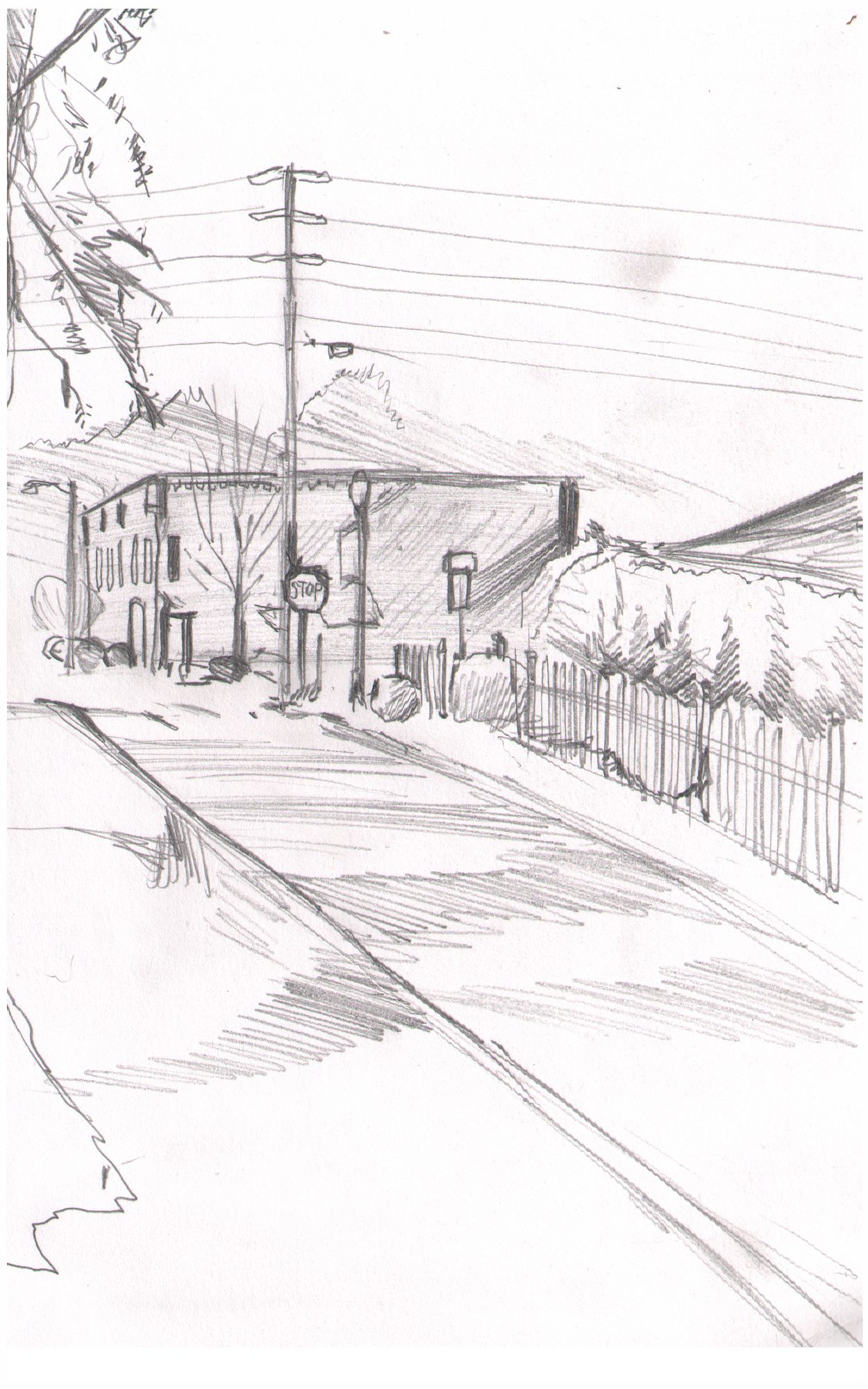
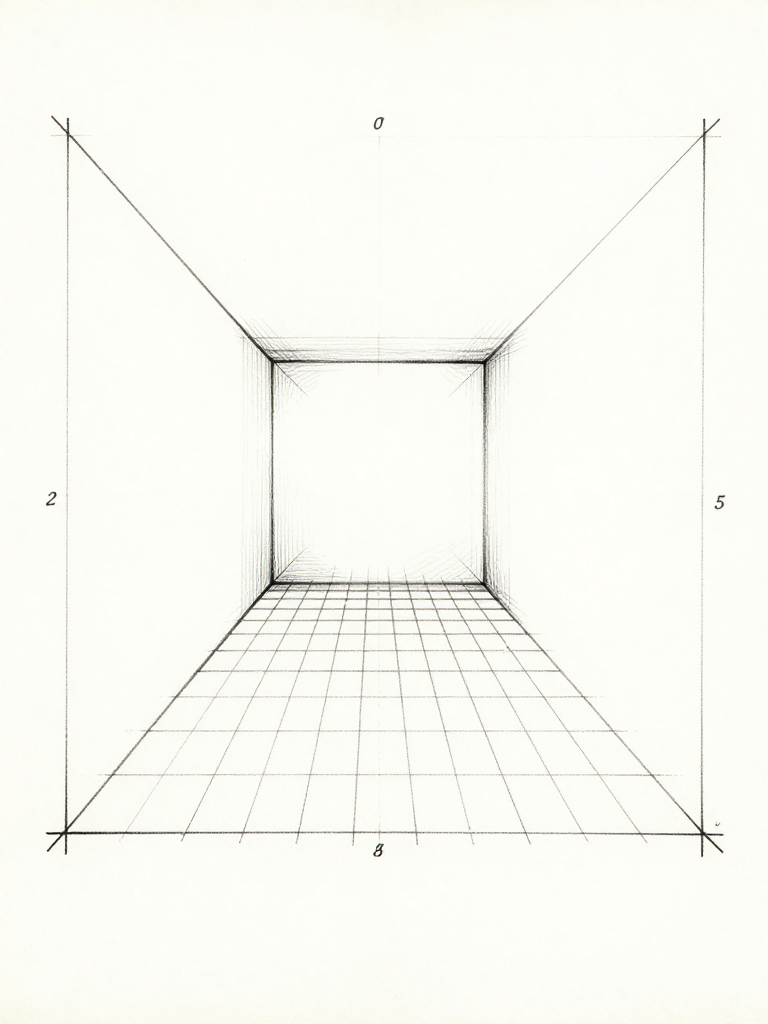
- All parallel lines converge at the vanishing point (one-point perspective)
- The belt buckle dot can serve as the vanishing point for centered compositions
- Worm's eye view (looking up at subject) = subject appears powerful and dominant
- Bird's eye view (looking down at subject) = subject appears small or vulnerable
- Foreshortening: forms pointing at the viewer appear dramatically compressed
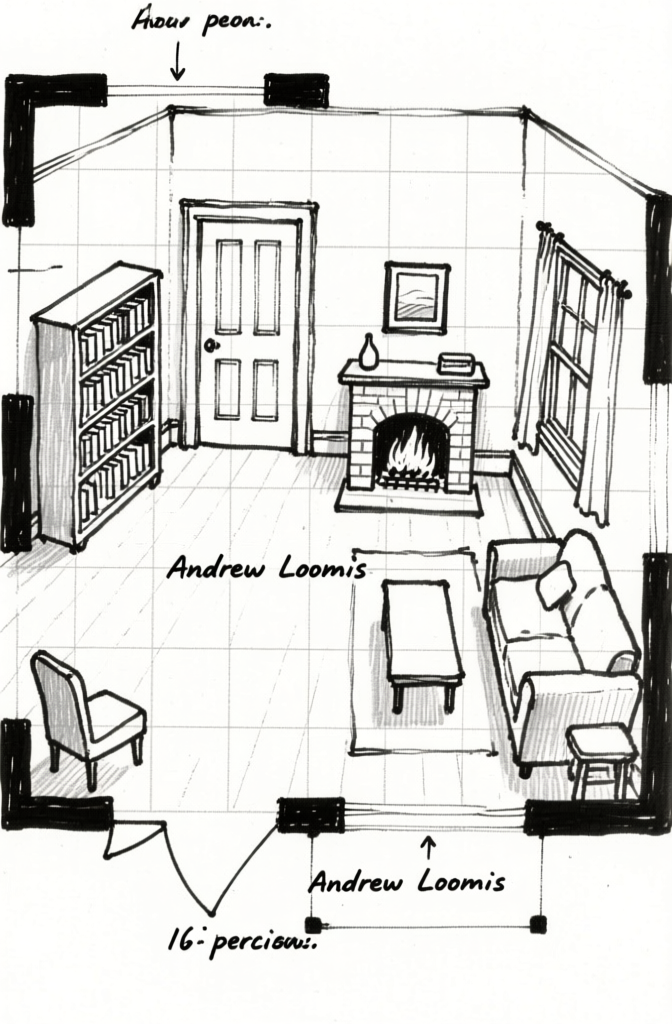
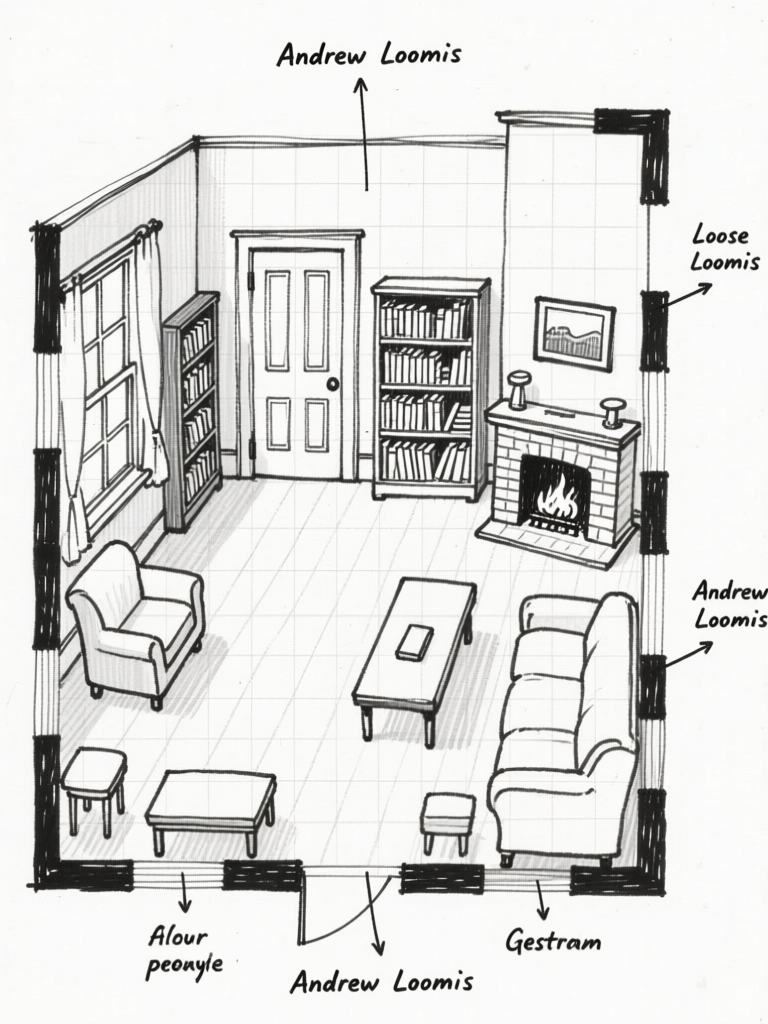
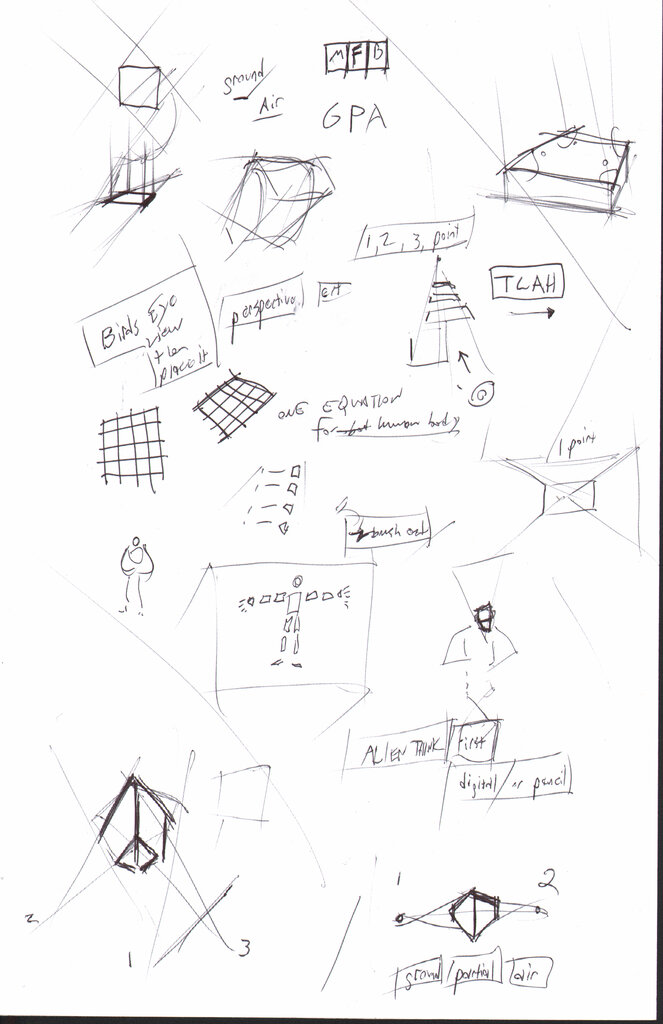
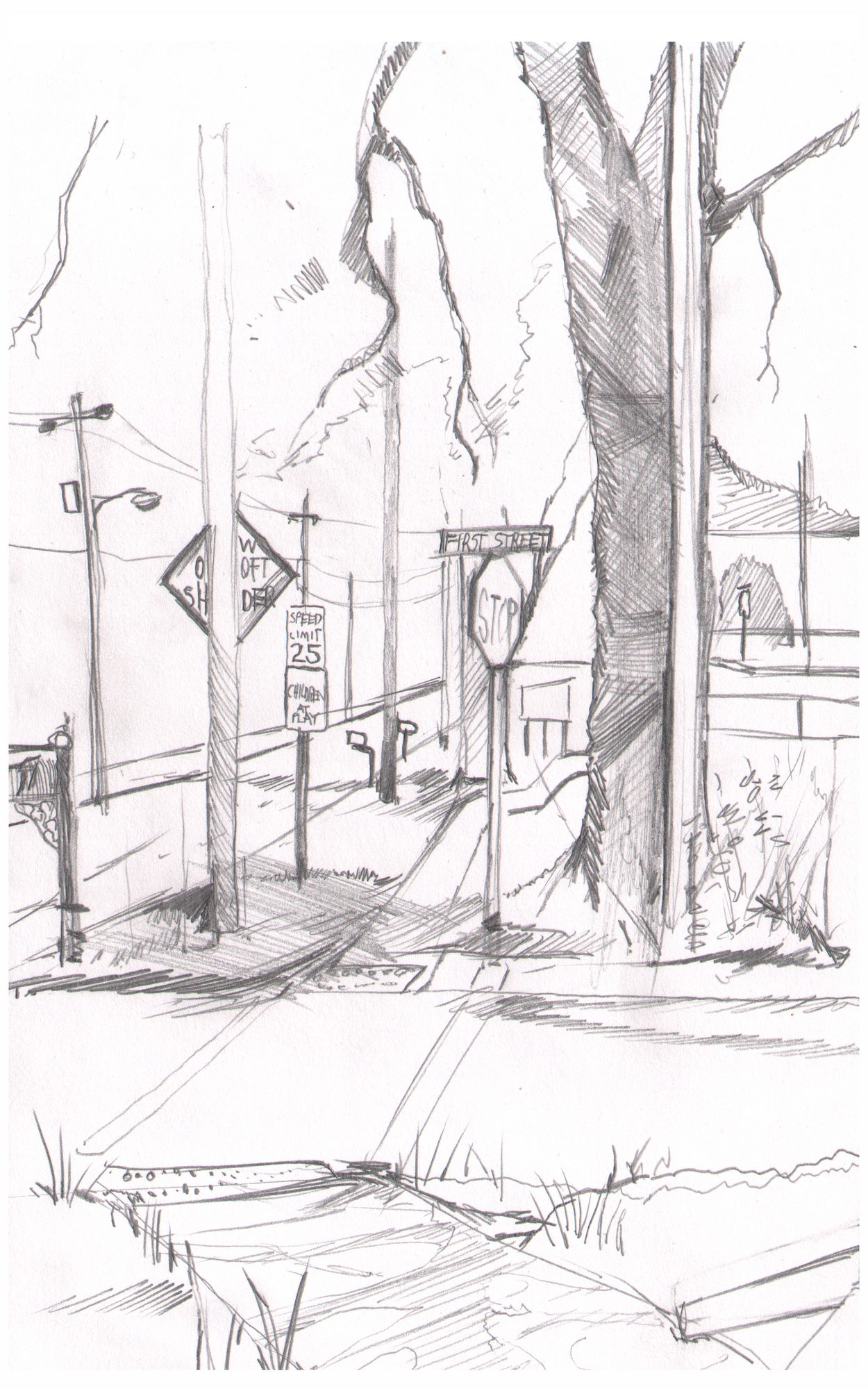
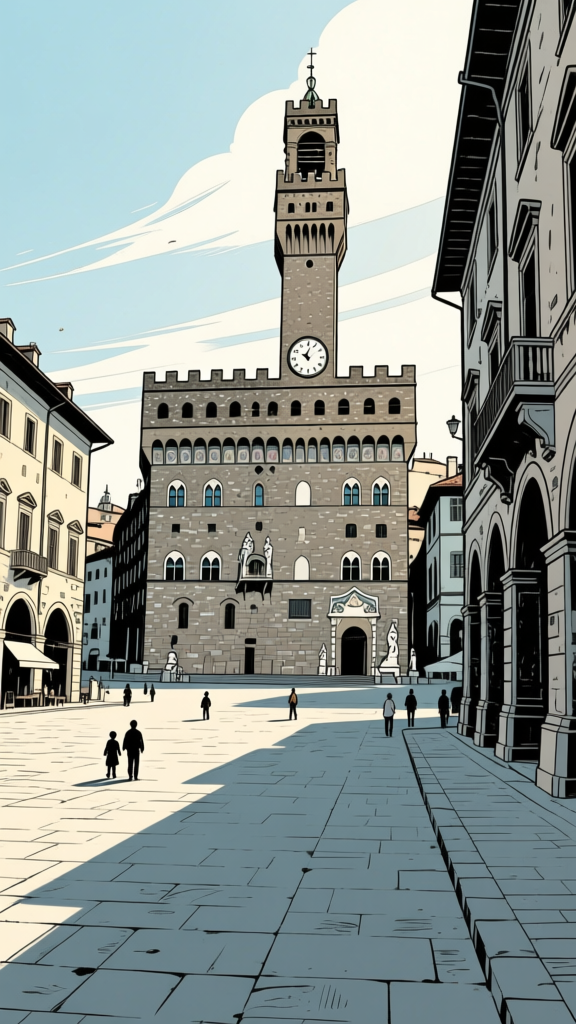
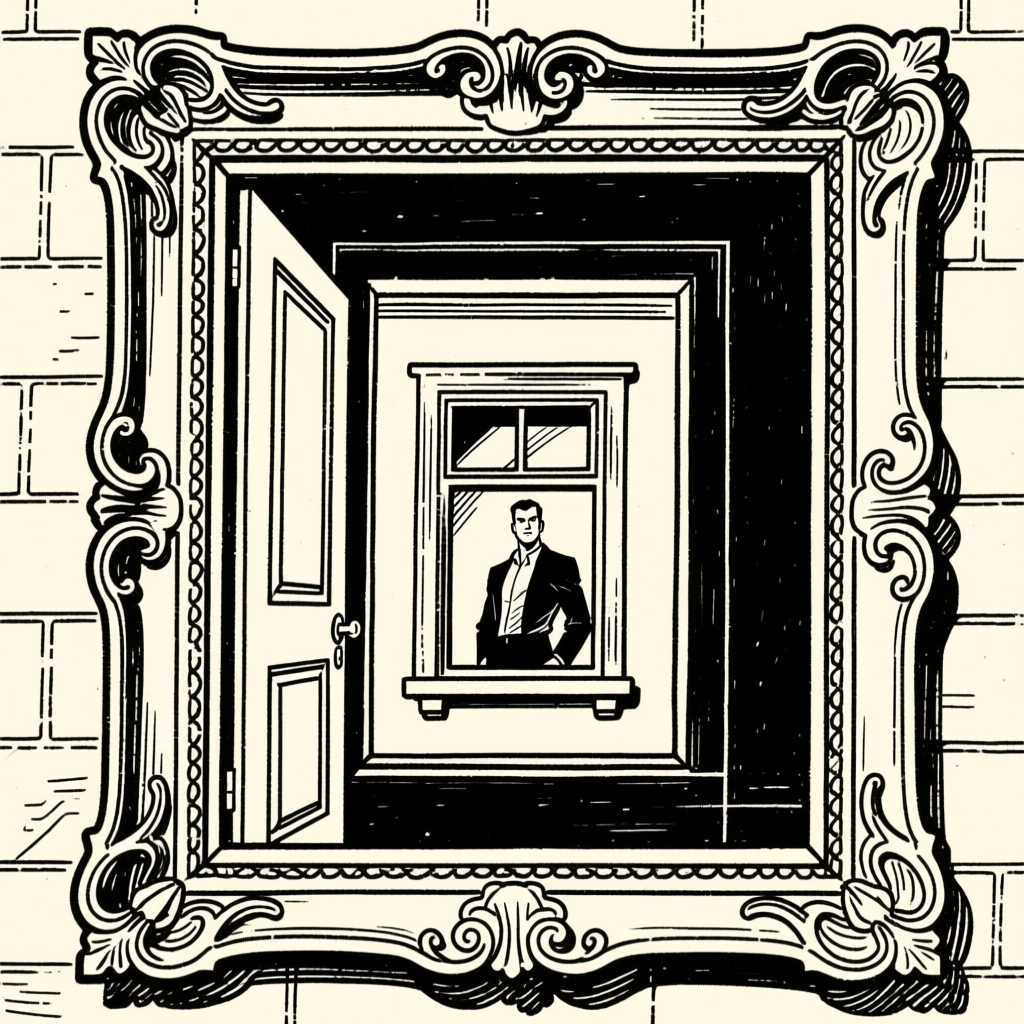
Draw a horizontal line across your page — the horizon. Place a dot on it: the vanishing point. Draw several lines radiating from that dot like sun rays. Every surface that is parallel to the ground follows these lines. Now draw two vertical lines at different distances — the near one is taller, the far one is shorter. Connect their tops and bottoms back to the vanishing point. You have drawn a three-dimensional box in one-point perspective.
Your figure stands inside a space exactly like this. The floor of that space is the ground plane. The belt buckle — the center point of the figure — sits on that ground plane. In heroic and superhero art, the worm's eye view is used constantly — we look up at the figure, making them appear massive, powerful, and dominant. The reverse (bird's eye, looking down) makes figures appear small, vulnerable, or surveyed.
VOCABULARY
- Horizon Line — Horizontal line at the viewer's eye level
- Vanishing Point — Where all parallel lines converge in one-point perspective
- Foreshortening — Visual compression of a form angled toward the viewer
- Ground Plane — The implied floor surface on which the figure stands
- Eye Level — The height of the viewer's eyes, which determines all perspective relationships
REFERENCE GALLERY