KEY CONCEPTS
- The 2 traces the outer leg contour: quad bulge, knee loop, calf flare below
- Two 2s facing inward at the groin = both legs in a standing figure
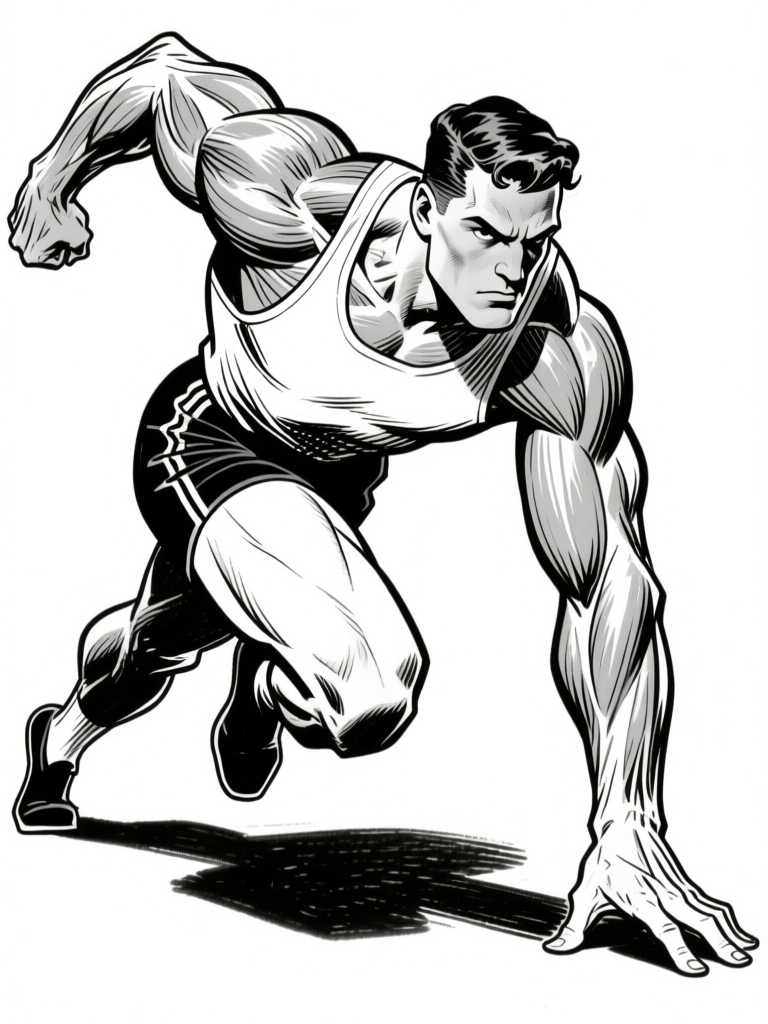
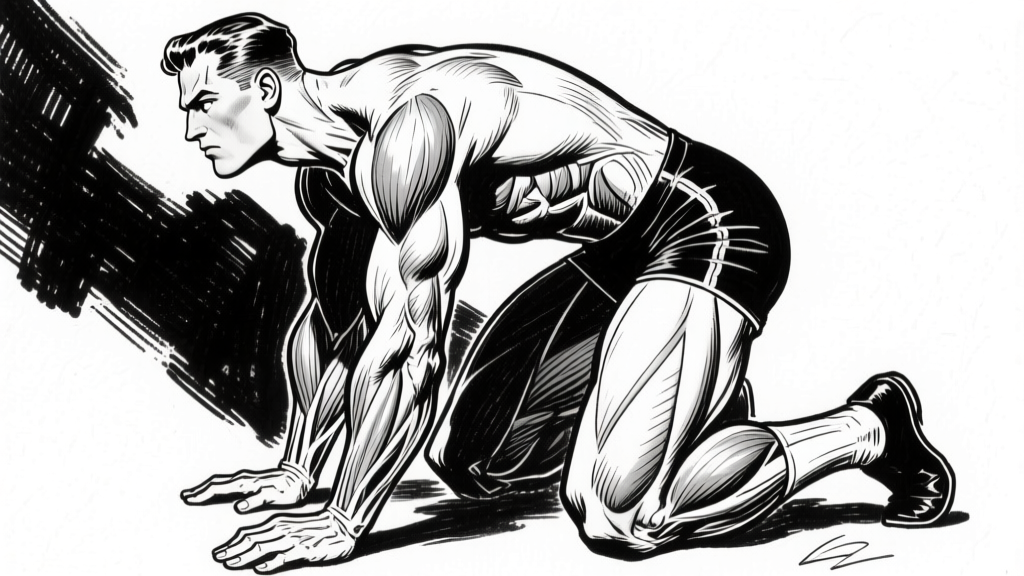
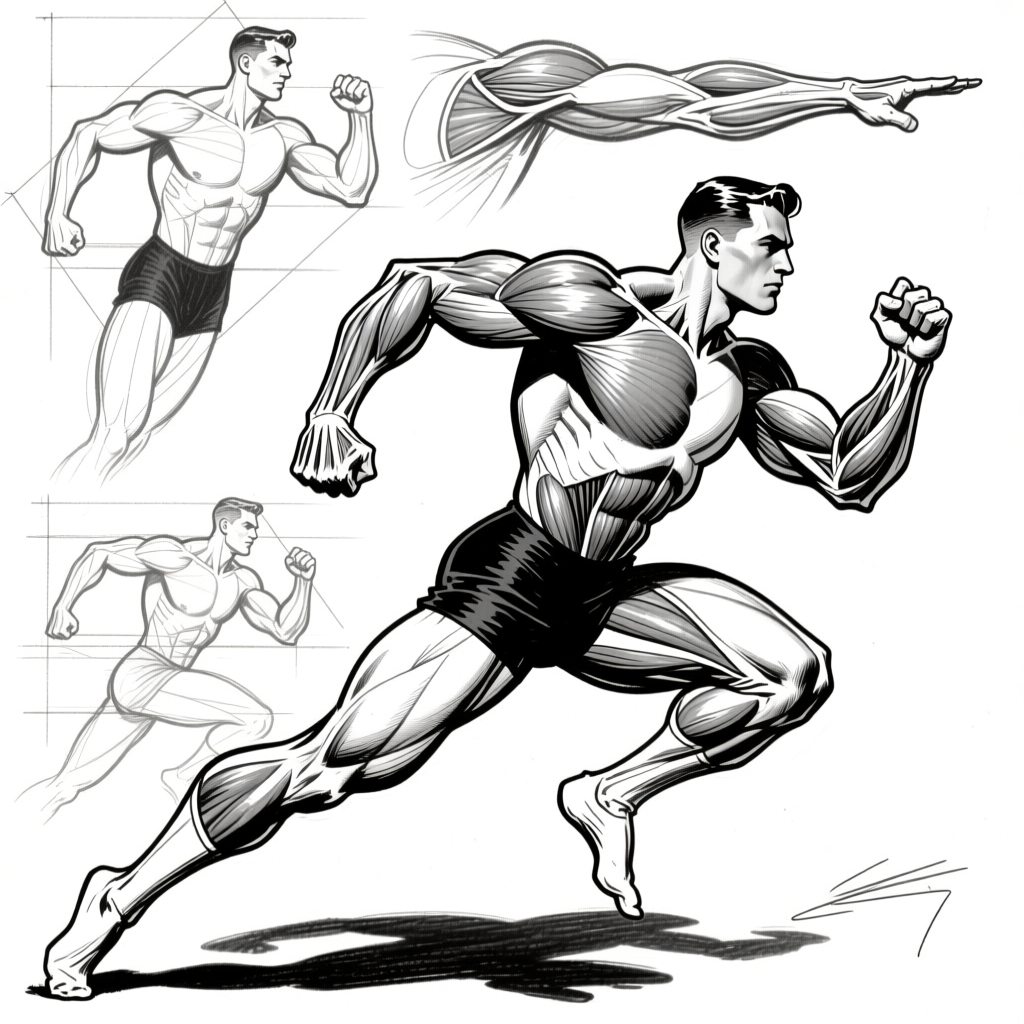
- Quadriceps: four muscles of the front thigh — the body's largest muscle group
- Calf (gastrocnemius): the distinctive double-head shape
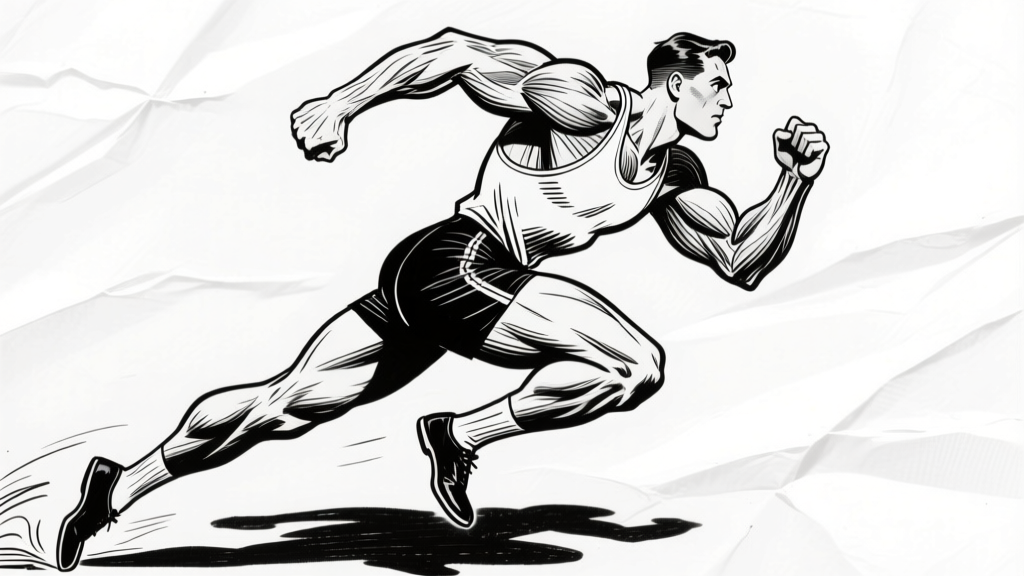
- For heroic figures: legs drawn longer, quads exaggerated in width
- The knee is the hard bony pivot — not a soft form
Write a large cursive 2 on your page. The top sweep is the upper thigh and quad. The loop is the knee. The downward stroke is the shin. The outward flare at the bottom is the calf muscle. This is the template for the entire outer leg contour — memorize this feeling in your hand.
The quadriceps are four muscles on the front of the thigh — they are the largest muscle group in the entire body. They bulk out the front and outer thigh above the knee. Below the knee on the front is the shin bone (tibia) — there is almost no muscle here, which is why the shin reads as angular and hard compared to the soft quad mass above.
The calf is a spectacular form. It consists of two muscles — the gastrocnemius (the visible double-bulge calf) and the soleus beneath it. The gastrocnemius creates the high, round calf mound with distinctive inner and outer head shapes that give the leg its character from behind. For heroic figures, the calf is drawn higher and rounder than in real life.
REFERENCE GALLERY