KEY CONCEPTS
- Quadriceps: four muscles of the front thigh — the body's largest muscle group
- Hamstrings: three rear thigh muscles — only visible from behind or in profile
- Gastrocnemius: the double-head calf — the most expressive lower leg form
- The knee is bony and angular — the patella (kneecap) has a hard, specific shape
- The shin bone (tibia) is almost entirely subcutaneous — angular and hard
- The IT band creates the outer quad sweep on the side of the thigh
Think of the leg as three zones: the quad zone (front thigh, from hip to knee), the knee zone (hard, angular, with visible patella), and the calf zone (soft muscle mound on the lower back of the leg, hard shin on the front). Each zone has a very different texture — soft, hard, soft — which creates visual rhythm as the eye travels down the leg.
For heroic figures, the quad mass is exaggerated: wider, more swept outward, creating a teardrop shape on the outer thigh. The calf is exaggerated higher (the muscle belly sits higher on the leg than in real life) and rounder. These exaggerations all serve the same purpose: communicating stored power and athletic capacity.
VOCABULARY
- Quadriceps — The four muscles of the front thigh; the body's largest muscle group
- Hamstrings — The three rear thigh muscles responsible for knee flexion
- Gastrocnemius — The large visible calf muscle with inner and outer heads
- Patella — The kneecap; a small circular bone at the front of the knee joint
- IT Band — The iliotibial band — a thick band of tissue running down the outer thigh
TRY THIS — 10 MINUTESDraw a standing leg in profile. Block in the three zones separately: quad zone (a wide, forward-bulging oval for the front thigh), knee zone (a hard angular shape), calf zone (a high round shape on the back, a flat-straight line on the shin front). Feel how dramatically different the three zones are in texture and shape.
REFERENCE GALLERY
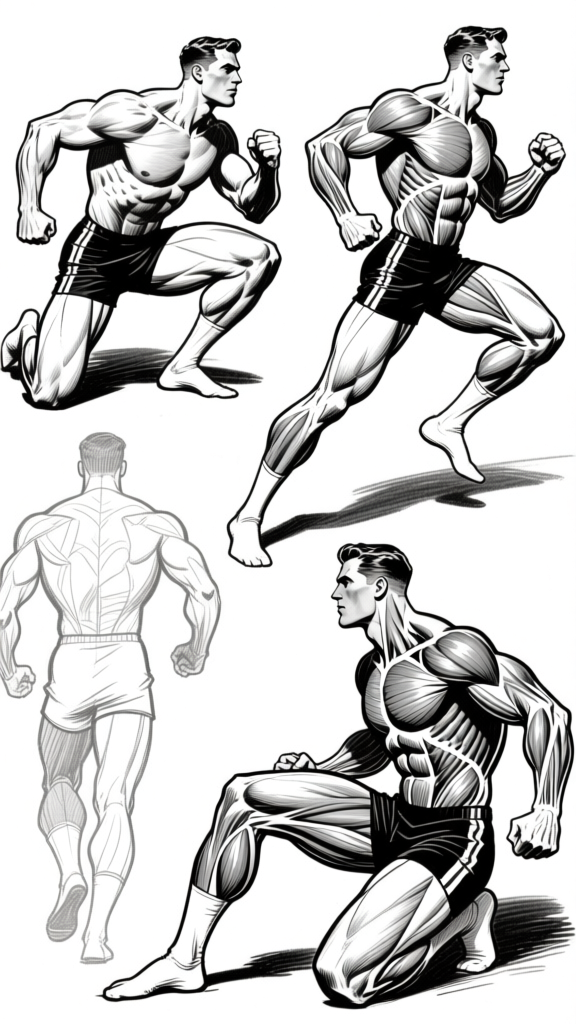
Multiple running poses — full leg work
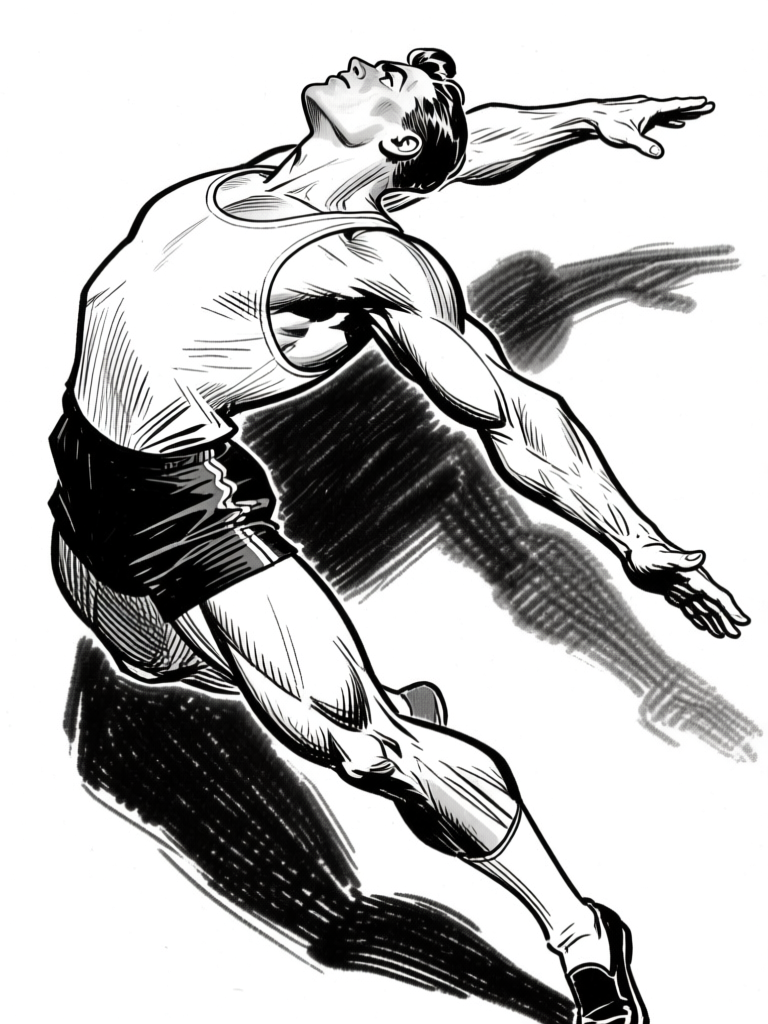
Leaping figure — legs extended in power
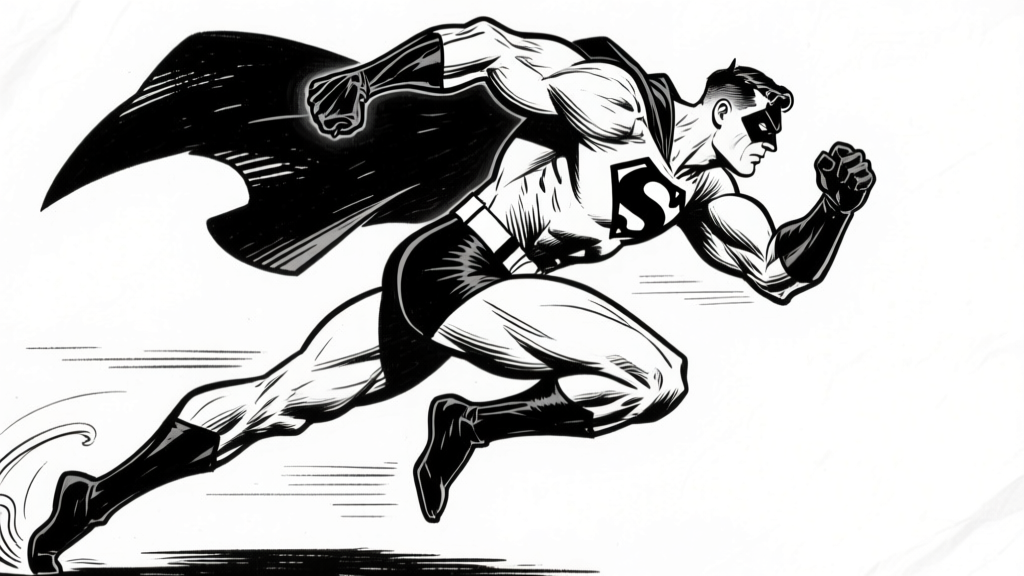
Flying figure — legs streamlined
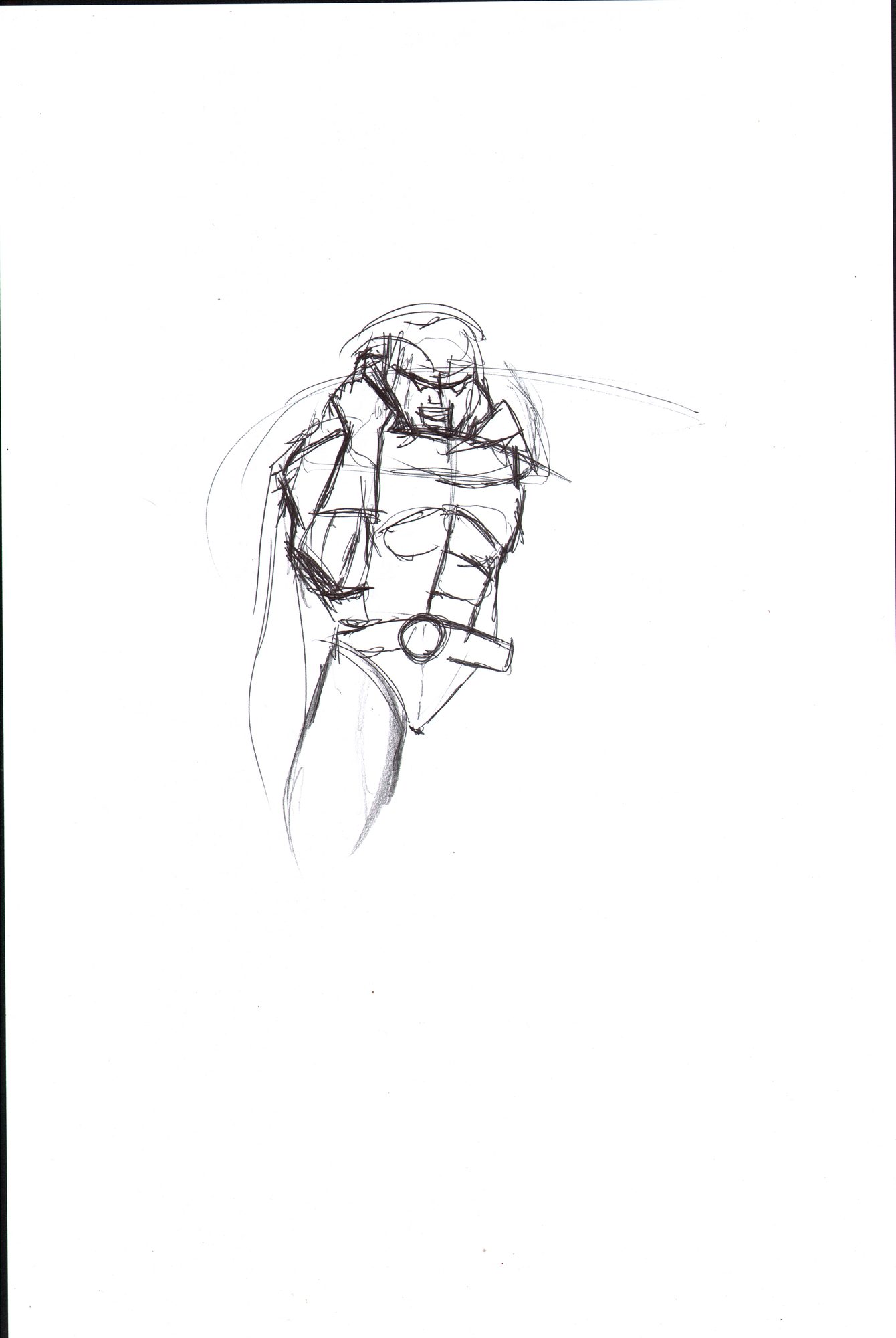
Life drawing — leg muscle study
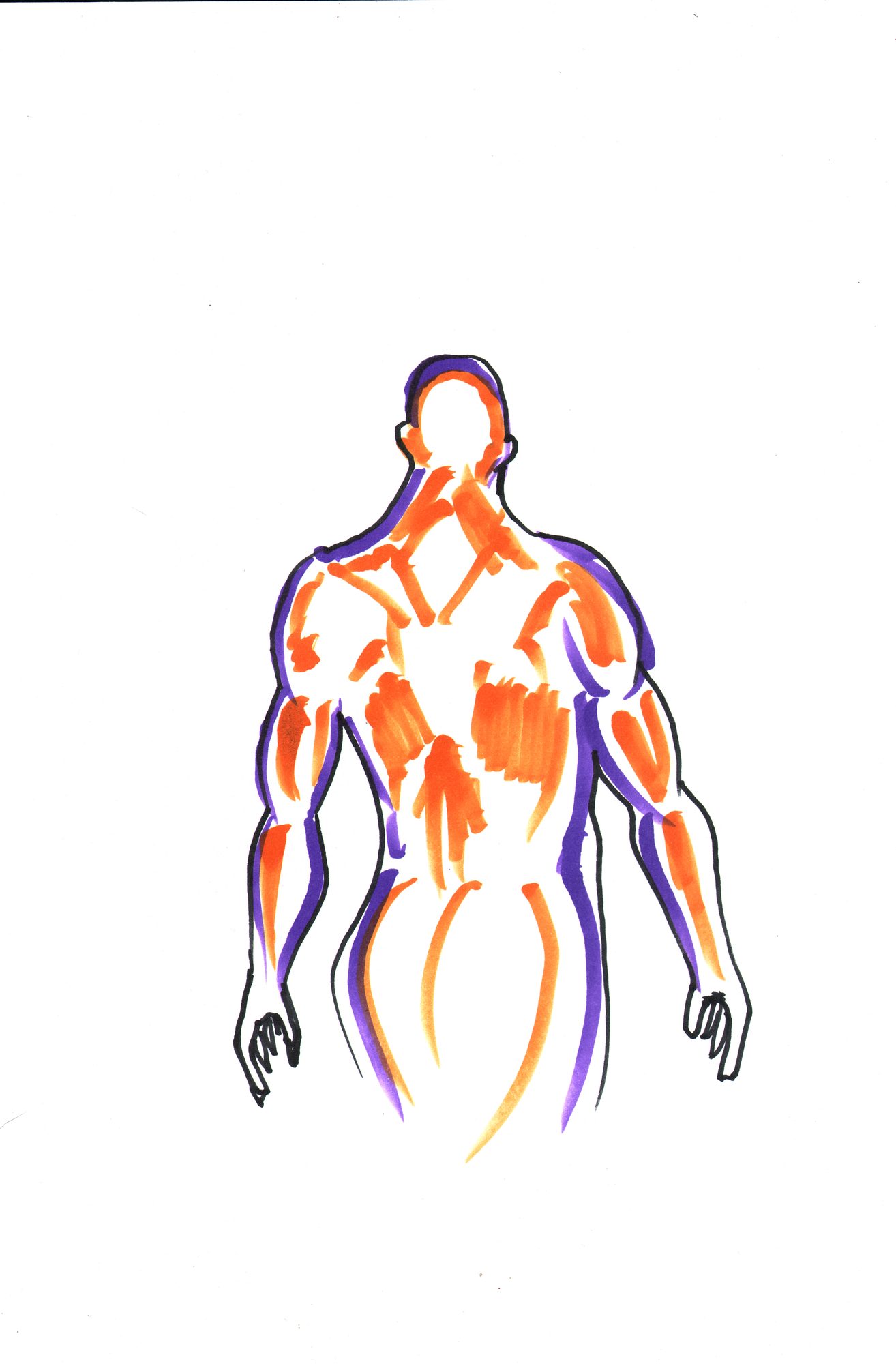
Life drawing — leg in motion
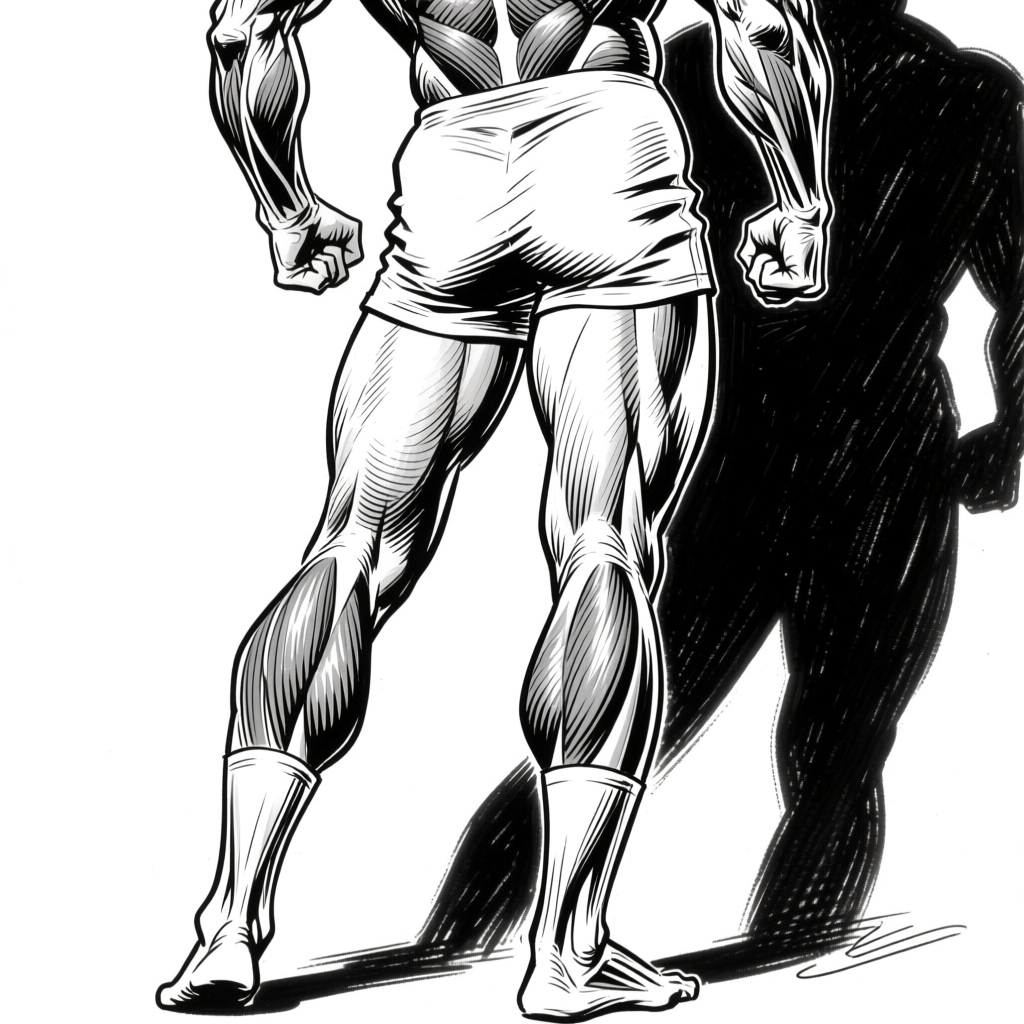
Leg muscles — standing study
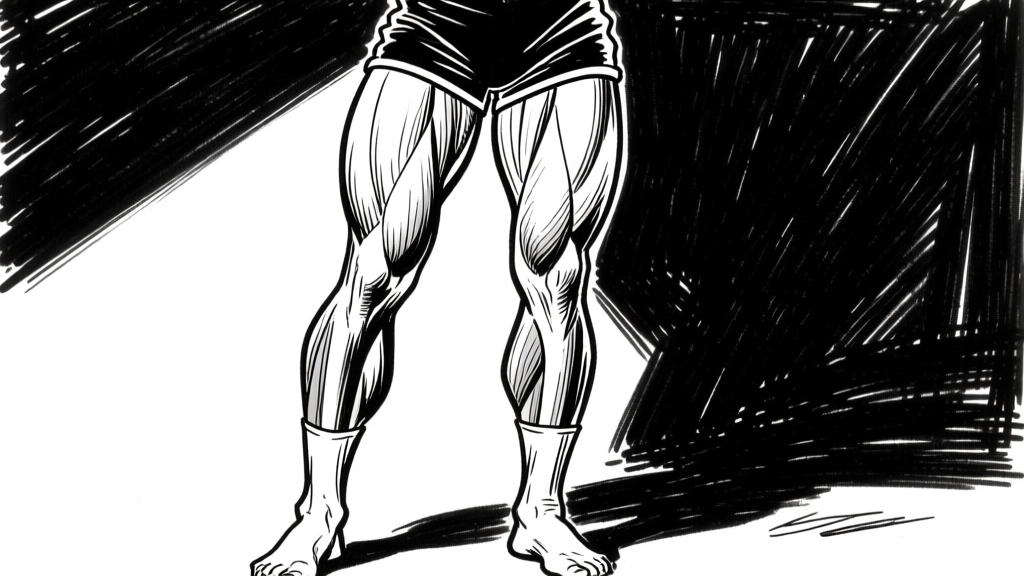
Leg muscles — ink study
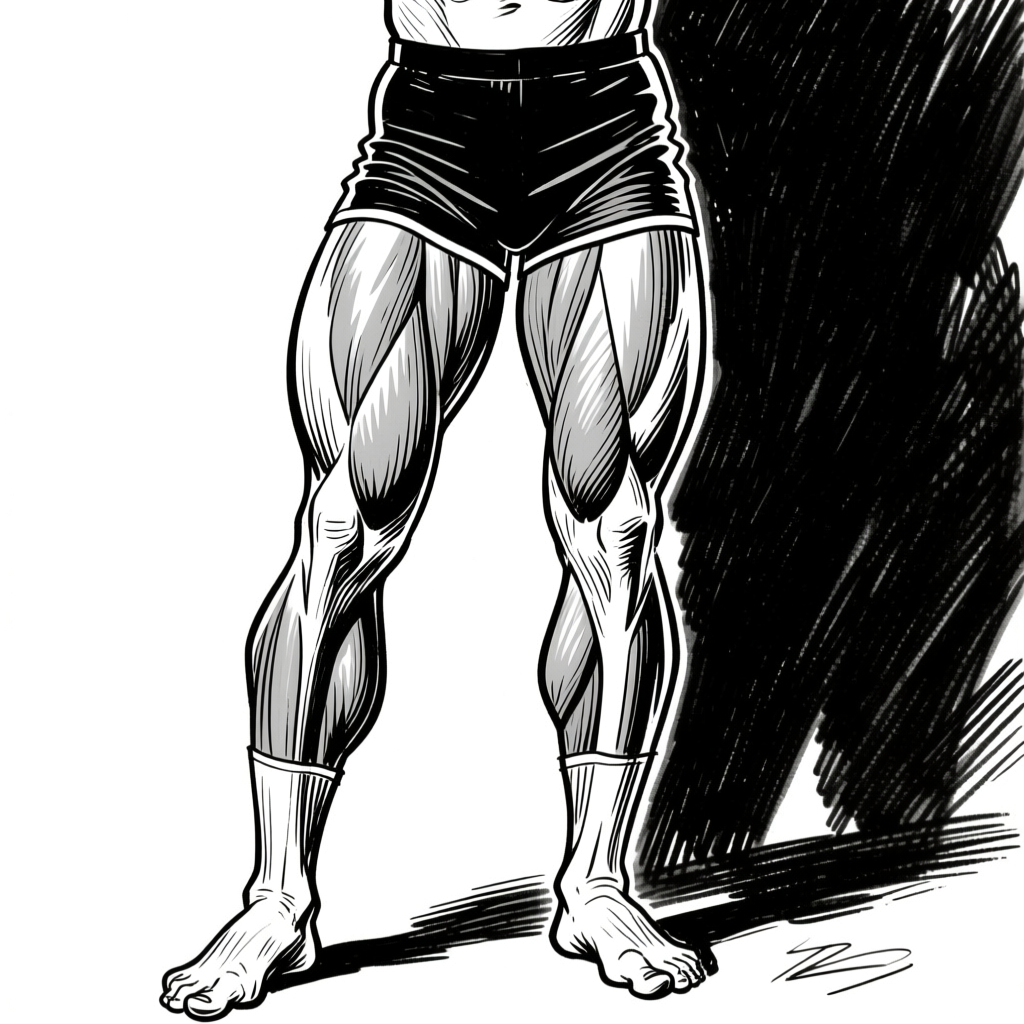
Leg muscles — detailed study
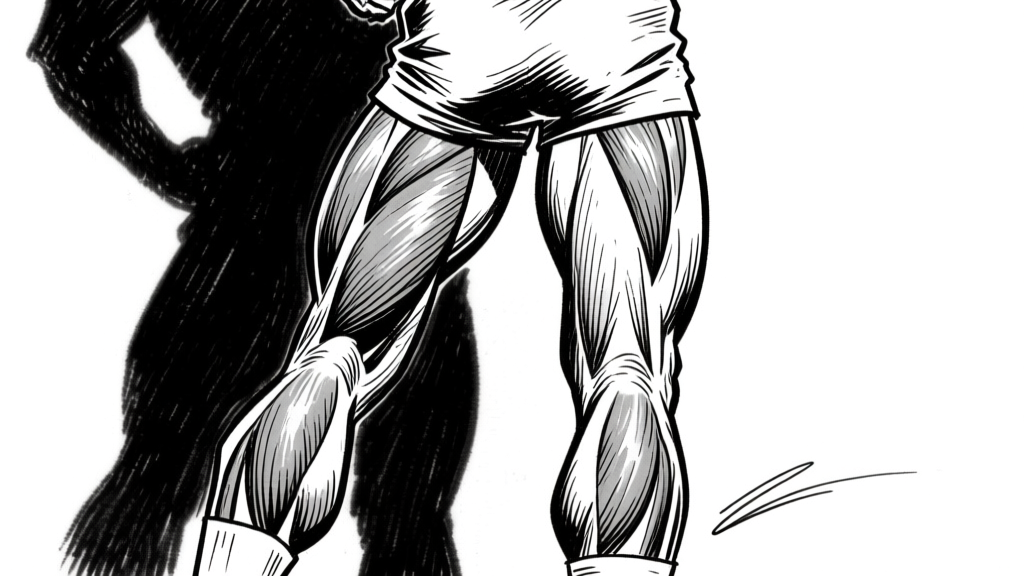
Leg muscles — with shadow
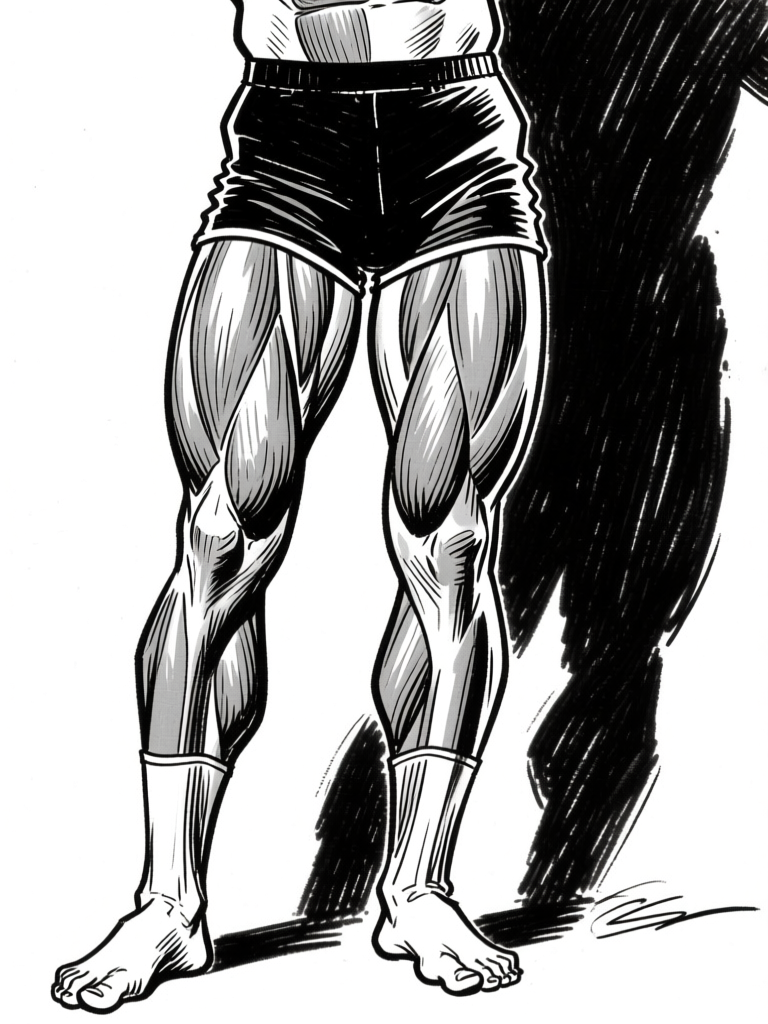
Leg muscles — ink standing
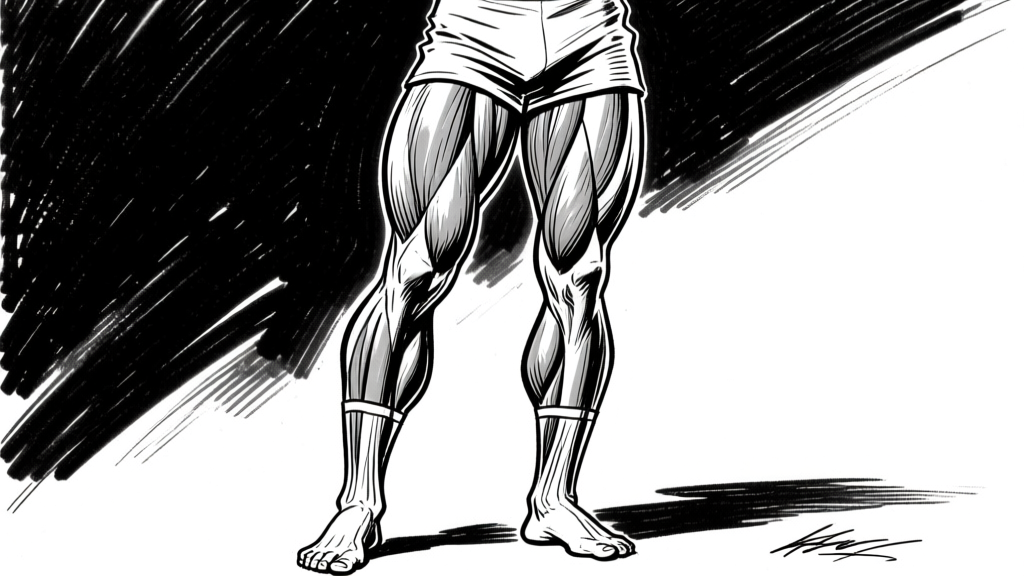
Leg muscles — with shadow ink
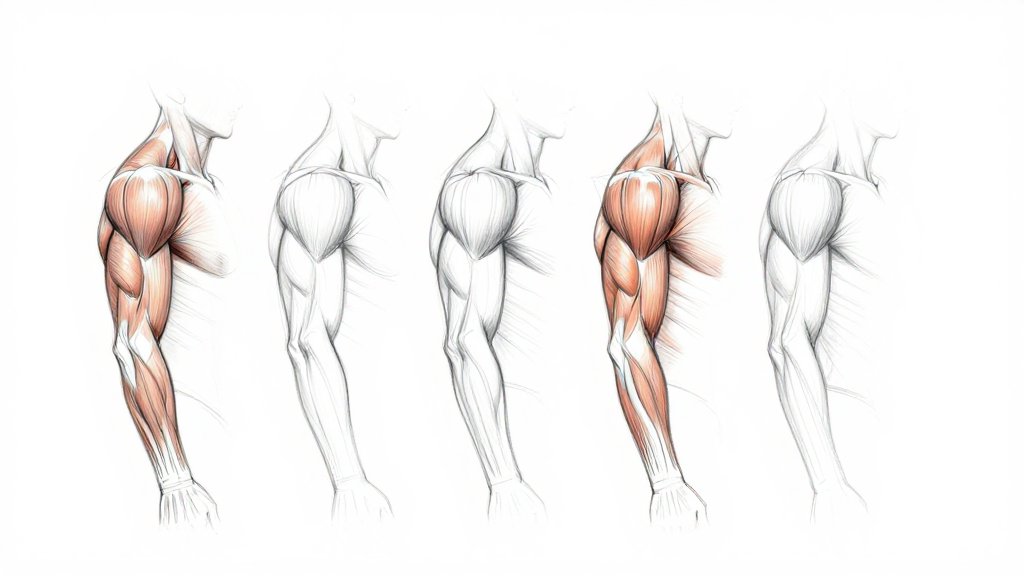
Leg anatomy — colored stages
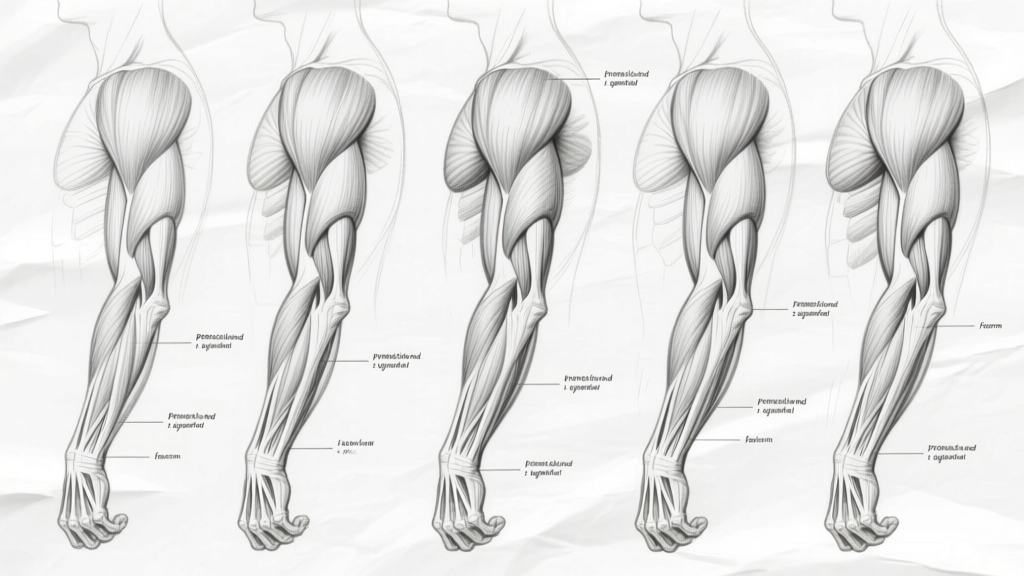
Leg anatomy — five-stage colored