KEY CONCEPTS
- 5 = the hand: five fingers, inner curve = thumb web
- The thumb breaks away at ~45 degrees from the fingers
- The palm is a simple square — roughly as wide as it is long
- The middle finger is the longest; each successive finger is shorter
- 14 phalanges (1+4=5) — the Fibonacci connection confirms the number
- The knuckle line is the most important structural line of the entire hand
Draw the number 5 large. The inner curve of the 5 is where the thumb web (thenar eminence — the fleshy pad between thumb and index finger) sits. The horizontal top of the 5 is the line of the knuckles. The vertical drop is the outer edge of the palm. This one shape captures the complete structural skeleton of the open hand.
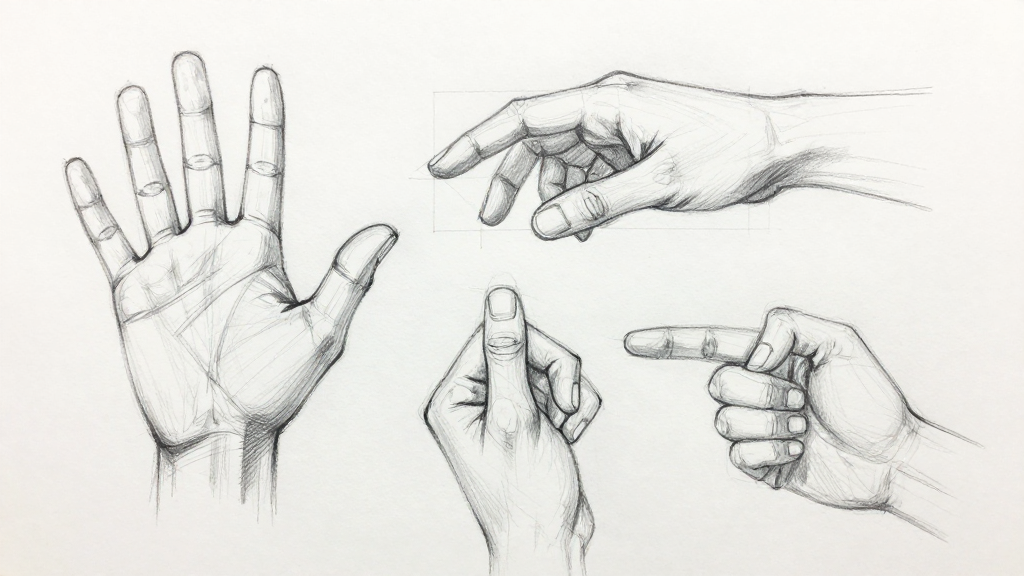
The thumb is the key to every hand pose. Before drawing fingers, establish the thumb — is it tucked in (fist) or extended out (open hand or pointing)? The thumb's position defines the entire hand gesture. For beginners: the thumb breaks away at approximately 45 degrees from the index finger plane and attaches to the side of the palm, not the top.
A practical simplification for hand drawing: think of the fingers as four cylinders (tubes) of graduated length attached to a rectangular palm. The middle finger is the longest and tallest. The index and ring fingers are nearly equal. The pinky is the shortest. Connect them at the knuckle ridge and you have the essential hand structure.
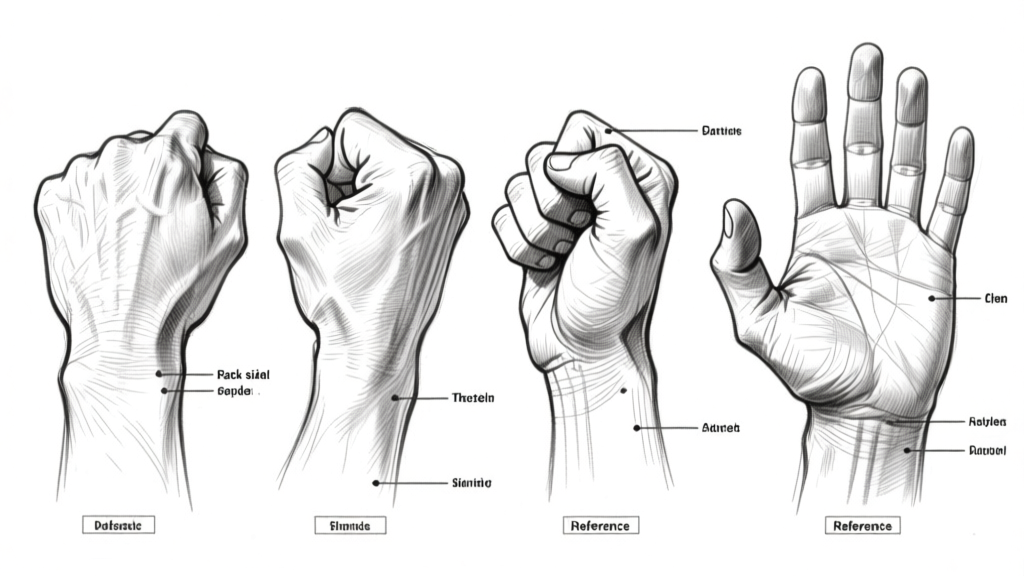
REFERENCE GALLERY