KEY CONCEPTS
- Jaw = 3: runs from chin up to ear, creating the face's outer silhouette
- Ear = 6: at the jaw line, level with the eyes in height
- If ear is low: head is looking up. If ear is high: head is looking down
- Neck = 4 strokes: two sternocleidomastoid tubes + two clavicle lines
- The neck is a cylinder — not a flat column
- The neck angles forward from the shoulder — it is not perfectly vertical
The ear's placement is the single best indicator of head angle. In a straight-on neutral head, the ear sits level with the eye line to the base-of-nose zone. When the head tilts up, the ears appear lower relative to the facial features. When the head tilts down, the ears appear higher. Use this to double-check your head angles.
The neck, drawn as two sternocleidomastoid (SCM) cylinders, connects the skull to the clavicles. The SCM muscles create the two prominent diagonal columns that frame the front of the neck in muscular figures. They run from behind the ear down to the clavicle notch — the more they are developed, the more clearly they define the neck's structure from any angle.
TRY THIS — 10 MINUTESDraw the same face twice. In the first, place the ear level with the eyes (neutral forward gaze). In the second, drop the ear significantly below the eye line (head tilted up, worm's eye feel). Add the same jaw and neck to both. The ear placement alone — with no other changes — communicates the completely different head angles. That is the ear's power in the sequence.
REFERENCE GALLERY
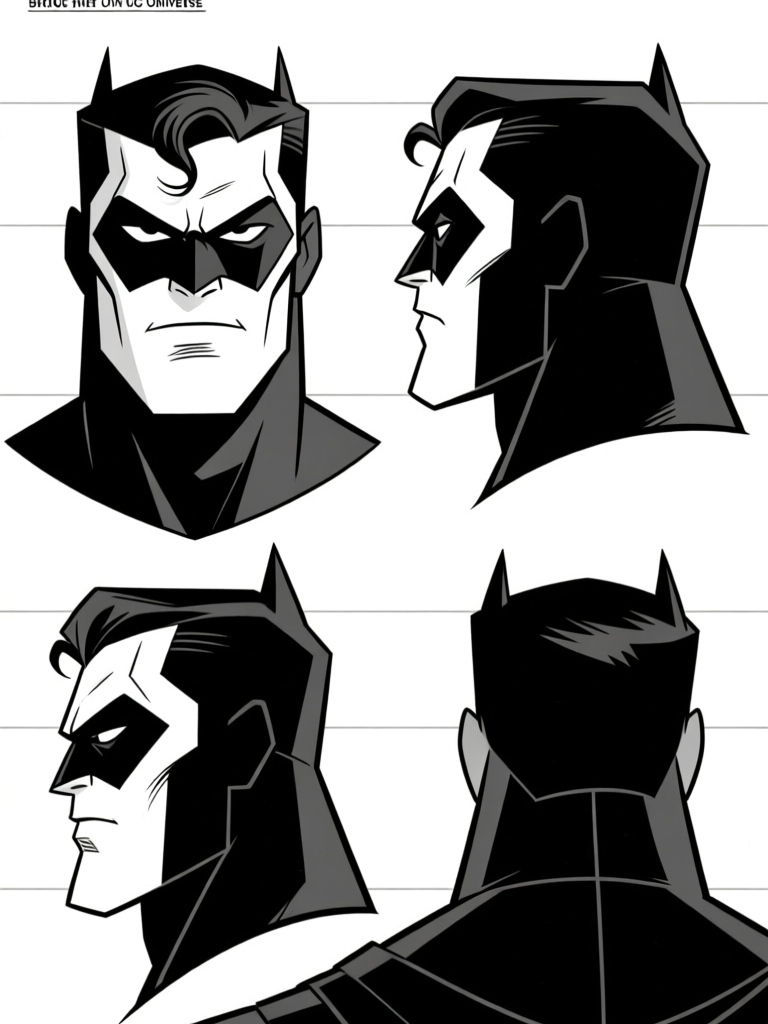
Four head views — ear placement in each
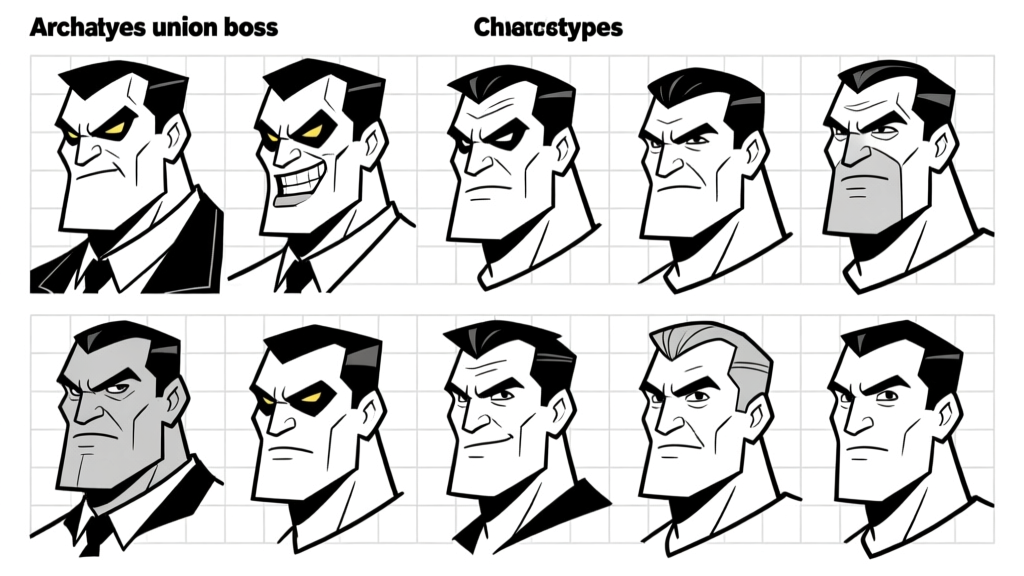
Head turnaround — jaw and neck visible
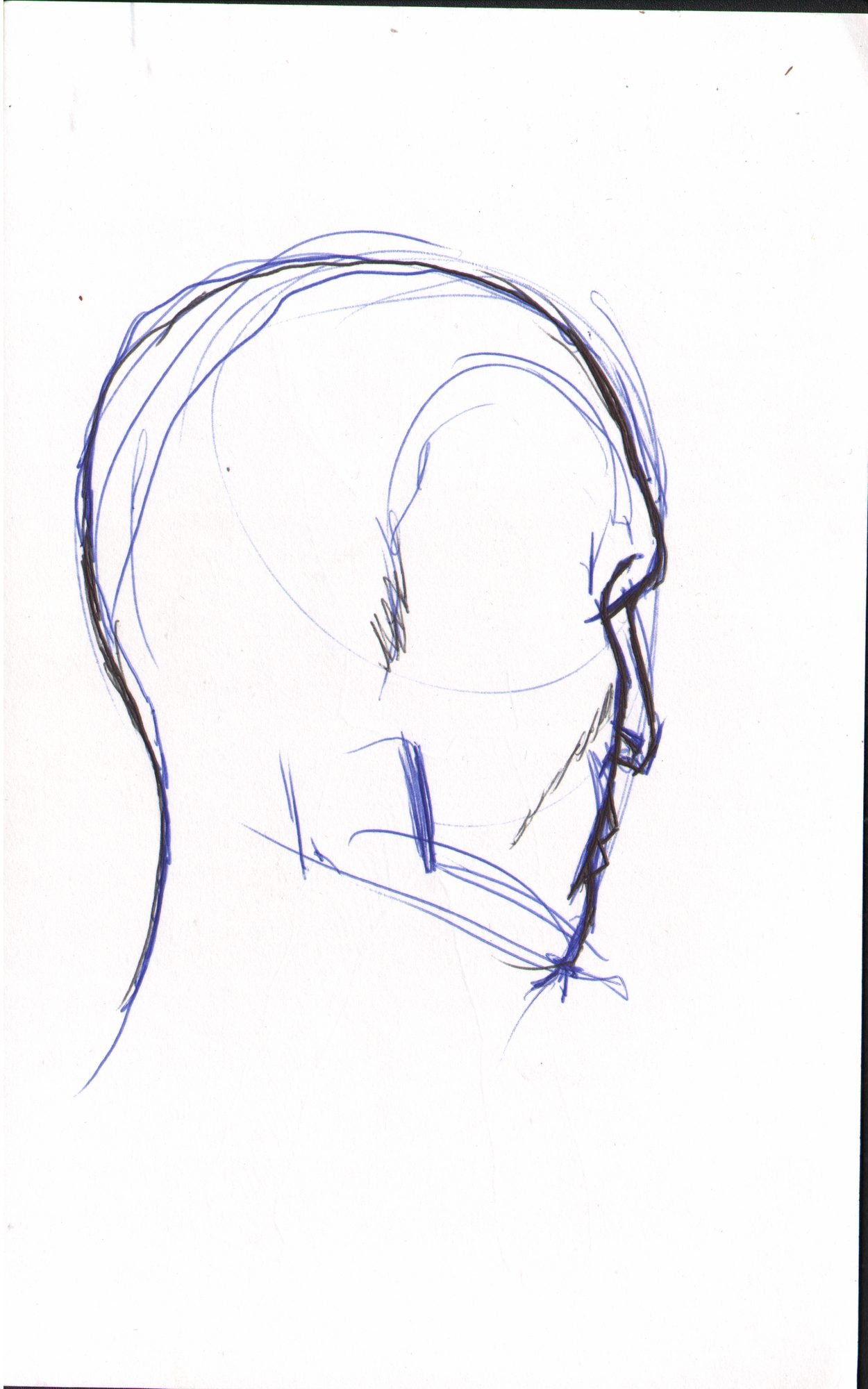
Head profile — blue pen side view construction
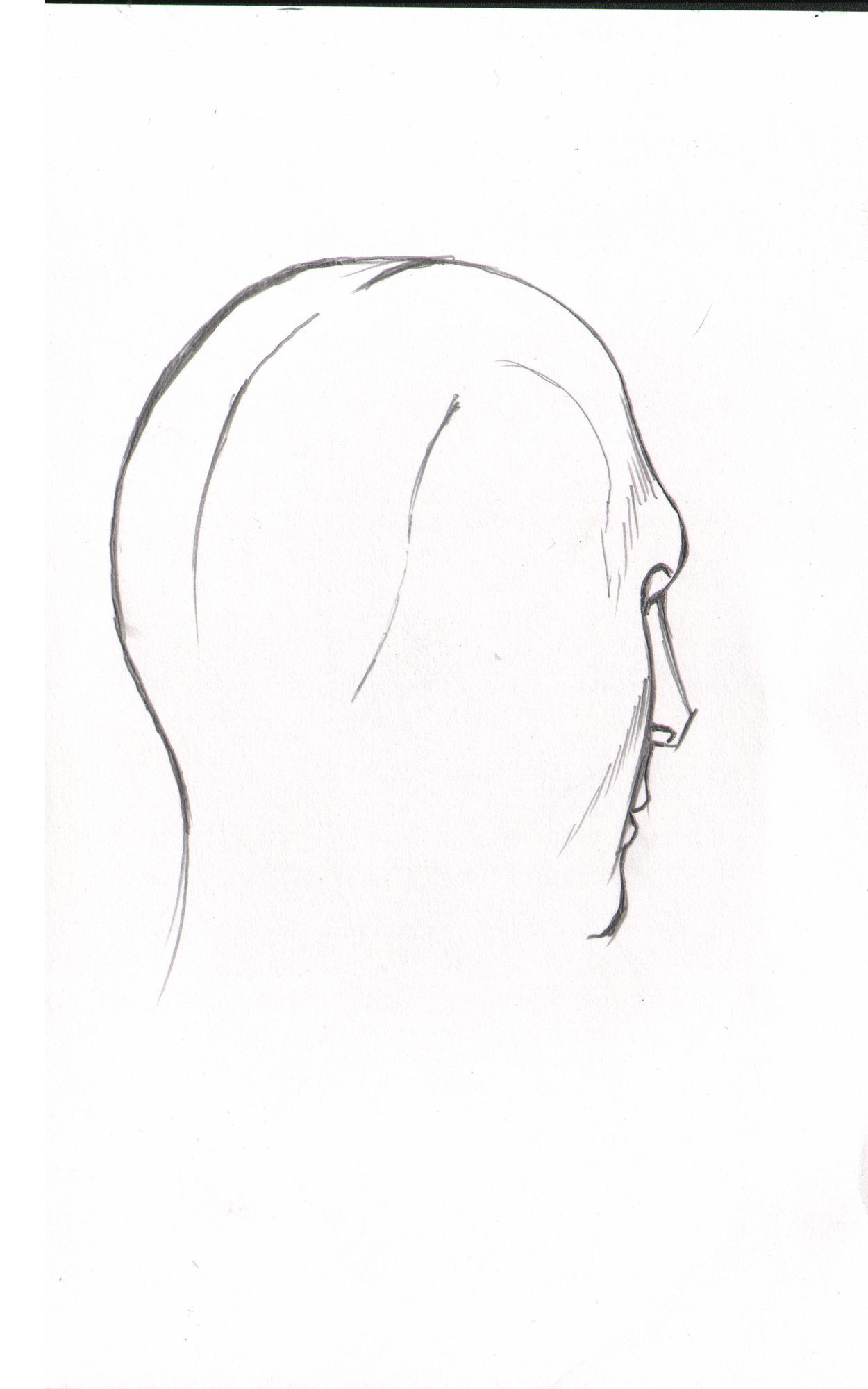
Head profile clean — pencil side view