KEY CONCEPTS
- The number 4 looks like the chest viewed from the front
- Vertical line of 4 = sternum (breastbone)
- Horizontal arm of 4 = clavicle (collar bone)
- Diagonal drop = rib cage edge curving down
- Mirror the 4 to get both pectoral muscles
- Two mirrored 4s = the complete chest skeleton
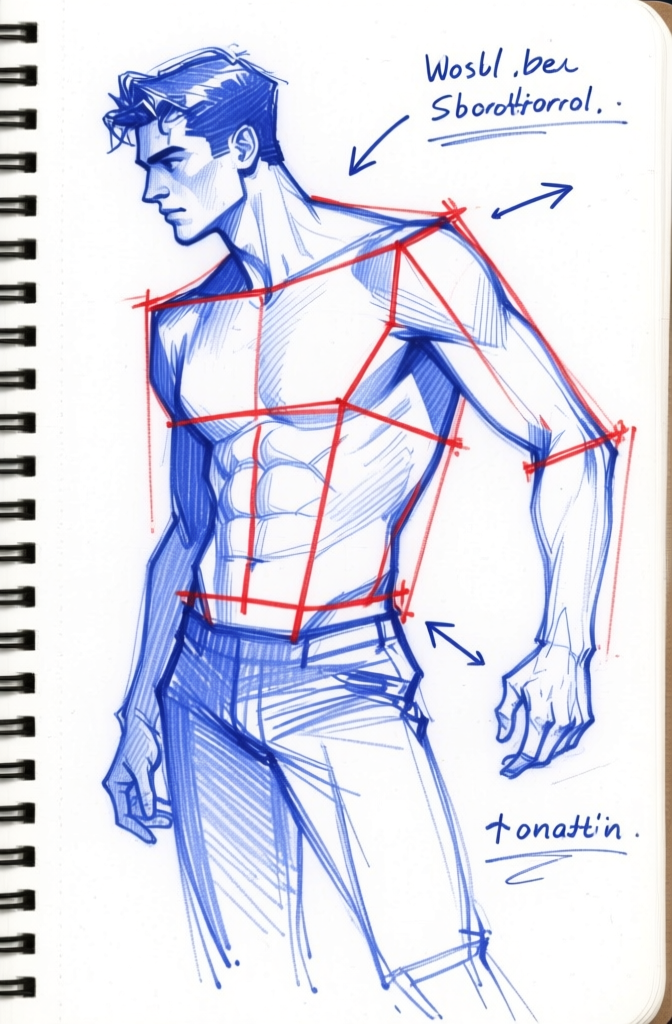
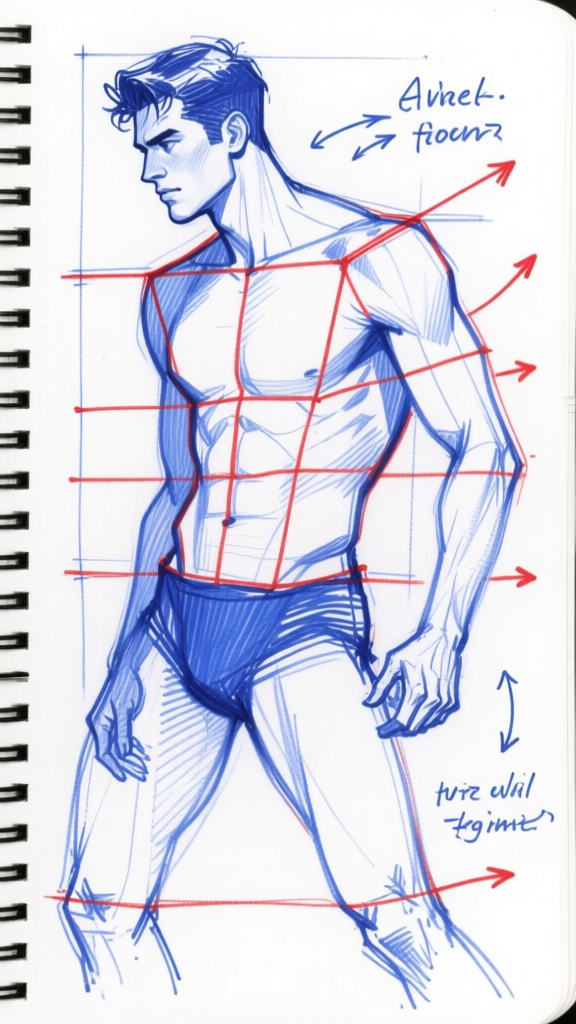
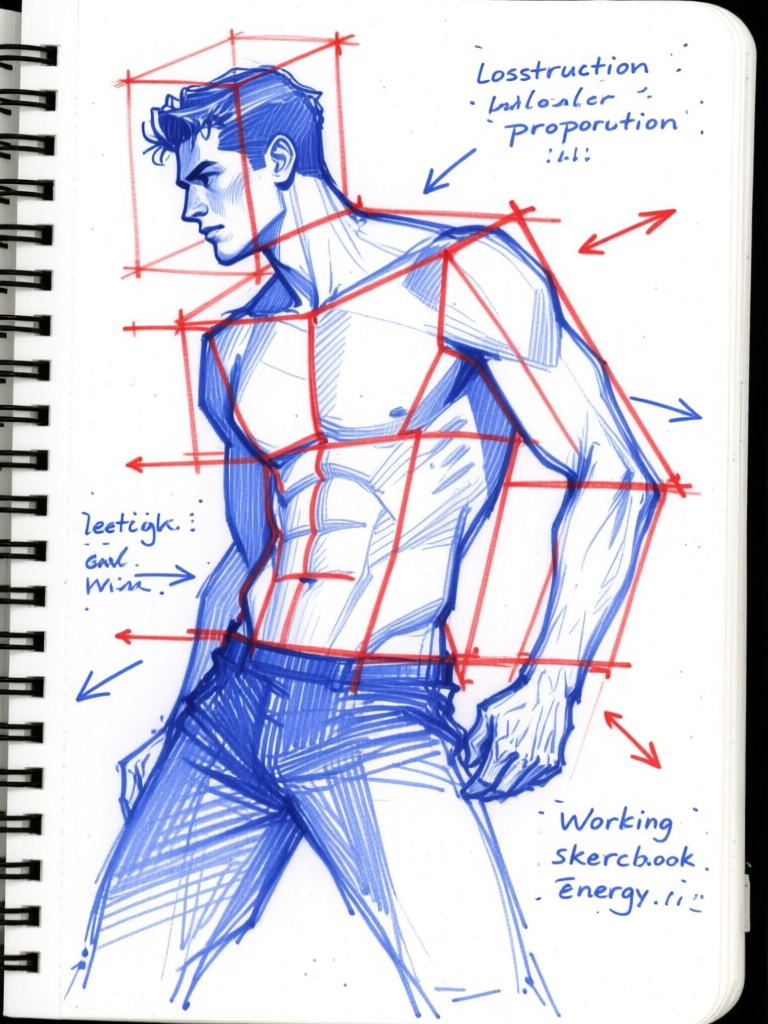
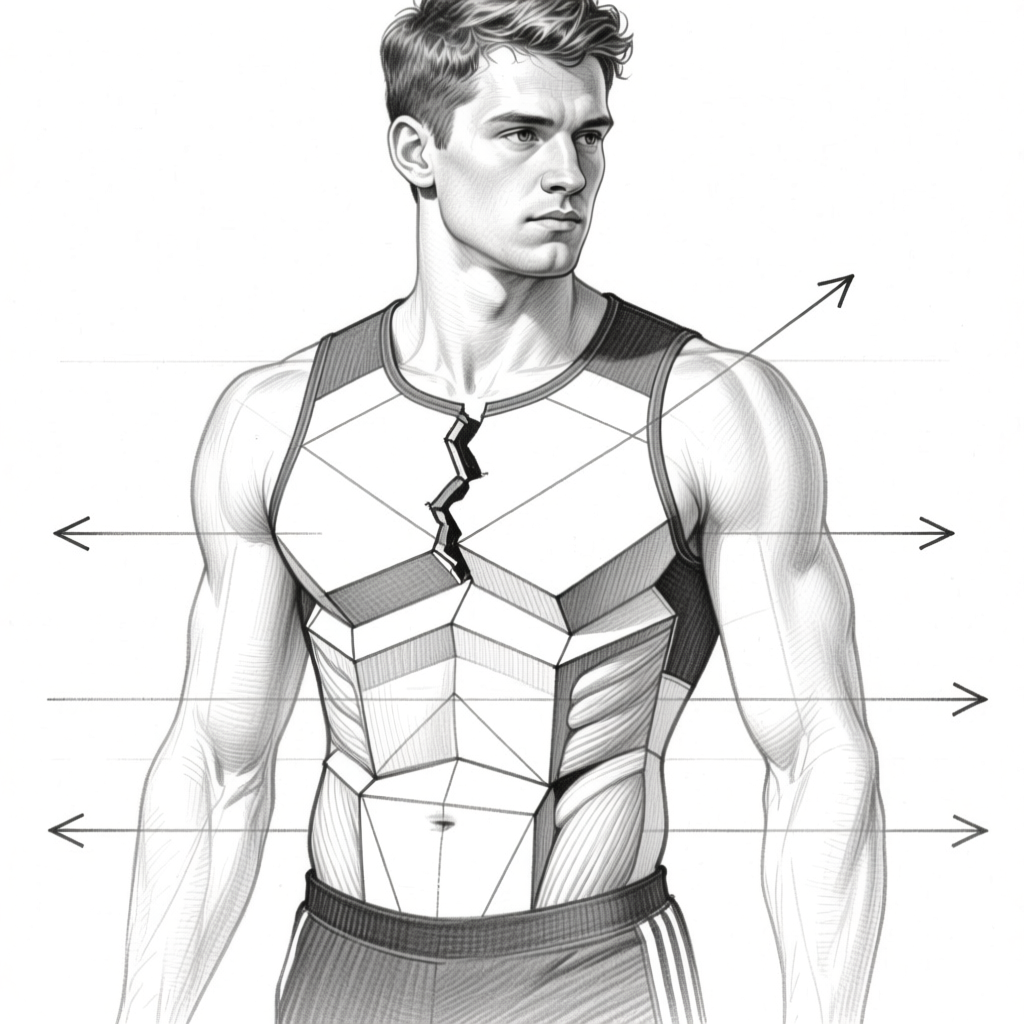
Draw the number 4 large on your page. Now look at it: the downward stroke is the center of the chest — the sternum. The horizontal arm going left is the left clavicle. The diagonal drop to the right is the edge of the rib cage. You have just drawn the chest's structural skeleton with one number.
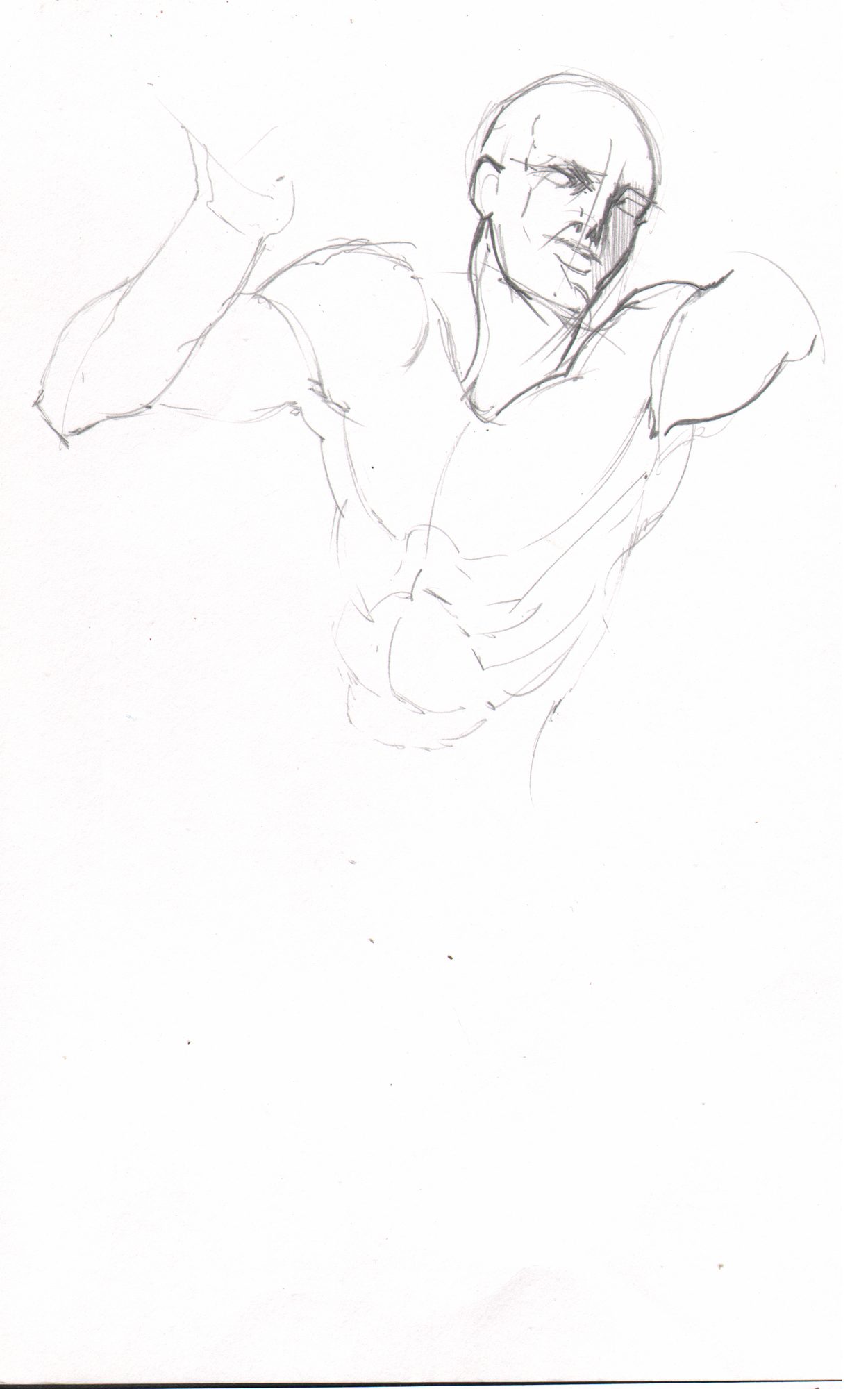
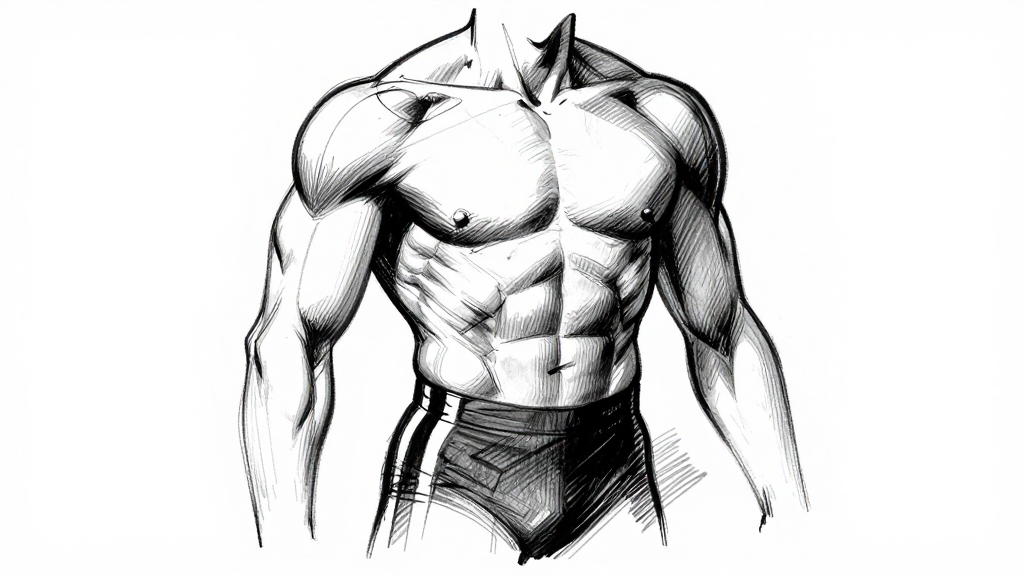
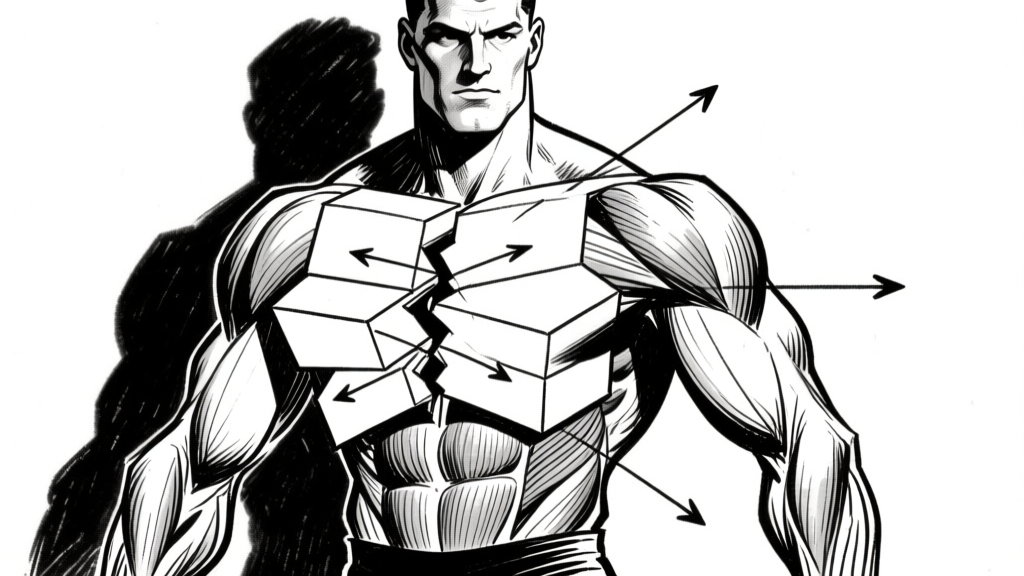
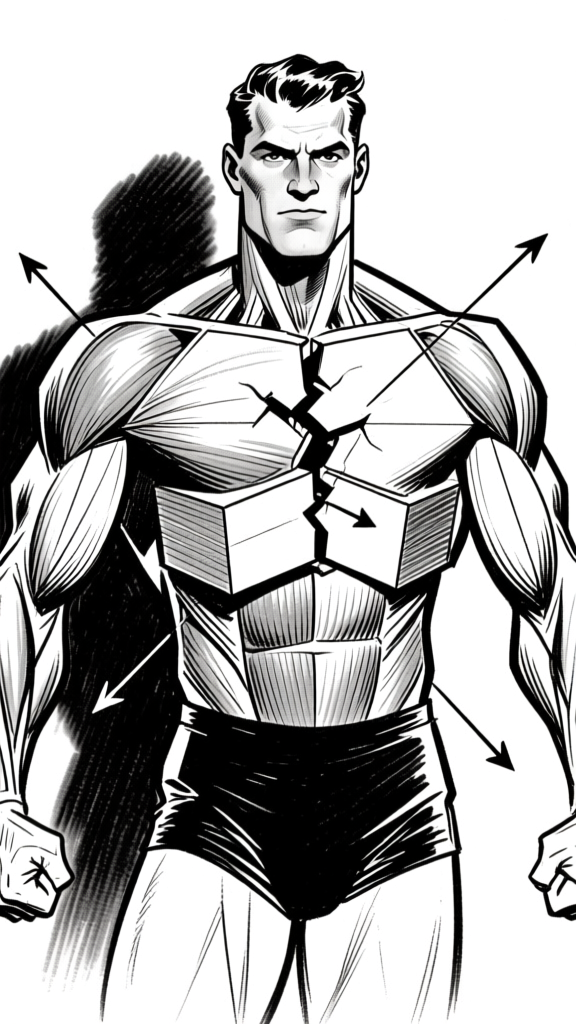
Now mirror that 4 — draw its reflection on the other side. The two downward strokes meet at the sternum center. The two clavicle arms reach outward to each shoulder. Now curve the pectoral muscles between the clavicle and the sternum — they arch downward and meet in the center like two parentheses facing each other.
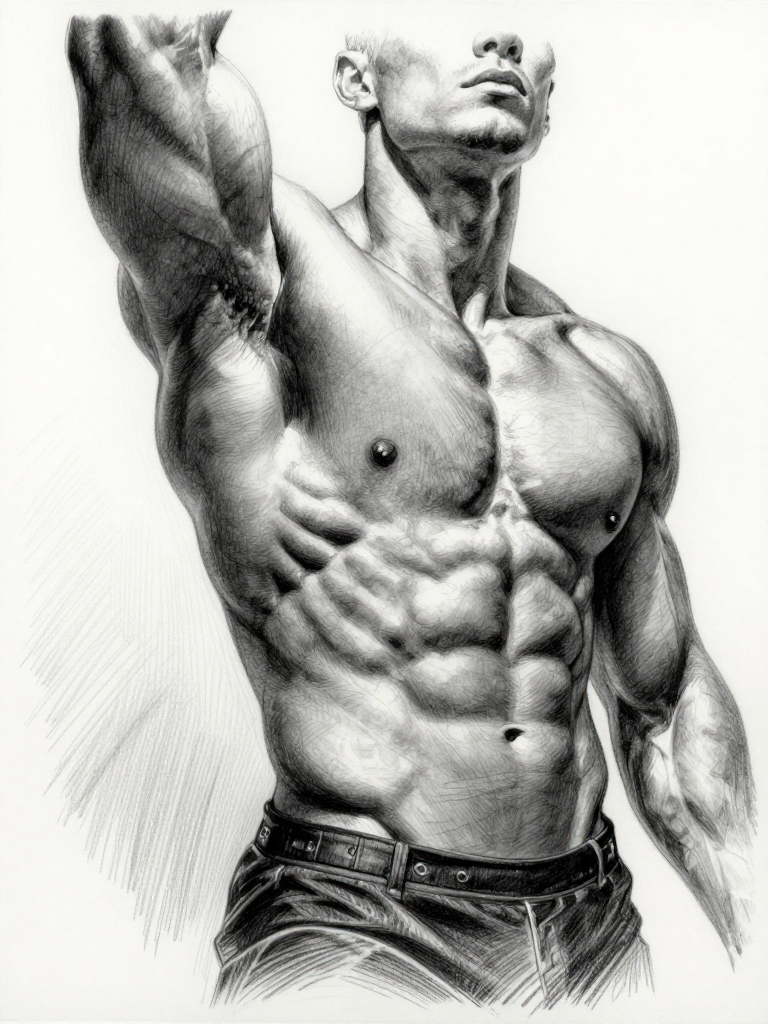
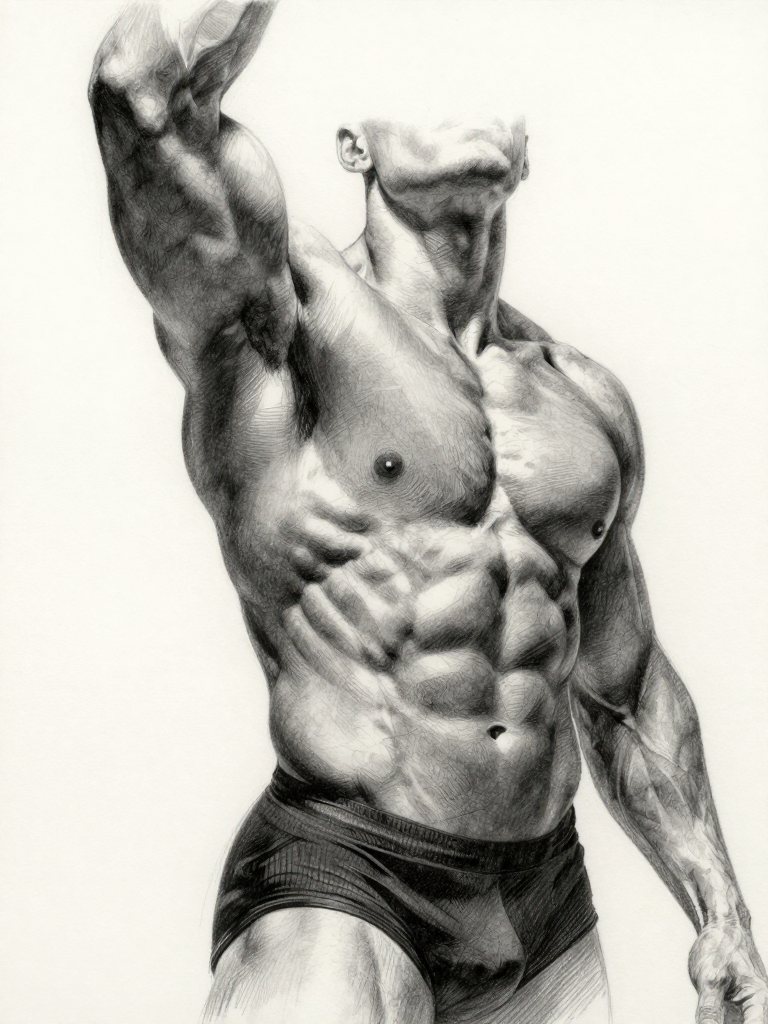
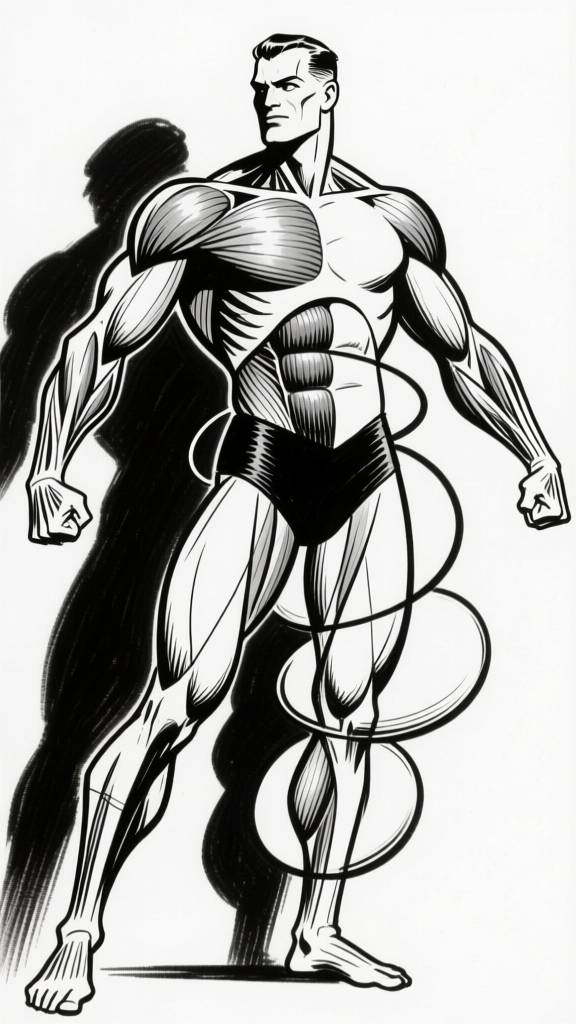
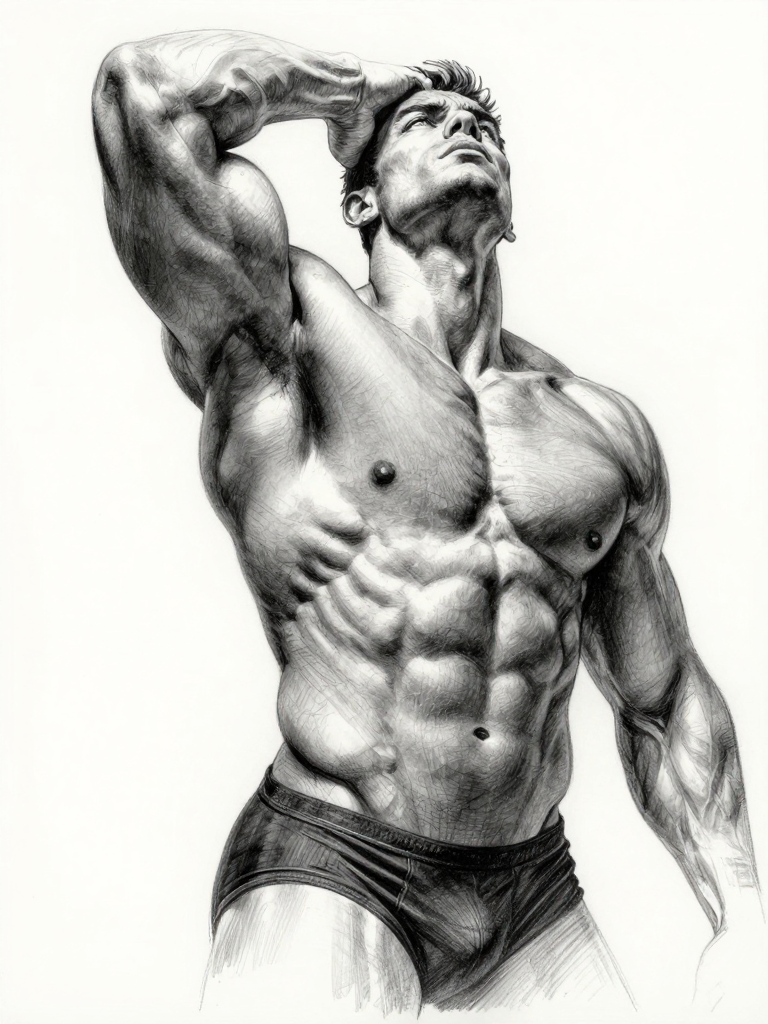
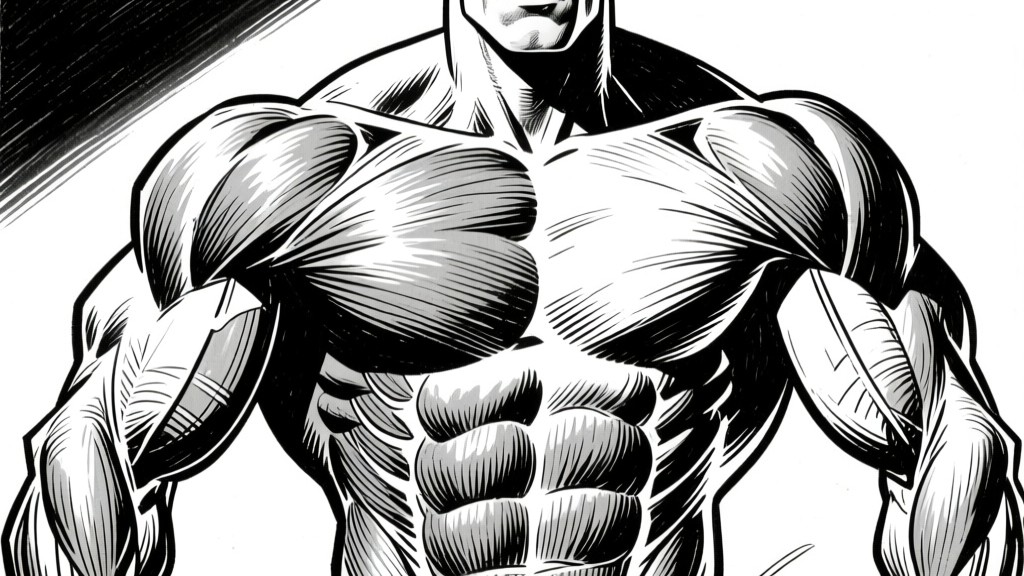
The pectoral muscles are large, fan-shaped muscles. They attach along the sternum and the clavicle, sweep outward, and attach to the upper arm bone (humerus). When drawn heroically, they curve powerfully away from center and taper dramatically to the armpit. The more you push that outward curve, the more powerful the figure reads.
VOCABULARY
- Sternum — The flat bone running vertically down the center of the chest
- Clavicle — The collar bones — two horizontal bones connecting sternum to shoulders
- Pectoralis Major — The large fan-shaped chest muscles — the "pecs"
- Rib Cage — The barrel-shaped bony structure protecting the heart and lungs
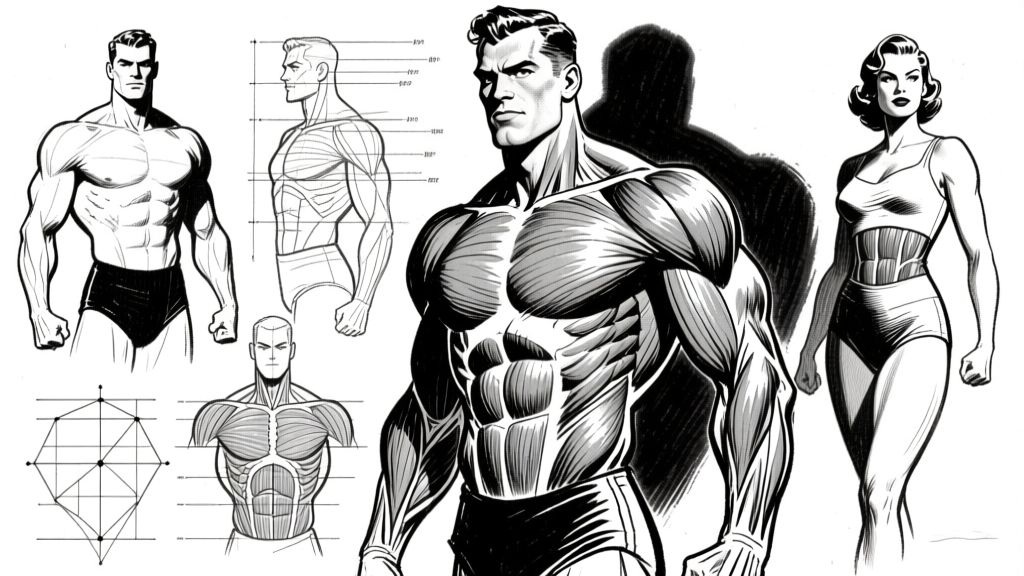
REFERENCE GALLERY