KEY CONCEPTS
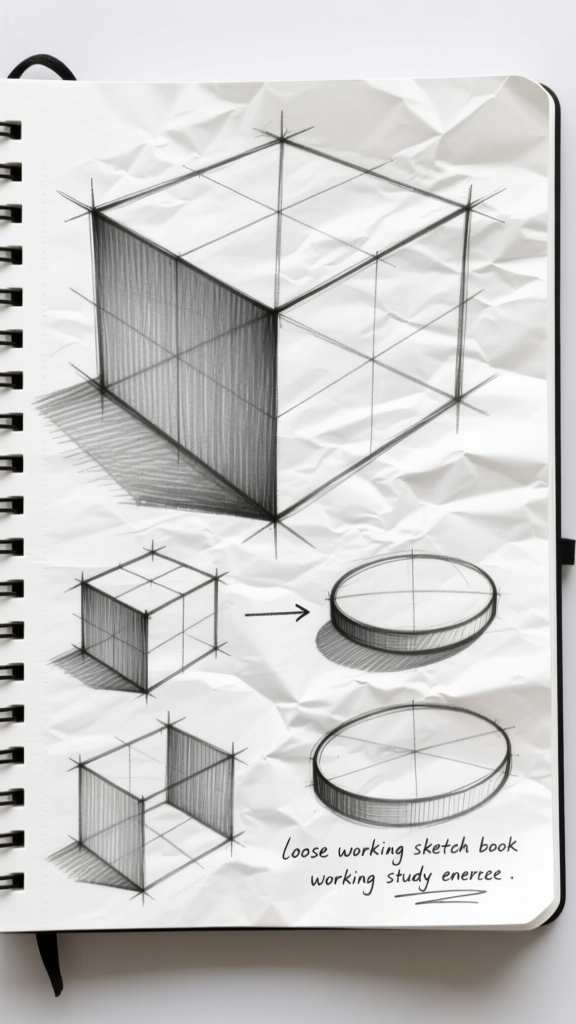
- A circle fits inside a square — finding that center reveals perspective
- A square has four corners = the number 4 = the chest/torso
- A circle takes five defining points = the number 5 = the hand
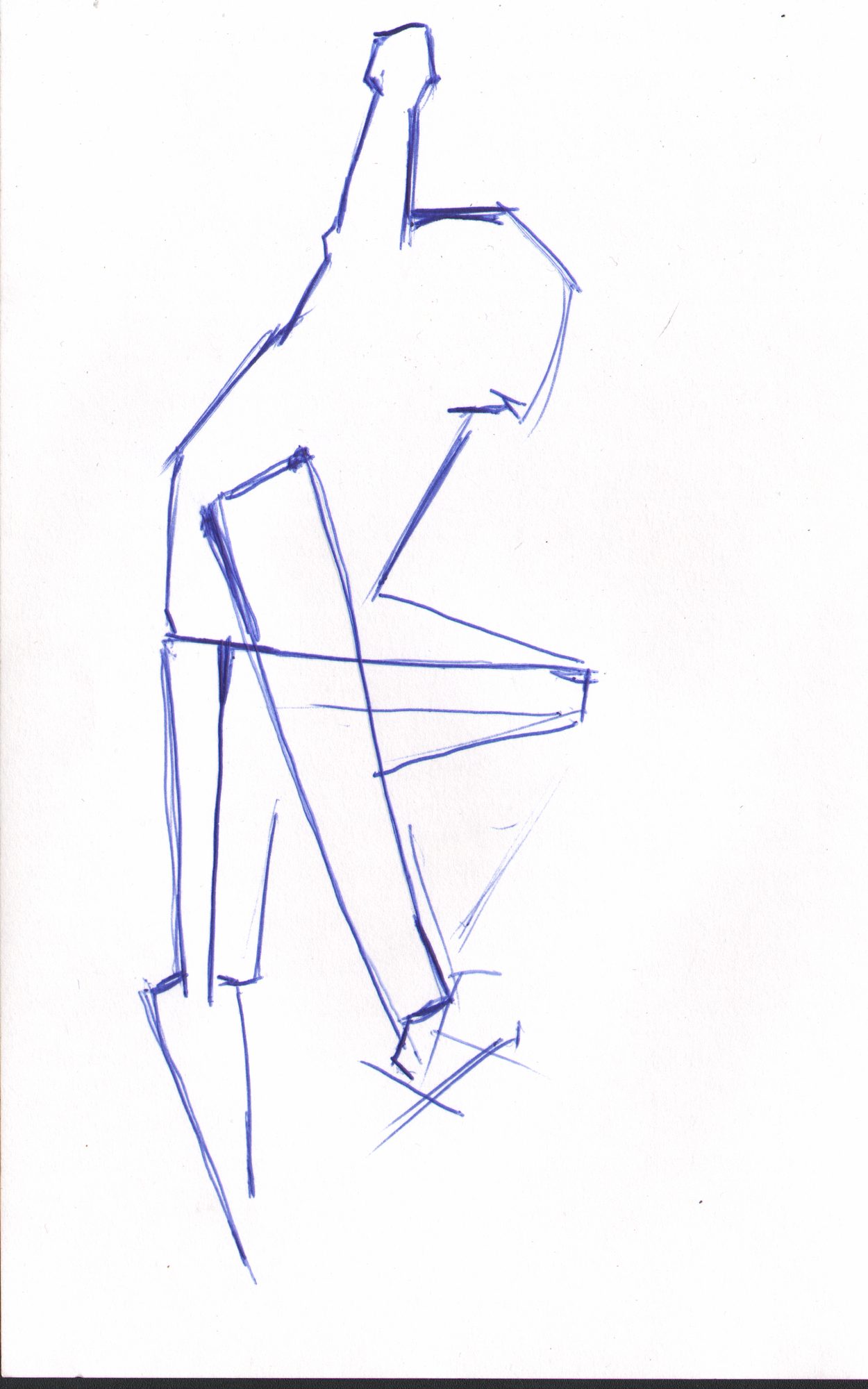
- Every body form can be "boxed in" — the box reveals the angle in space
- Tilt the square slightly and the inscribed circle becomes an ellipse — that IS perspective
Draw a square. Connect corner to corner with an X. The center of that X is the center of the square — and it is also the center of a circle inscribed within that square. You have just found the fundamental relationship that governs all of your forms.
Now take that square and imagine it as a box in space — a slightly turned rectangular prism. One face is larger (closer to you), the other is smaller (farther away). That difference in size is perspective. Your figure exists inside a space exactly like this.
In our number system: a square has four sides = 4 = the chest. A circle takes five defining points = 5 = the hand. These are not coincidences — they are memory hooks that will help you recall the right form at the right moment, instantly, without reference material.
REFERENCE GALLERY