KEY CONCEPTS
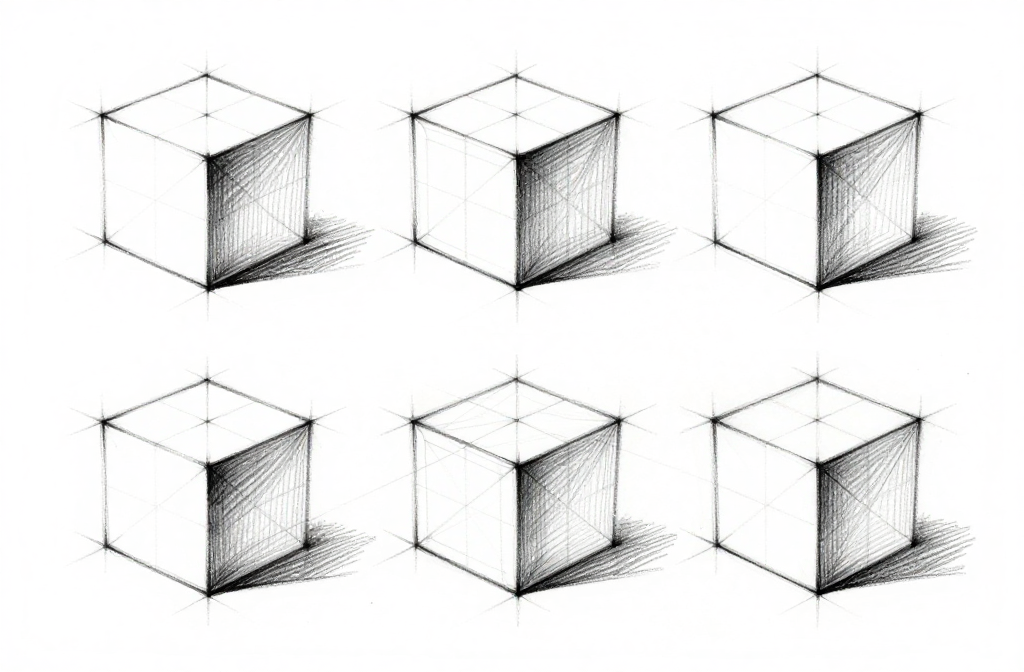
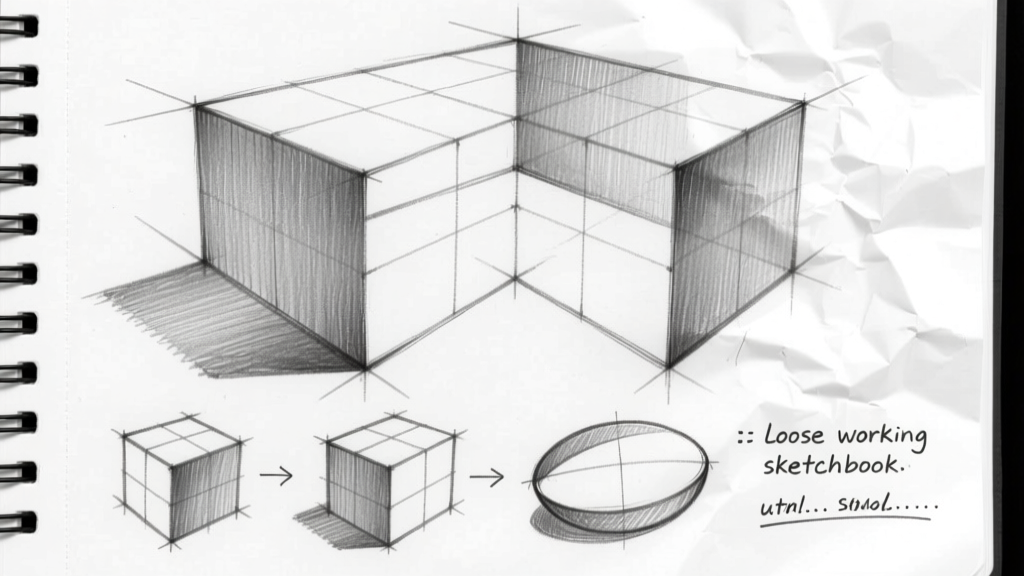
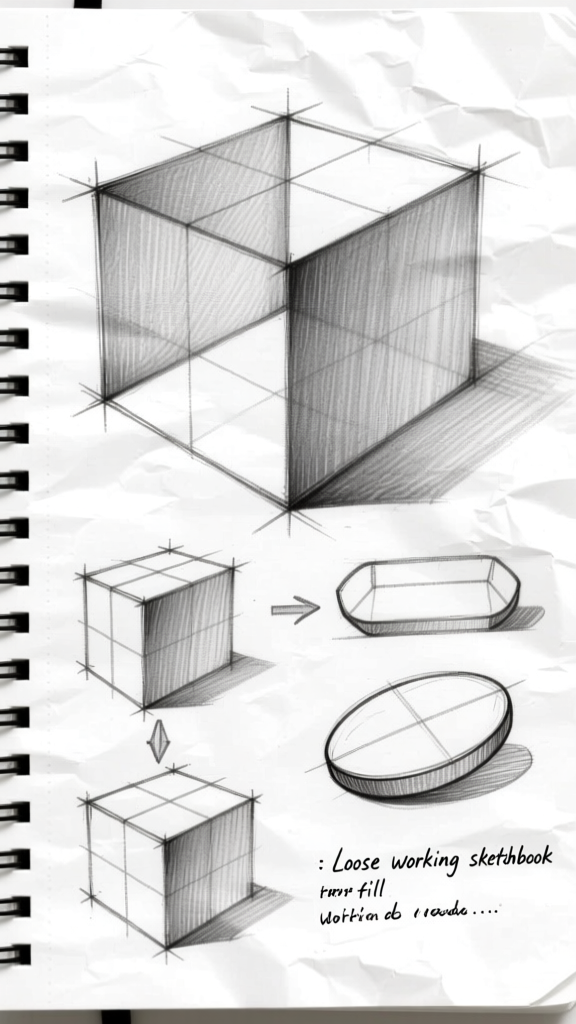
- The figure always fits inside a bounding rectangle — draw this first
- Drawing outer edges first prevents the figure from drifting off the page
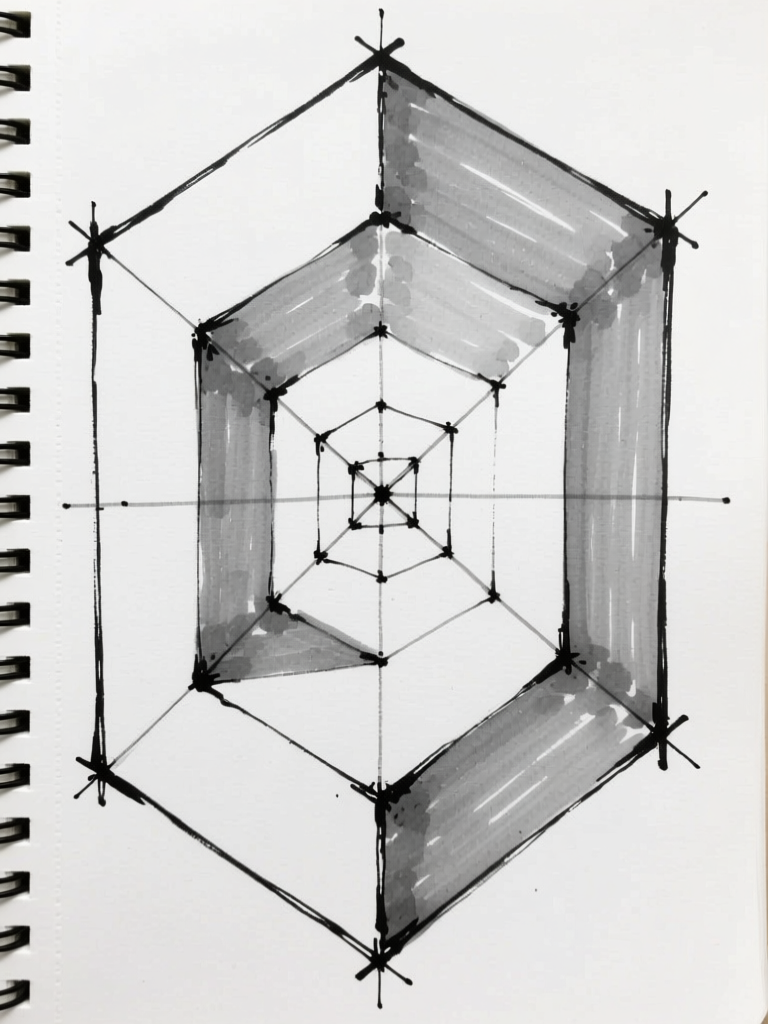
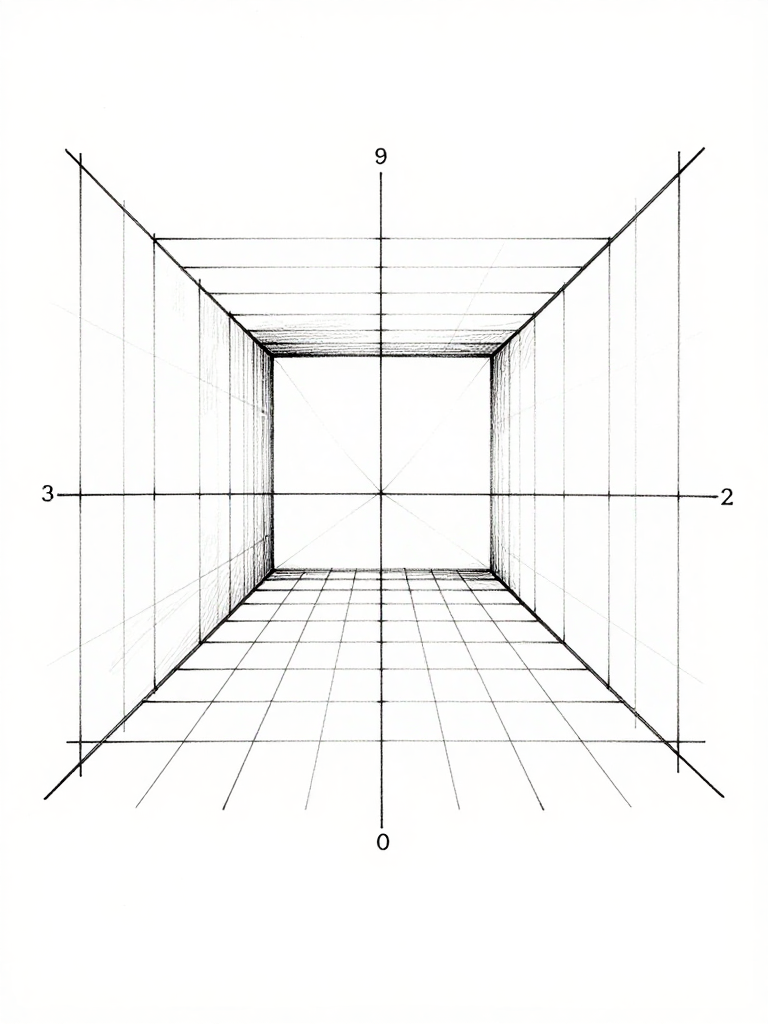
- The X from corner to corner locates the center: the belt buckle (the zero)
- Width = shoulder span (~2–2.5 head widths for heroic figures)
- The midpoint of the bounding box = the pelvis / belt
- Think of this as the architect's blueprint — the rooms come after the footprint
Draw a rectangle that will contain your full figure. Mark the center with an X. That intersection is your belt buckle — your zero. The top edge is the crown of the head. The bottom edge is the soles of the feet. You now have a grid to build everything within.
The width of the rectangle tells you how wide the figure will be. For heroic/athletic figures, the shoulders span roughly 2 to 2.5 head widths. The pelvis is slightly narrower than the shoulders in male figures, roughly equal in female figures.
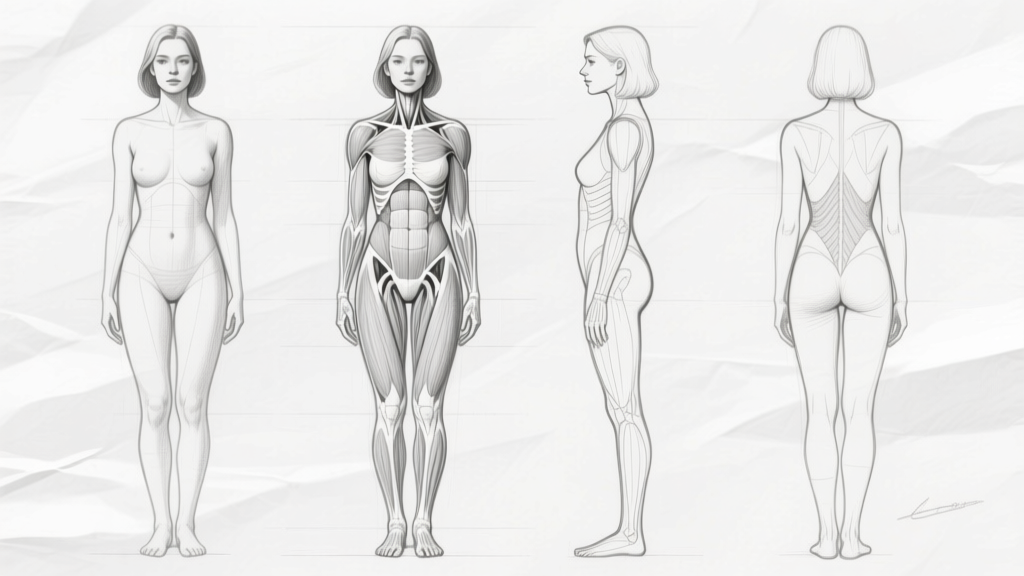
The four useful subdivision lines: Midpoint = belt. Quarter from top = armpits. Quarter from bottom = knees. These three horizontal divisions, combined with the midpoint vertical, give you nine compositional zones — every major body landmark falls into one of these zones.
REFERENCE GALLERY